


What to Look for When Choosing a Child Care Center in Staten Island
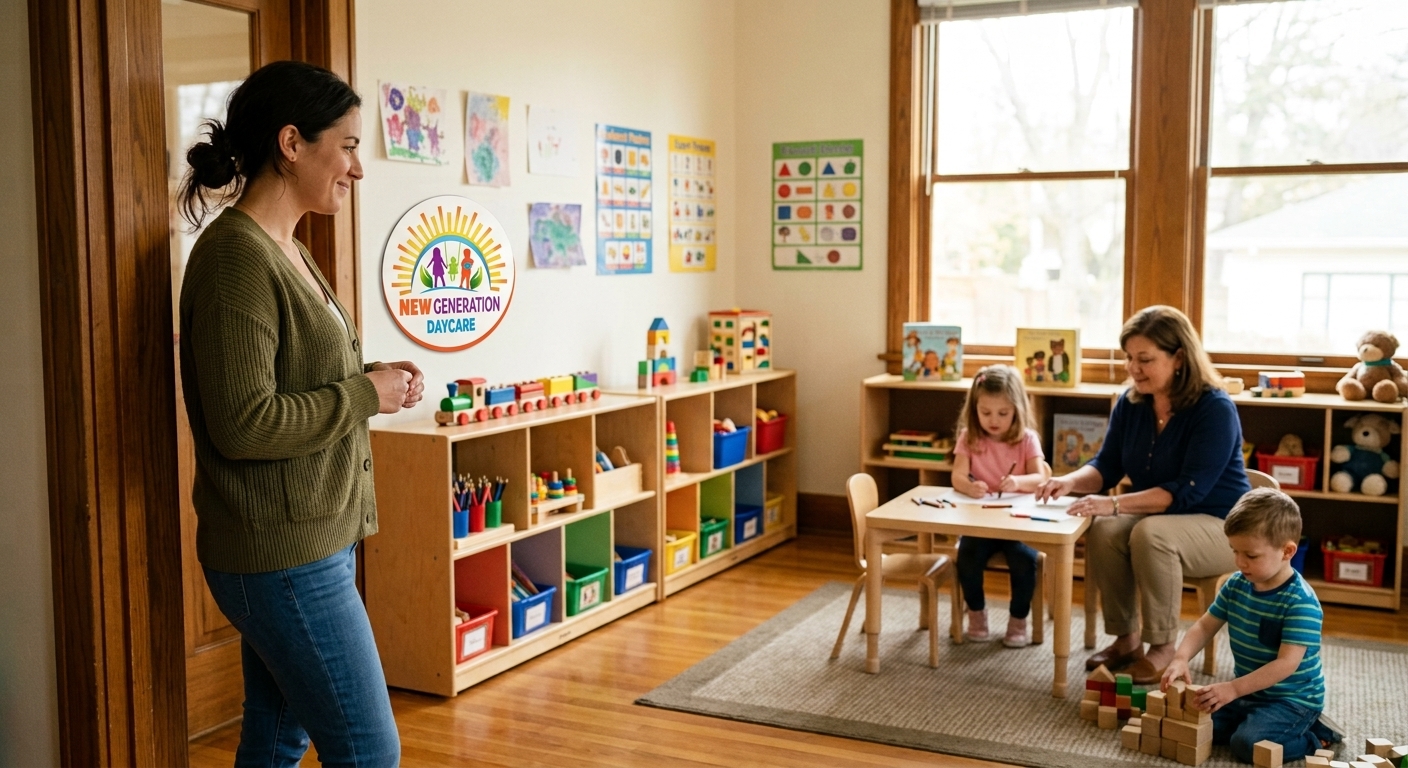
Choosing a child care center isn’t like picking a restaurant or a gym. You’re deciding where your child will spend a significant part of their day, possibly most of their waking hours during the week. That makes it worth slowing down and actually knowing what to look for, rather than relying on a website’s photos or a five-star review.
A good child care center does more than supervise children until pickup. It provides responsive caregiving, age-appropriate learning, consistent routines, opportunities for social interaction, and clear communication with families. Some of that is visible in a website description. Most of it isn’t; you have to see it, ask about it, and sometimes compare it against another center to know if it’s actually a good fit.
This guide walks through what to look for, what to ask, and how to evaluate what you see, so that by the time you’re comparing options, you’re doing it with real information instead of guesswork.
1. Check Licensing and Basic Safety Standards
Licensing is the baseline, not the whole picture, but it’s still the first thing worth confirming. A licensed center is required to meet specific health, safety, and operational standards set by the relevant regulatory body, and parents are generally entitled to ask about this directly.
Questions worth asking:
- Is the center currently licensed, and by which agency?
- Can parents see or verify licensing information?
- What health and safety procedures are followed day to day?
- How does the center handle medical emergencies?
- Who is authorized to pick up a child, and how is that verified?
- How is access to the building controlled during the day?
New Generation Learning Center is licensed by the NYC DOHMH – Bureau of Child Care, according to the center’s FAQ page. That’s a reasonable example of the kind of licensing detail worth confirming with any center you’re considering, not because licensing alone guarantees quality, but because it’s the regulatory floor everything else should be built on top of.
2. Observe How Teachers Interact With Children
This is one of the most telling things you can observe in person, and it’s hard to get a real sense of it from a website. During a visit, pay attention to:
- Do teachers speak to children respectfully, even during correction?
- Do adults get down to a child’s eye level when talking with them?
- Are children’s questions and comments actually listened to?
- Do teachers respond to frustration or conflict calmly, rather than with sharpness?
- Are there visible moments of warmth, a teacher noticing a child’s drawing, responding to a request, redirecting gently?
- Do children seem comfortable approaching staff, or do they seem hesitant?
Responsive, attentive interaction between adults and children is one of the strongest indicators of a healthy early childhood environment. It’s also something you can only really judge by watching it happen, which is part of why an in-person visit matters more than a brochure.
3. Look at the Classroom Environment
Once you’re in the classroom, look past the surface impression and pay attention to specifics:
- Is the space clean and reasonably organized, without being sterile or overly controlled?
- Are toys and materials within children’s reach, or locked away and inaccessible?
- Do the activities set up in the room look appropriate for the ages in that classroom?
- Is there enough space for children to move without constant collisions or crowding?
- Are children supervised in a way that feels attentive rather than absent?
- Does the room feel welcoming, or does it feel like children are being managed rather than engaged?
- Is there a mix of quiet space and more active space?
A good classroom doesn’t need to look picture-perfect or silent. Some noise and mess is a normal part of active, engaged learning. What matters more is whether the space is organized with intention and whether children seem genuinely engaged in what’s happening around them.
4. Ask About the Daily Schedule
A center’s daily rhythm tells you a lot about how the day actually runs for your child. Ask what a normal day looks like from arrival to departure, including:
- Drop-off and morning routine
- Meal and snack times
- Structured learning activities
- Free play
- Outdoor time
- Rest or quiet time
- Group or circle time
- Transitions between activities
- Pickup routine
Predictable daily structure helps young children feel secure because they start to anticipate what comes next. That said, a good schedule should also have some flexibility built in; young children don’t always transition on a fixed timeline, and a center that’s too rigid may struggle to accommodate individual needs on a given day.
5. Understand the Learning and Curriculum Approach
For preschool-age children especially, child care and early education tend to overlap. It’s worth understanding what “learning” actually looks like at a given center before assuming it matches what you picture.
Ask:
- What do children typically learn or work on during the day?
- Is the approach age-appropriate, or does it lean toward formal academics too early?
- How much of the day involves play versus structured activity?
- Are activities hands-on and exploratory?
- Are early literacy and math concepts introduced naturally, through conversation and activities?
- Are art, music, movement, and creative play part of the regular routine?
- How is social-emotional development supported alongside academics?
Quality early childhood education generally isn’t built around worksheets and academic drills; it’s built around exploration, play, and guided activity. New Generation Learning Center’s programs, for example, are described as including language development, science exploration, arts and crafts, music, dance, yoga, physical exercise, and self-help skills alongside hands-on learning. That’s a useful reference point for the kind of well-rounded approach worth looking for at any center, one that treats early learning as broader than academics alone.
6. Consider the Program for Your Child’s Age
The right fit depends partly on your child’s age and stage of development. A program built for toddlers looks very different from one built for Pre-K children, even within the same center.
Worth asking:
- Is this specific classroom or program designed for my child’s age group?
- Are the activities I’m seeing developmentally appropriate for that age?
- How does the center handle the range of developmental levels that naturally exist within one age group?
- What happens if a child needs more support or extra time with something?
Every child develops at their own pace, and a good program should have some flexibility to accommodate that range rather than expecting every child in a classroom to be at the same point.
7. Ask About Social and Emotional Support
Big emotions are part of early childhood: frustration, separation anxiety, conflicts over toys, difficulty switching from one activity to another. How a center handles these moments says a lot about its overall approach.
Ask:
- How do teachers respond to challenging behavior?
- What discipline approach does the center use?
- How are conflicts between children typically handled?
- How are children comforted when upset?
- How are parents kept informed if a concern comes up repeatedly?
New Generation Learning Center’s FAQ describes a positive discipline approach that includes redirection and positive reinforcement, an example of the kind of specific, concrete answer worth getting from any center you’re evaluating, rather than a vague assurance that “we handle it well.” It’s worth noting that child care staff are generally supporting everyday social-emotional development, not providing clinical behavioral services; if a child has more significant needs, that’s a separate conversation with a pediatrician or specialist.
8. Ask About Communication With Parents
Communication expectations vary a lot between families, so it’s worth being specific about what you actually want to know and how often.
Ask:
- How are parents updated about their child’s day?
- How are day-to-day questions or concerns communicated?
- Are there scheduled parent meetings or conferences?
- How are developmental observations shared over time?
- Who should parents contact with a question, and how quickly can they expect a response?
There’s no single “right” amount of communication; some parents want a daily update, others check in weekly. What matters is whether the center’s communication style matches what you actually need to feel informed.
9. Check Meals, Hygiene, and Daily Care Routines
These day-to-day details matter more than they might seem at first glance. Ask about:
- Meal and snack schedules
- Food and allergy policies
- Handwashing routines
- Diapering or toileting support, where applicable
- Cleaning routines throughout the day
- Illness policies: what happens if a child gets sick during the day
- Rest or nap time
- How personal belongings are managed
These are the kinds of practical questions that are easy to overlook during a tour but come up constantly once your child is actually enrolled. It’s worth confirming specifics directly with any center rather than assuming based on general impressions.
10. Ask About Outdoor Play and Physical Activity
Movement and outdoor time matter for young children’s physical development, energy regulation, and overall well-being. Ask:
- Is there an outdoor play area, and how is it maintained?
- How often do children go outside during the day?
- What happens on days with bad weather?
- Are physical activities appropriate for different ages?
New Generation Learning Center’s Staten Island location has a fenced-in playground area, according to the center’s FAQ, a specific, verifiable detail worth confirming for any center, since outdoor access varies significantly between programs, especially in more urban settings.
11. Review the Hours, Location, and Daily Logistics
Even an excellent program isn’t the right fit if it doesn’t work with your family’s schedule. Consider:
- Opening and closing times
- Commute distance and traffic patterns
- Drop-off and pickup procedures
- Holiday closures and how much notice you get
- Before- or after-school options, if you need care beyond preschool age
- Current enrollment availability
New Generation Learning Center’s FAQ lists operating hours as Monday through Friday, 6:30 AM to 6:30 PM. Hours and closures can change, so it’s worth confirming current details directly with any center before enrolling, rather than relying solely on a website.
12. Take a Tour Before You Decide
If it’s possible, visit in person before making a decision. A tour tells you things a website simply can’t.
During the visit, pay attention to:
- How children behave around teachers when they’re not “on display”
- The overall atmosphere of the classroom
- Cleanliness and organization
- Noise level and general energy
- Variety of activities and materials
- How staff communicate with you and with the children
- Security and access to the building
- Outdoor spaces, if available
- How openly and specifically staff answer your questions
If you’re able to, compare more than one center rather than making a decision based on a single visit or a website alone. Seeing two or three programs in person makes it much easier to notice differences you wouldn’t otherwise catch.
13. Questions to Ask a Child Care Center Before Enrollment
A practical checklist to bring with you:
- Is the center licensed, and by whom?
- What age groups does the program accept?
- What does a typical day look like?
- What is the learning or curriculum approach?
- How do teachers handle challenging behavior?
- How does the center communicate with parents?
- What are the meal and allergy policies?
- What happens if a child gets sick during the day?
- How are emergencies handled?
- What are the hours and holiday closures?
- What should a child bring each day?
- What does the enrollment process involve?
- What are the tuition and payment policies?
- Is it possible to schedule a tour?
- What happens if a child has a hard time adjusting?
Bringing a written list helps you compare answers across centers instead of relying on memory or general impressions later.
Red Flags Parents Should Not Ignore
Most centers will have small imperfections, a slightly delayed answer, an off day, a minor scheduling mix-up. That’s normal. But a few patterns are worth taking seriously:
- Staff consistently speaking sharply or dismissively to children
- Reluctance or refusal to answer reasonable safety or licensing questions
- Unclear or evasive answers about licensing status
- Visibly poor cleanliness, beyond normal classroom mess
- Children who appear consistently unsupervised
- No clear sense of daily routine or structure
- Vague or dismissive answers about policies
- Pressure to enroll immediately without time to ask questions
- Communication that’s inconsistent or hard to reach
- Promises that sound too good to be realistic, guaranteed outcomes, no-issues assurances, etc.
One awkward answer or a single off moment isn’t necessarily a dealbreaker. What matters more is the overall pattern, if several of these show up together, or if a center becomes defensive rather than direct when you ask follow-up questions, that’s worth taking seriously.
How to Compare Child Care Centers in Staten Island
If you’re weighing more than one option, a simple side-by-side comparison can make the decision clearer:
| Factor | What to Check |
|---|---|
| Safety | Licensing status, building security, emergency procedures |
| Staff | Interaction style, responsiveness, how they handle a tour |
| Learning | Age-appropriate activities, curriculum approach, balance of play and structure |
| Environment | Cleanliness, organization, visible supervision |
| Routine | Meal schedule, rest time, transitions, daily structure |
| Communication | How updates are shared, response time, parent meetings |
| Convenience | Hours, location, holiday closures |
| Cost | Tuition, fees, payment policies |
| Child Fit | How comfortable your child seemed during the visit |
Filling this out for each center you visit turns a set of gut impressions into something you can actually compare side by side.
Choosing a Child Care Center at New Generation Learning Center
New Generation Learning Center in Staten Island serves children ages 2 to 5, and also offers before- and after-school care for elementary school-age children. The center is licensed by NYC DOHMH – Bureau of Child Care, and its programs are described as covering language development, science exploration, arts and crafts, music, movement, self-help skills, and hands-on learning, the kind of well-rounded approach discussed throughout this guide.
If you’re in the process of comparing child care centers in Staten Island, New Generation Learning Center offers tours for families who want to see the classroom environment and ask questions in person. Whether or not it ends up being the right fit for your family, using the questions and observations in this guide during your visit will give you a much clearer picture than a website alone can provide.
Child Care Center FAQ
How do I choose the right child care center in Staten Island?
Start by confirming licensing, then visit in person to observe teacher-child interaction, classroom environment, and daily routines. Compare your observations against your family’s specific priorities; schedule, learning approach, and communication style all matter.
What should I look for when touring a daycare?
Pay attention to how teachers interact with children, whether the classroom feels organized and age-appropriate, how supervision looks in practice, and how directly staff answer your questions.
How do I know if a child care center is safe?
Confirm licensing status, ask about emergency procedures and pickup authorization, and observe building access and supervision during your visit. Safety is shown through specific, verifiable answers rather than general assurances.
What questions should I ask a daycare before enrolling?
Ask about licensing, daily schedule, curriculum approach, discipline methods, communication practices, meal and allergy policies, and enrollment or tuition details; the checklist above covers the most important ones.
How important is daycare licensing?
Licensing establishes the baseline health, safety, and operational standards a center is required to meet. It’s not the only factor to evaluate, but it’s an important starting point.
What should a good child care daily schedule include?
A well-structured day typically balances meals, learning activities, free play, outdoor time, rest, and group activities, with predictable transitions that help children feel secure.
How can I tell if my child feels comfortable at a daycare?
Watch how your child responds during a visit or trial period; comfort approaching staff, willingness to explore the space, and general ease are good early signs, though adjustment can take time even at a great fit.
Should I visit more than one child care center before deciding?
Where possible, yes. Comparing two or three centers in person makes it much easier to notice real differences in environment, staff interaction, and communication than judging a single center in isolation.
- Preschool Parent-Teacher Communication: What Staten Island Parents Should Know
- What to Pack for Preschool: A Complete Checklist for Staten Island Parents
- Preschool Learning Activities Parents Can Try at Home in Staten Island
- How to Help Your Child Adjust to a New Preschool in Staten Island
- What Age Does Preschool Start in Staten Island? A Parent's Guide
