


Preschool Learning Activities Parents Can Try at Home in Staten Island
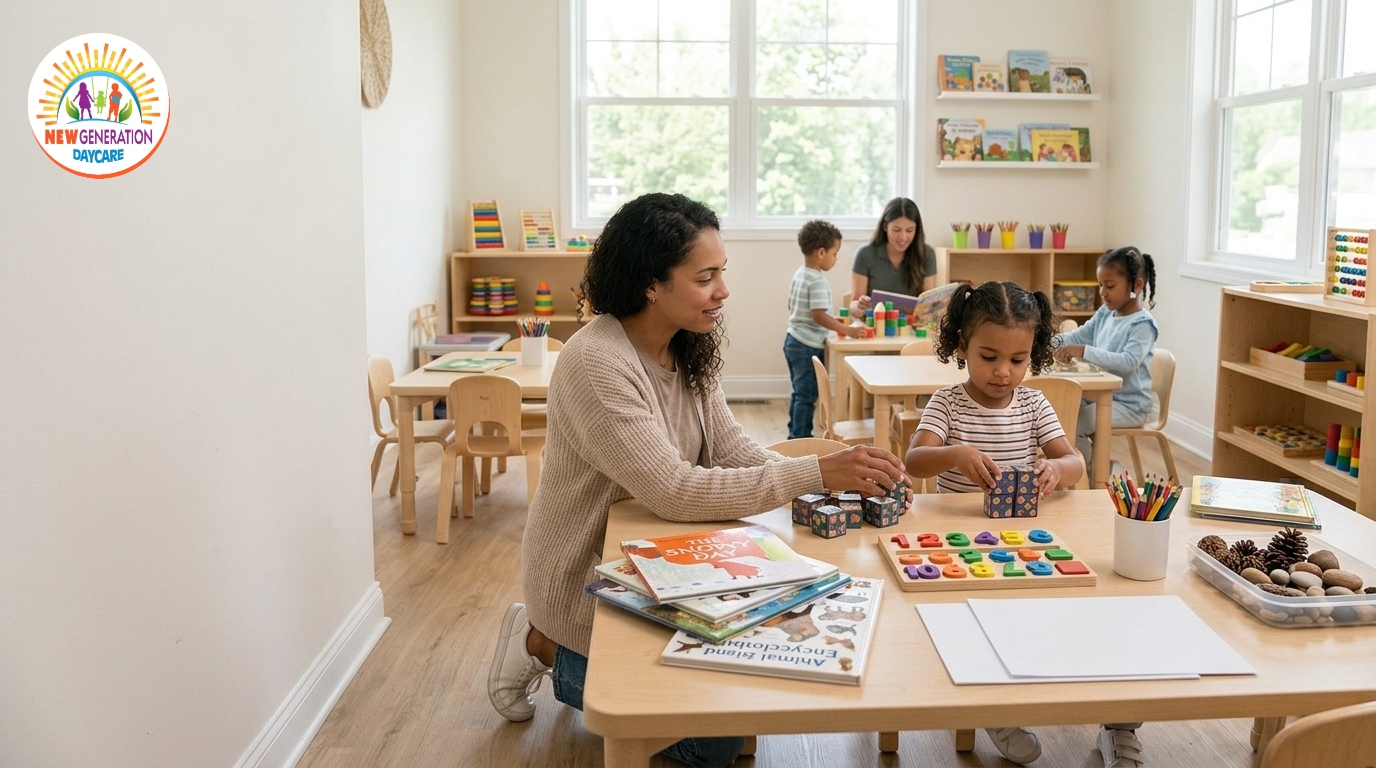
Preschoolers learn constantly, often without realizing they’re learning at all. A simple game of counting spoons at dinner or sorting socks by color can build real skills, the same way structured classroom activities do. For parents in Staten Island looking for ways to support their child’s development outside of the classroom, a few household materials and a bit of time are usually all it takes.
Below are practical, easy preschool activities at home that support different areas of early childhood learning, using items most families already have on hand.
Early Literacy Activities
Building early literacy skills doesn’t require flashcards or workbooks. Everyday conversation and play go a long way.
Letter Hunt Around the House
Choose a letter and see how many objects your child can find around the house that start with that sound. This simple game builds letter and sound awareness in a low-pressure, playful way.
Storytelling With Toys
Use stuffed animals or action figures to act out a simple story together. Ask your child what happens next, encouraging them to build their own narrative and practice vocabulary.
Read and Pause
While reading a favorite book, pause occasionally and ask, “What do you think happens next?” This encourages listening skills and early comprehension, and it turns reading time into an interactive activity rather than a passive one.
Counting and Early Math Activities
Basic math concepts show up naturally in everyday routines, and preschoolers benefit from seeing numbers used in context.
Snack Time Counting
Ask your child to count out crackers, grapes, or pretzels before a snack. This builds one-to-one counting skills in a natural, motivating way.
Sorting Socks or Toys
Sorting laundry or toys by color, size, or type introduces early classification skills, which support later math and logical thinking.
Shape Hunt
Walk around the house or yard and look for shapes, like a circle-shaped plate or a rectangular window. This helps children connect shape names to real objects rather than just pictures.
Drawing and Creative Activities
Creative play gives preschoolers room to experiment without a “right” or “wrong” outcome, which supports both fine motor skills and imagination.
Free Drawing Time
Set out paper and crayons or markers and let your child draw whatever comes to mind. Ask open-ended questions about their drawing rather than guessing what it is.
Collage Making
Save old magazines, cardboard, or fabric scraps and let your child glue pieces together to create their own collage. This activity supports creativity along with fine motor control.
Building With Recycled Materials
Empty boxes, paper towel tubes, and bottle caps can become building materials for a fort, a tower, or an imaginary vehicle. Open-ended building activities like this encourage problem-solving and spatial thinking.
Science and Nature Activities
Preschoolers are naturally curious, and simple science activities can turn everyday observations into learning moments.
Backyard or Park Exploration
Take a short walk and encourage your child to notice leaves, bugs, or weather changes. Asking simple questions like, “Why do you think that leaf is a different color?” encourages early scientific thinking.
Sink or Float Experiment
Fill a bowl or bathtub with water and test different household objects to see which ones sink and which float. This introduces basic cause-and-effect thinking in a hands-on way.
Growing Something Together
Planting a seed in a small cup, even a quick-growing one like grass or beans, gives children a simple way to observe change over time and practice patience.
Sensory Play Activities
Sensory activities help preschoolers explore textures, materials, and cause-and-effect relationships through touch and movement.
Homemade Playdough
A simple flour, salt, and water dough gives children a hands-on material to squeeze, roll, and shape, supporting fine motor development along the way.
Water Play
Filling containers of different sizes with water and pouring between them introduces early measurement concepts and cause-and-effect learning.
Sensory Bins
Fill a shallow container with rice, dried pasta, or beans, and hide small toys inside for your child to find. This kind of activity supports focus and fine motor skills through digging and sorting.
Problem-Solving Activities
Simple, everyday challenges give preschoolers a chance to think through solutions on their own.
Puzzles
Age-appropriate puzzles help children practice patience, spatial reasoning, and persistence when a piece doesn’t fit right away.
Simple Obstacle Courses
Set up pillows, chairs, or blankets as an indoor obstacle course. Children have to figure out how to move through it, which builds both problem-solving and gross motor skills.
Matching Games
Simple matching card games help children practice memory and pattern recognition while also learning to follow game rules.
Fine Motor Skill Activities
Many everyday household tasks double as fine motor practice, even when they don’t look like a formal activity.
Practicing With Child-Safe Scissors
Cutting along drawn lines on paper helps build hand strength and coordination, both important for early writing skills.
Threading Activities
Stringing large beads or pasta onto a shoelace or piece of string builds hand-eye coordination.
Helping With Simple Chores
Tasks like pouring cereal, buttoning a shirt, or zipping a jacket give children real, functional practice with fine motor control.
Social-Emotional Learning Activities
Social-emotional skills grow through everyday interaction, play, and conversation, not just formal lessons.
Emotion Charades
Take turns acting out different feelings, like happy, sad, or surprised, and guessing what emotion is being shown. This helps children build vocabulary around emotions.
Turn-Taking Games
Simple board games or card games that require waiting for a turn help children practice patience and cooperation.
Talking Through Feelings
When your child seems upset or frustrated, naming the feeling out loud (“It looks like you’re feeling frustrated”) can help them build emotional awareness over time.
Bringing Learning Activities Into Everyday Life
None of these activities require special equipment or a lot of preparation. The goal isn’t to turn every moment into a structured lesson, but to notice the everyday opportunities already built into daily life, from grocery shopping to bath time, and use them as natural chances for learning.
For families exploring early childhood learning options in Staten Island, activities like these can also complement what a child is already practicing in a classroom setting, reinforcing skills like counting, communication, and problem-solving in a comfortable, familiar environment at home.
Final Thoughts
Supporting a preschooler’s development at home doesn’t require a curriculum or a trip to the store. Everyday household items, combined with a bit of intentional conversation and play, can support early literacy, math, creativity, motor skills, and social-emotional growth. Whether you’re looking to build on what your child is learning in preschool or simply want some easy activity ideas for a rainy afternoon, small, consistent moments of play tend to add up over time.
Frequently Asked Questions
Do I need special educational toys for these activities?
No. Most of these activities use common household items, like paper, crayons, containers, or pantry staples, rather than specialized educational materials.
How often should I do learning activities with my preschooler?
There’s no set requirement. Even occasional, short activities woven into daily routines, like counting snacks or sorting laundry, can support learning over time.
What if my child loses interest quickly during an activity?
This is normal for young children. Keep activities short, follow your child’s interest, and don’t worry about finishing every step. The process matters more than completing the activity perfectly.
Can these activities replace preschool or structured early education?
These activities are meant to complement early learning, not replace a structured preschool program. They work well alongside a classroom setting to reinforce similar skills at home.
How do I know which activities are right for my child’s age?
Watch your child’s interest and skill level, and adjust activities accordingly. If something feels too easy or too frustrating, it’s fine to simplify or add complexity as needed.
- Preschool Parent-Teacher Communication: What Staten Island Parents Should Know
- What to Pack for Preschool: A Complete Checklist for Staten Island Parents
- Preschool Learning Activities Parents Can Try at Home in Staten Island
- How to Help Your Child Adjust to a New Preschool in Staten Island
- What Age Does Preschool Start in Staten Island? A Parent's Guide
What Age Does Preschool Start in Staten Island? A Parent’s Guide
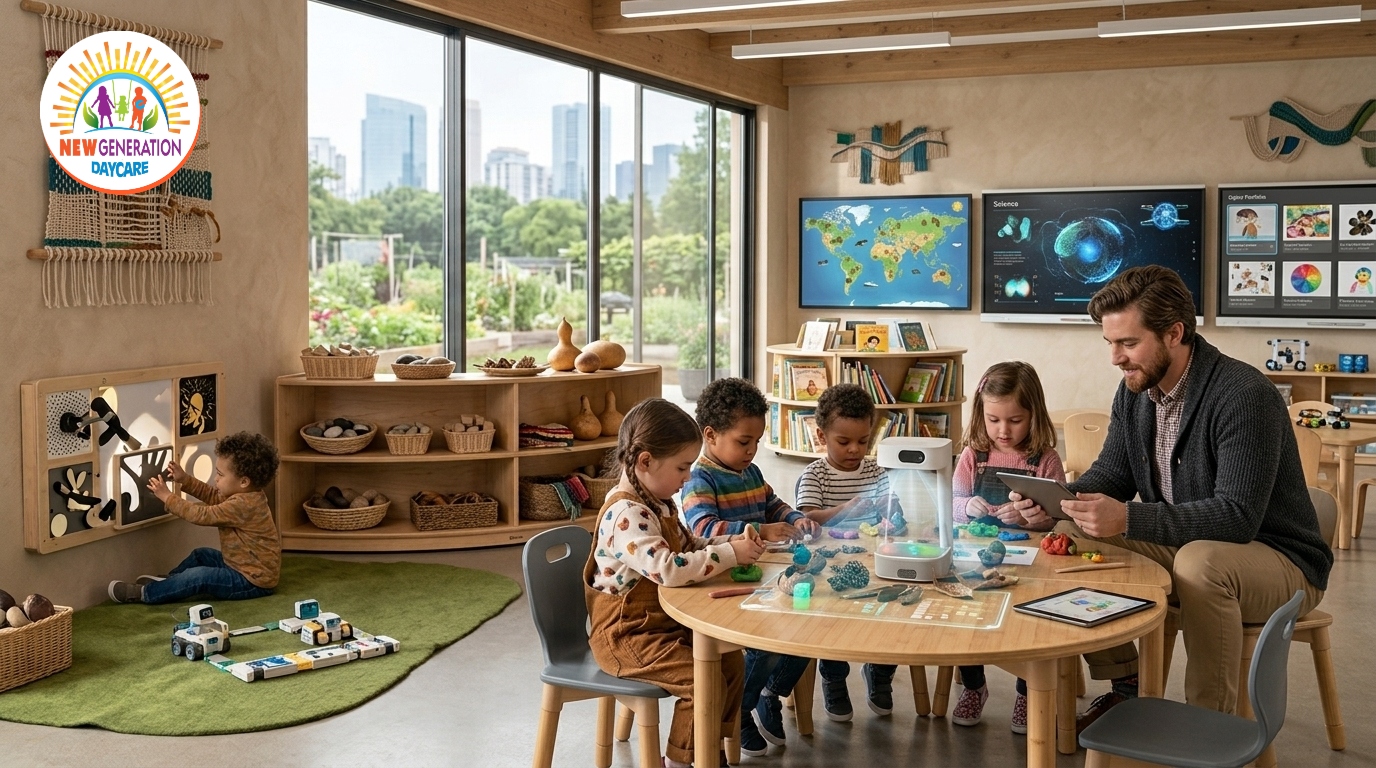
Many children begin preschool around age 3 or 4, but there’s no single “correct” starting age that applies to every child or every school. The right time to start preschool depends on your child’s individual development, your family’s needs, and the specific enrollment requirements of the program you’re considering.
If you’re a Staten Island parent trying to figure out when preschool makes sense for your child, it helps to understand the general age ranges involved, what programs typically look for, and how to recognize readiness in your own child.
What Age Does Preschool Usually Start?
Preschool programs commonly serve children starting around age 3, with many also welcoming 4-year-olds. That said, this is a general pattern, not a fixed rule.
- Preschool around age 3: Many programs consider age 3 a common starting point, often as children gain more language, independence, and comfort in group settings.
- Preschool around age 4: Some children start a year later, either because a program’s age requirements start there or because families choose to wait based on their child’s development.
- Program-to-program differences: Some early childhood centers accept children younger than 3, while others set their minimum age higher. Class structure, staffing, and licensing requirements can all influence this.
Because starting ages vary so much between schools, it’s important to check the specific age requirements of any program you’re considering rather than assuming a universal standard.
Is 2 Too Young for Preschool?
Not necessarily. Some early childhood programs accept children starting at age 2, often in a classroom designed specifically for toddlers before they move into a more structured preschool setting. Whether age 2 is the right time depends heavily on the individual child and the specific program’s approach.
A few factors parents often consider at this age include:
- Communication skills, even simple ones
- Ability to participate in basic group activities
- Comfort being away from a parent for periods of time
- Ability to follow simple routines
- Interest in exploring and trying new things
- Basic self-help skills, like attempting to feed themselves
These are general considerations, not a rigid checklist a child must fully meet before starting. Every child develops differently, and many programs designed for younger toddlers build in extra support for skills that are still developing.
How Do You Know Your Child Is Ready for Preschool?
Readiness looks different for every child, but there are some general signs parents can look for when deciding if the timing feels right:
- Shows curiosity about new activities or environments
- Can participate in simple, predictable routines
- Is beginning to communicate basic needs
- Shows interest in interacting with other children
- Is becoming more independent with small tasks
- Can separate from a parent with some support and reassurance
- Enjoys stories, songs, games, or hands-on activities
It’s worth remembering that children reach these milestones at different rates, and that’s completely normal. A child who isn’t fully independent yet, for example, can still do well in a supportive preschool classroom.
Preschool vs. Toddler Care vs. Pre-K
Understanding how these stages generally differ can help make the decision less confusing:
|
Toddler Care |
Preschool |
Pre-K |
|
|
Typical stage |
Younger, early developmental stage |
Early-to-mid preschool years |
Year(s) before kindergarten |
|
Main focus |
Care, routines, early exploration |
Early academic and social skill-building |
More structured school-readiness skills |
|
Social development |
Early peer exposure |
Regular group interaction |
More advanced group participation |
|
Independence |
Just beginning |
Actively developing |
More established |
|
Kindergarten prep |
Not a primary focus |
Builds foundational skills |
Often a core focus |
These are general patterns, not exact age brackets that apply to every program. Different early learning centers structure their classrooms differently, so it’s worth asking a specific school how it defines and separates these stages.
What Do Children Learn in Preschool?
Preschool generally supports development across several connected areas, including:
- Early literacy and language exposure
- Early math concepts
- Communication skills
- Social-emotional development
- Fine motor skills
- Gross motor skills
- Creative expression
- Simple problem-solving
- Growing independence
At New Generation Learning Center, for example, the preschool classroom includes activities like counting to 10 and identifying objects to build early numerical skills, imaginative play to encourage creativity, and activities that support social and emotional growth alongside critical thinking. The program also includes structured physical activities for gross motor development, practice with pencil grip and early writing for fine motor skills, and art classes and performances for creative expression, guided by certified Early Childhood Education teachers.
What Age Does New Generation Learning Center Accept?
According to New Generation Learning Center’s website, the center welcomes children from age 2 through age 5. This doesn’t mean every child in that range is automatically placed in the same classroom; early learning centers typically group children by age and developmental stage, moving them through different programs as they grow.
For families exploring options in this age range, it’s worth looking specifically at New Generation’s preschool program to understand how it fits into the center’s broader age range and how the classroom supports early academic, social, and physical development.
Questions Parents Should Ask Before Choosing a Preschool
Whether you’re considering New Generation Learning Center or another program, these questions can help you evaluate fit:
- What age range does the program accept, and how are classrooms grouped?
- What does a typical day look like?
- How does the program support social development?
- What learning activities are included in the daily routine?
- How does the program prepare children for the next stage of learning?
- How are parents updated on their child’s progress?
- What are the school’s hours and enrollment procedures?
Asking these questions directly gives you accurate, current answers specific to the program you’re considering, rather than relying on general assumptions.
Final Thoughts
There’s no single perfect age for every child to start preschool. The right decision depends on your child’s developmental stage, your family’s circumstances, the structure of the program you’re considering, that school’s specific age requirements, and how comfortable your child is with routines and group settings.
If you’re weighing your options in Staten Island, reaching out to a program directly, like New Generation Learning Center, is a good way to get clear answers about enrollment and to see whether the classroom environment feels like the right fit for your child.
Frequently Asked Questions
What age do children usually start preschool?
Many children start preschool around age 3 or 4, though this varies by program. Some schools accept children as young as 2, while others set a higher minimum age.
Can a 2-year-old start preschool?
Some early childhood programs do accept 2-year-olds, often in a classroom designed for younger children. Readiness at this age depends on the individual child and the specific program’s approach.
Is 3 a good age to start preschool?
Age 3 is a common starting point for many preschool programs, as children often begin developing more language, independence, and comfort in group settings around this age. However, readiness varies by child.
What is the difference between preschool and Pre-K?
Preschool generally focuses on early academic and social skill-building for younger children, while Pre-K typically involves more structured school-readiness activities in the year or two before kindergarten. Exact ages and structure vary by program.
How do I know if my child is ready for preschool?
Signs of readiness can include curiosity, growing independence, basic communication skills, and interest in interacting with other children. Children develop at different rates, so readiness looks different for every child.
What should parents look for in a preschool program?
Consider the program’s age requirements, daily structure, balance of learning and play, teacher support, and how well the schedule and environment fit your child’s needs and your family’s routine.
- Preschool Parent-Teacher Communication: What Staten Island Parents Should Know
- What to Pack for Preschool: A Complete Checklist for Staten Island Parents
- Preschool Learning Activities Parents Can Try at Home in Staten Island
- How to Help Your Child Adjust to a New Preschool in Staten Island
- What Age Does Preschool Start in Staten Island? A Parent's Guide
How Play-Based Learning Supports Early Childhood Development
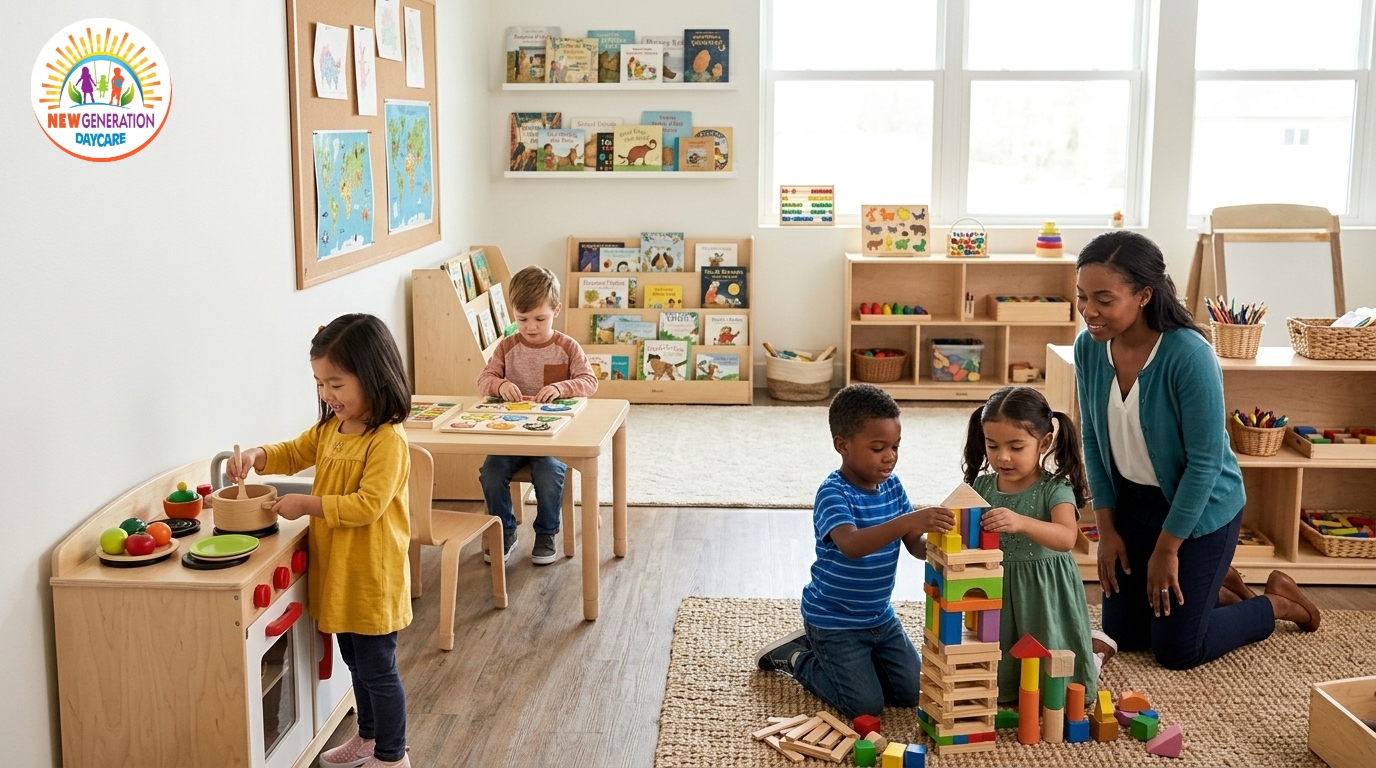
Watch a young child for even a few minutes and you’ll notice something: they’re always doing something. Stacking blocks, pretending to cook dinner, chasing a ball, asking why the sky is blue. Children explore the world by moving, experimenting, imagining, and interacting with the people around them. This is how they learn, long before formal instruction ever enters the picture.
Play isn’t just downtime between “real” learning. When it’s thoughtfully supported, play can become a rich, natural context for children to build skills across nearly every area of development. This is often referred to as play-based learning, and understanding how it works can help parents feel more confident about what their child is really gaining through everyday play, whether at home or in a classroom setting in Staten Island.
What Is Play-Based Learning?
Play-based learning is an approach where children build skills and understanding through activities that involve exploration, imagination, problem-solving, movement, creativity, communication, and social interaction. Instead of sitting through direct instruction, children learn concepts by doing: building, pretending, sorting, moving, and talking with others along the way.
It’s worth noting the difference between play-based learning and simply letting children play unsupervised. Both involve genuine, child-led play, but play-based learning also involves some intentional thought behind it. A teacher or parent might set up an environment with specific materials, ask an open-ended question at just the right moment, or introduce a new word during pretend play. The child still leads the activity and stays actively engaged, but the surrounding environment is designed to support learning along the way.
Why Is Play Important in Early Childhood?
Play gives young children a low-pressure way to explore their surroundings, make their own choices, and try out new skills without the fear of getting something “wrong.” Through play, children test ideas, learn from small mistakes, and build confidence as they figure things out.
Play also gives children regular chances to interact with others, which naturally supports curiosity and social awareness. A child stacking blocks isn’t just building a tower, they’re testing balance, adjusting their approach when it falls, and often inviting a friend to help. None of this requires play to guarantee specific academic outcomes; it simply creates meaningful, repeated opportunities for growth across many areas at once.
7 Ways Play-Based Learning Supports Child Development
1. Cognitive Development and Problem-Solving
Activities like puzzles, block building, sorting games, and pretend scenarios ask children to think through choices, notice patterns, and work out simple problems on their own. A child trying to fit puzzle pieces together, for example, is practicing spatial reasoning and trial-and-error thinking without even realizing it.
Sorting toys by color or size, figuring out how to balance a block tower, or working out how many spoons are needed for a pretend tea party are all small, everyday moments of problem-solving.
2. Language and Communication Skills
Pretend play, storytelling, and group activities give children real reasons to use language. A child narrating a pretend story, asking a friend to pass a toy, or explaining the rules of a made-up game is practicing vocabulary, listening, and conversation skills all at once.
Role-play in particular tends to encourage new vocabulary, since children often try out words and phrases they’ve heard adults use in real-life situations, like “May I take your order?” during pretend restaurant play.
3. Social Skills and Cooperation
Group play naturally requires children to practice sharing, taking turns, and working with others toward a shared goal, whether that’s building a fort together or acting out a story with friends. These moments also involve negotiation, like deciding who plays which role in a pretend game.
Children often need some adult guidance while learning these skills. A teacher or parent stepping in to help two children take turns with a toy isn’t interrupting play, it’s supporting the social learning happening within it.
4. Emotional Development and Self-Regulation
Play gives children a safe space to express emotions and try out different perspectives. Pretend play, in particular, often lets children act out situations that mirror real feelings, like putting a stuffed animal “to bed” after a hard day or acting out a disagreement between characters.
This kind of play can support coping and confidence over time, though it doesn’t eliminate emotional ups and downs. Big feelings are still a normal part of growing up.
5. Creativity and Imagination
Open-ended play, such as drawing, building, dress-up, or inventing stories, gives children room to come up with their own ideas rather than following a single set of instructions. There doesn’t need to be one “correct” way to build a tower or one “right” ending to a pretend story.
This kind of freedom is part of what makes creative play valuable: children get to practice generating and testing their own ideas, which is a skill that extends well beyond the playroom.
6. Fine and Gross Motor Development
Physical play supports both small and large muscle movements. Fine motor skills get practice through activities like drawing, cutting, building with small blocks, and completing puzzles. Gross motor skills develop through running, jumping, climbing, balancing, dancing, and outdoor games.
Both types of movement help children build physical coordination and confidence, whether they’re carefully stacking small blocks or racing across a playground.
7. Independence, Confidence, and Decision-Making
Play often involves small, age-appropriate decisions: which materials to use, how to build something, which role to take in a pretend game, or whether to try a new activity. Making these choices, even small ones, helps children practice independence and build confidence in their own ideas.
Supportive adults play an important role here too, stepping back enough to let a child work through a decision or a challenge on their own, rather than taking over the activity for them.
Examples of Play-Based Learning Activities
Here are a few everyday activities and the kinds of skills children can practice through them:
|
Activity |
What Children Can Practice |
|
Building with blocks |
Problem-solving, spatial awareness, creativity |
|
Pretend restaurant |
Language, social skills, counting |
|
Puzzles |
Problem-solving, concentration |
|
Storytelling |
Vocabulary, communication, imagination |
|
Water or sand play |
Exploration, sensory learning, coordination |
|
Art activities |
Creativity, fine motor skills |
|
Outdoor obstacle courses |
Balance, coordination, confidence |
|
Sorting games |
Early math, classification, observation |
These are simply examples of skills children can practice through play, not guarantees of a specific developmental outcome.
How Teachers Can Support Play-Based Learning
In a classroom setting, effective play-based learning usually involves intentional teaching rather than simply stepping back and letting children play alone. Teachers often support this kind of learning by:
- Preparing engaging, age-appropriate learning environments
- Offering materials that invite exploration
- Observing children’s interests and building on them
- Asking open-ended questions during play
- Introducing new vocabulary naturally
- Helping children navigate cooperation and turn-taking
- Extending a child’s thinking with a follow-up question or idea
- Allowing room for experimentation and mistakes
- Balancing child-led play with more guided activities
This kind of intentional support is really what separates play-based learning from unstructured playtime.
How Parents Can Encourage Learning Through Play at Home
You don’t need a room full of educational toys to support learning through play. Some simple, low-cost ideas include:
- Reading stories together and acting them out
- Building with blocks or household items
- Letting your child help sort laundry or toys by color or type
- Playing pretend games together
- Counting objects during everyday tasks, like setting the table
- Drawing or creating simple art projects
- Playing turn-taking games as a family
- Exploring outdoors and talking about what you notice
- Asking “What do you think will happen?” during an activity
- Letting your child make small choices during play
The real value comes from interaction, curiosity, and conversation, not from expensive materials.
Play-Based Learning in Preschool
A quality preschool environment often brings play-based learning to life by combining play with early academic concepts, social interaction, language development, creative activities, physical movement, and daily routines, all guided by a teacher who understands how young children learn.
If you’re comparing early-learning options, it’s worth asking a prospective preschool program in Staten Island how play is incorporated into their daily learning environment, and how teachers connect that play to their broader early childhood curriculum. As children grow older and move toward a Pre-K program in Staten Island, play often continues to play a role even as academic structure increases.
What Should Parents Look for in a Play-Based Learning Environment?
When evaluating an early-learning center, it can help to look for:
- Safe, age-appropriate materials
- Opportunities for child-led exploration
- Supportive, attentive teachers
- Open-ended activities without a single “correct” outcome
- A mix of indoor and outdoor play
- Regular opportunities for group interaction
- Room for creativity and imagination
- A thoughtful balance between guided learning and independent play
- Activities suited to each child’s developmental stage
If you’re weighing several options, it can help to understand more generally what to look for in an early learning center before making a decision.
Final Thoughts
Play is one of the most natural and effective contexts for early childhood learning. Through everyday play, children have the chance to build cognitive, language, social, emotional, creative, physical, and independence skills, often all within a single afternoon of building, pretending, and exploring.
If you’d like to see how play and learning come together for young children, feel free to explore early learning in Staten Island with New Generation Learning Center.
Frequently Asked Questions
What is play-based learning?
Play-based learning is an approach where children build skills through activities involving exploration, imagination, and hands-on experiences, often supported by intentional guidance from a teacher or parent rather than direct instruction alone.
Why is play important for early childhood development?
Play gives children low-pressure opportunities to explore, make choices, test ideas, and interact with others, which supports growth across cognitive, social, emotional, and physical development.
What are the benefits of play-based learning?
Play-based learning can support problem-solving, language development, social skills, emotional growth, creativity, motor coordination, and independence, often through the same everyday activities.
How can parents use play-based learning at home?
Parents can encourage learning through play by reading together, building with blocks, playing pretend games, counting during daily routines, and asking open-ended questions during everyday activities.
Is play-based learning appropriate for preschool children?
Yes. Play-based learning is widely used in early childhood settings because it aligns with how young children naturally explore and understand the world around them.
- Preschool Parent-Teacher Communication: What Staten Island Parents Should Know
- What to Pack for Preschool: A Complete Checklist for Staten Island Parents
- Preschool Learning Activities Parents Can Try at Home in Staten Island
- How to Help Your Child Adjust to a New Preschool in Staten Island
- What Age Does Preschool Start in Staten Island? A Parent's Guide
Kindergarten Readiness Checklist: 10 Skills Your Child Should Develop Before Kindergarten
Kindergarten is a big milestone, and it’s natural for parents to wonder whether their child is truly ready for it. Many families in Staten Island start asking this question during the preschool or pre-K year, often after hearing about “kindergarten readiness” from a teacher, a friend, or a school open house.
Here’s something worth knowing upfront: kindergarten readiness is about a lot more than knowing letters and numbers. It also includes how a child communicates, plays with others, manages emotions, follows routines, and handles simple daily tasks on their own. This checklist is meant to give you a realistic, supportive picture of the skills that tend to help children settle into kindergarten, not a pass-or-fail test.
What Does Kindergarten Readiness Mean?
Kindergarten readiness is really a mix of several areas of development working together. It generally includes:
- Academic foundations, like early letter and number awareness
- Social skills, such as sharing and cooperating with peers
- Emotional regulation, including coping with frustration
- Communication skills, like expressing needs and following directions
- Independence with everyday tasks
- Physical and motor development
- The ability to follow classroom routines and instructions
No child arrives at kindergarten with every single one of these skills fully developed, and that’s expected. Teachers plan for a wide range of abilities in any classroom. Readiness is best thought of as a general direction of growth, not a checklist that has to be fully checked off before day one.
Kindergarten Readiness Checklist: 10 Skills to Develop
- Recognizing Letters and Basic Sounds
At this stage, many children are becoming familiar with letters, especially the ones in their own name, and starting to understand that letters represent sounds. This early awareness lays some groundwork for reading, though most children are still in the early stages of this process.
To help at home, point out letters during everyday moments, like on signs or cereal boxes, and spend time sounding out your child’s name together. - Early Number and Counting Skills
Basic number sense includes counting objects, recognizing a few numbers, and understanding simple comparisons like “more” and “less.” Children don’t need to do complex math, but a general comfort with counting can help in a kindergarten classroom.
Everyday counting, like counting stairs, snacks, or toys during cleanup, is a simple way to build this skill naturally. - Listening and Following Instructions
Kindergarten classrooms rely heavily on children being able to listen to a teacher and follow simple, multi-step directions, like “put your folder away and sit on the carpet.” This skill takes practice and develops gradually.
At home, try giving two-step instructions during daily routines, such as “put your shoes on, then grab your backpack.” - Communication and Expressing Needs
Being able to speak clearly enough to communicate basic needs, ask questions, and answer simple questions helps children participate in classroom life and interact with teachers and classmates.
Everyday conversation, encouraging your child to describe their day, and asking open-ended questions all support this kind of communication growth. - Social Skills and Playing With Others
Sharing, taking turns, cooperating during group activities, and beginning to understand classroom expectations are all part of the social side of kindergarten readiness. These skills often develop through repeated practice with other children.
Playdates, group activities, and simple turn-taking games at home all give children a chance to practice. - Emotional Regulation
Kindergarten asks children to manage a full day of transitions, group activities, and new social situations. Part of readiness involves gradually learning to identify feelings, cope with frustration, and know when to ask an adult for help.
This doesn’t mean children shouldn’t cry or get upset — that’s a normal part of growing up. It simply means they’re slowly building the tools to handle big feelings with support.
Naming emotions together (“It looks like you’re feeling frustrated”) can help children build this awareness over time. - Independence and Self-Help Skills
Kindergarten classrooms expect a certain level of self-sufficiency with daily tasks, including:- Using the bathroom independently
- Washing hands
- Putting on and taking off simple clothing items
- Managing a backpack
- Cleaning up after activities
- Eating independently
- Practicing these tasks at home, even in small ways, can build confidence before the school year starts.
- Fine Motor Skills
Many classroom activities rely on fine motor coordination, including:- Holding crayons or pencils
- Drawing and coloring
- Cutting with child-safe scissors
- Using glue
- Manipulating small classroom materials, like puzzle pieces or blocks
- These skills tend to develop through regular hands-on play, drawing, and craft activities rather than formal practice.
- Attention and Classroom Participation
Kindergarten requires children to sit for group activities, listen during instruction, and transition between tasks throughout the day. This ability builds gradually, and it’s worth keeping expectations realistic — most five-year-olds are still developing longer attention spans, not mastering them.
Reading together, playing simple games with rules, and practicing short focused activities at home can all help build this skill over time. - Gross Motor Skills and Physical Confidence
Basic movement skills, like running, jumping, balancing, and climbing, support recess, physical education, and general classroom mobility. Comfort with movement also tends to support overall confidence in a new environment.
Outdoor play, active games, and simple movement activities all contribute to this kind of physical development.
How Parents Can Prepare Their Child for Kindergarten
Beyond the specific skills above, there are simple, everyday habits that support kindergarten readiness as a whole:
- Read together daily, even for just a few minutes
- Practice counting during everyday activities, like grocery shopping
- Let your child help with simple household tasks
- Practice getting dressed independently
- Play turn-taking games as a family
- Encourage your child to explain how they’re feeling
- Practice opening lunch containers, backpacks, and zippers
- Create simple, predictable routines at home
- Visit a school or classroom environment ahead of time if possible
None of these need to feel like formal lessons. Most of this readiness-building happens naturally through everyday family life.
What If My Child Isn’t Ready for Every Skill?
If you read through this checklist and notice a few areas where your child could use more practice, that’s completely normal. Children develop at different rates, and being less confident in one area doesn’t mean a child isn’t ready for kindergarten overall.
A few helpful next steps:
- Talk with your child’s current preschool or pre-K teacher about their observations
- Identify one or two specific areas to focus on through everyday play
- Build skills gradually rather than trying to “fix” everything at once
- Avoid comparing your child’s progress to other children’s
- Give your child time, patience, and encouragement along the way
Readiness tends to come together over time, often with support from both home and school.
How Preschool and Pre-K Can Support Kindergarten Readiness
A quality early-learning environment can support many of the skills covered above at once. A good preschool program in Staten Island typically builds early academic awareness alongside social skills, communication, and independence through daily classroom routines and guided play.
As children move into pre-K programs in Staten Island, the focus often shifts toward more structured preparation for kindergarten, including early literacy, number sense, and classroom participation. This kind of progression, supported by a thoughtful early childhood curriculum, gives children repeated, age-appropriate practice with the exact areas that tend to matter most once kindergarten begins.
If you’re considering an early-learning program for your child, visiting in person and asking about daily routines is a good way to see how a classroom supports these skills firsthand — many families find it helpful to schedule a tour before making a decision.
Final Thoughts
Kindergarten readiness isn’t about passing a test or checking every box on a list. It’s about a child building a balanced set of skills over time, including academics, social connection, emotional awareness, independence, and physical confidence. Progress, curiosity, and a willingness to try are often just as meaningful as any single skill.
If you’d like to learn more about how early-learning programs can support your child’s growth before kindergarten, feel free to explore New Generation Learning Center and our early-learning programs in Staten Island.
Frequently Asked Questions
What should a child know before starting kindergarten?
Children benefit from a mix of skills, including early letter and number awareness, communication, social skills, independence with daily tasks, and the ability to follow simple routines. No single skill determines readiness on its own.
How can I tell if my child is ready for kindergarten?
Look at overall progress across academic, social, emotional, and independence skills rather than one specific ability. Talking with your child’s current teacher can also offer helpful, personalized insight.
What social skills are important for kindergarten?
Sharing, taking turns, cooperating during group activities, and beginning to understand classroom routines are all valuable social skills that support a smoother kindergarten transition.
How can I prepare my child for kindergarten at home?
Simple daily habits help, such as reading together, practicing counting, encouraging independence with dressing and cleanup, and playing turn-taking games as a family.
Does my child need to know how to read before kindergarten?
No. Most kindergartens expect early literacy awareness, like recognizing some letters and sounds, rather than full reading ability. Reading skills typically develop further during the kindergarten year itself.
- Preschool Parent-Teacher Communication: What Staten Island Parents Should Know
- What to Pack for Preschool: A Complete Checklist for Staten Island Parents
- Preschool Learning Activities Parents Can Try at Home in Staten Island
- How to Help Your Child Adjust to a New Preschool in Staten Island
- What Age Does Preschool Start in Staten Island? A Parent's Guide
Preschool Daily Schedule: What Does a Typical Day Look Like for Children?
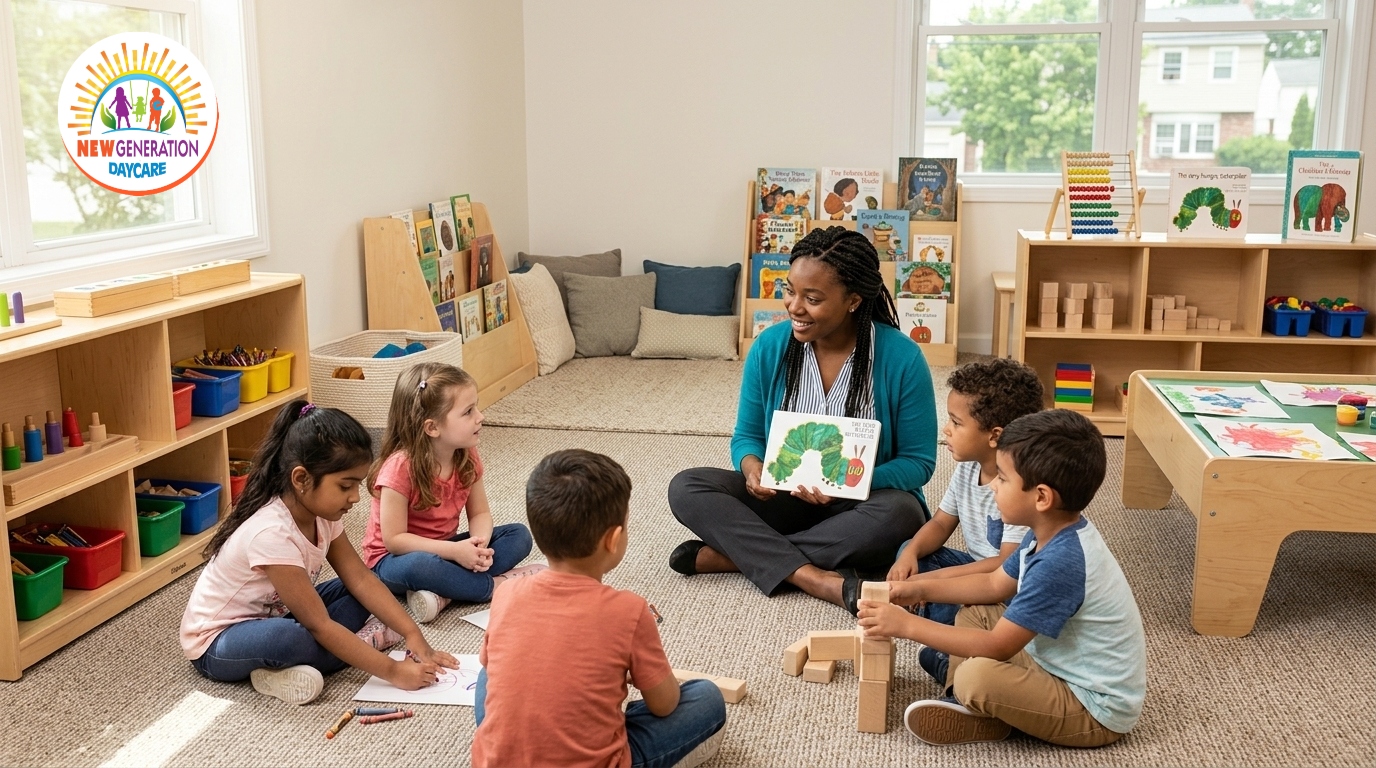
If you’re a parent researching preschool options, you’ve probably wondered what your child’s day actually looks like once you drop them off. It’s a fair question. A preschool day is built around more than just supervision; it usually follows a rhythm designed to help children feel settled, engaged, and ready to participate.
Understanding a typical preschool daily schedule can also help you compare programs and figure out what matters most for your child’s age and personality.
What Does a Typical Preschool Day Look Like?
Most preschool programs follow a general daily routine that balances structured learning, free play, movement, and rest. While the exact order and timing differ from school to school, a typical preschool day usually includes:
- A welcoming arrival period
- Group or circle time
- Hands-on learning activities
- Snack or mealtime
- Outdoor or active play
- Creative activities like art or music
- Story or reading time
- A calm wind-down before pickup
The specific mix depends on the school, the age group, and even the day itself.
Sample Preschool Daily Schedule
To give you a general sense of what a preschool day might include, here’s a sample daily routine. This is an illustrative example only; actual schedules vary by program, classroom, and children’s individual needs.
Arrival and Greeting
Children arrive and are welcomed into the classroom, often with a simple morning routine like hanging up belongings or choosing a quiet activity.
Morning Circle Time
The class gathers as a group for songs, a calendar routine, or a discussion about the day ahead. This is often when early literacy and communication skills get practiced.
Learning Activities
Teachers guide small or large groups through hands-on activities focused on early math, language, or problem-solving.
Snack Time
A short break for a snack, which also gives children a chance to socialize in a more relaxed setting.
Outdoor or Active Play
Time outside or in a gym space supports physical activity and gross motor development.
Creative Activities
Art, music, or imaginative play activities give children room for creative expression.
Story or Reading Time
A quieter part of the day focused on listening skills and early literacy.
Rest or Quiet Time
Depending on the age group, this may include a nap or a calmer, low-stimulation activity.
End-of-Day Routine
A wind-down period before pickup, often including cleanup and a closing group activity.
Again, this is a general example; every preschool structures its day a little differently based on its own approach and the needs of its students.
What Do Children Learn During the Day?
Even in a single day, preschool activities tend to touch on several areas of development at once:
- Language and literacy, through conversation, story time, and vocabulary-building activities
- Early math concepts, through counting, sorting, and hands-on activities
- Social skills, through group activities, sharing, and cooperative play
- Communication, through group discussions and everyday interactions with peers and teachers
- Creativity, through art, music, and imaginative play
- Fine and gross motor skills, through activities like drawing, building with blocks, and outdoor play
- Independence, through daily routines like cleaning up or making simple choices
These areas naturally build on each other throughout the day rather than being taught in isolation.
Why Is a Preschool Routine Important?
A predictable routine gives young children something to rely on. When kids know roughly what to expect next, they tend to transition between activities more smoothly and feel more comfortable participating.
Routines also give children repeated opportunities to practice independence, like following classroom steps without constant reminders, and to build confidence in a familiar structure. Over time, this consistency can make the classroom feel like a safe, understandable place rather than an unpredictable one.
What Should Parents Look for in a Preschool Schedule?
When comparing preschool programs, it helps to look at how a school structures its day. A few things worth considering:
- Age-appropriate activities suited to your child’s developmental stage
- A reasonable balance between structured learning and free play
- Built-in time for movement and physical activity
- Regular opportunities for social interaction
- Flexible, well-managed transitions between activities
- Appropriate meal, snack, or rest periods for the age group
- An overall environment that feels safe and nurturing
Asking a school directly about its daily schedule is one of the best ways to understand whether the pacing and structure will suit your child.
Preschool at New Generation Learning Center in Staten Island
At New Generation Learning Center, our preschool program incorporates many of the developmental areas parents look for in a preschool day. Children work on early numeracy skills like counting to 10 and identifying objects, take part in imaginative play and dramatic arts, and build both gross and fine motor skills through structured activities and early writing practice.
Certified Early Childhood Education teachers guide the program and is part of our broader curriculum, which continues to build on these skills as children progress toward our Pre-K program.
If you’d like to see how a day unfolds in our classroom, you’re welcome to schedule a tour and get a firsthand look at our preschool program in Staten Island.
Frequently Asked Questions
What does a typical preschool day look like?
A typical preschool day generally includes arrival time, group activities, hands-on learning, outdoor play, creative activities, and a rest or quiet period, though the exact schedule varies by program.
How long is a preschool day?
Preschool day length varies significantly by program, ranging from a few hours to a full day. It’s best to check directly with a specific school about its hours.
What activities do children do in preschool?
Common preschool activities include circle time, early math and literacy exercises, art and creative play, outdoor time, and group social activities.
Why is a daily routine important for preschoolers?
A predictable routine helps children understand what to expect, transition more easily between activities, and build independence and confidence in the classroom.
How should parents choose a preschool program?
Consider the school’s daily structure, teacher qualifications, classroom environment, and how well the schedule and activities suit your child’s age and needs. Visiting the school and asking about a typical day can help you evaluate fit.
- Preschool Parent-Teacher Communication: What Staten Island Parents Should Know
- What to Pack for Preschool: A Complete Checklist for Staten Island Parents
- Preschool Learning Activities Parents Can Try at Home in Staten Island
- How to Help Your Child Adjust to a New Preschool in Staten Island
- What Age Does Preschool Start in Staten Island? A Parent's Guide
