


Kindergarten Readiness Checklist: 10 Skills Your Child Should Develop Before Kindergarten
Kindergarten is a big milestone, and it’s natural for parents to wonder whether their child is truly ready for it. Many families in Staten Island start asking this question during the preschool or pre-K year, often after hearing about “kindergarten readiness” from a teacher, a friend, or a school open house.
Here’s something worth knowing upfront: kindergarten readiness is about a lot more than knowing letters and numbers. It also includes how a child communicates, plays with others, manages emotions, follows routines, and handles simple daily tasks on their own. This checklist is meant to give you a realistic, supportive picture of the skills that tend to help children settle into kindergarten, not a pass-or-fail test.
What Does Kindergarten Readiness Mean?
Kindergarten readiness is really a mix of several areas of development working together. It generally includes:
- Academic foundations, like early letter and number awareness
- Social skills, such as sharing and cooperating with peers
- Emotional regulation, including coping with frustration
- Communication skills, like expressing needs and following directions
- Independence with everyday tasks
- Physical and motor development
- The ability to follow classroom routines and instructions
No child arrives at kindergarten with every single one of these skills fully developed, and that’s expected. Teachers plan for a wide range of abilities in any classroom. Readiness is best thought of as a general direction of growth, not a checklist that has to be fully checked off before day one.
Kindergarten Readiness Checklist: 10 Skills to Develop
- Recognizing Letters and Basic Sounds
At this stage, many children are becoming familiar with letters, especially the ones in their own name, and starting to understand that letters represent sounds. This early awareness lays some groundwork for reading, though most children are still in the early stages of this process.
To help at home, point out letters during everyday moments, like on signs or cereal boxes, and spend time sounding out your child’s name together. - Early Number and Counting Skills
Basic number sense includes counting objects, recognizing a few numbers, and understanding simple comparisons like “more” and “less.” Children don’t need to do complex math, but a general comfort with counting can help in a kindergarten classroom.
Everyday counting, like counting stairs, snacks, or toys during cleanup, is a simple way to build this skill naturally. - Listening and Following Instructions
Kindergarten classrooms rely heavily on children being able to listen to a teacher and follow simple, multi-step directions, like “put your folder away and sit on the carpet.” This skill takes practice and develops gradually.
At home, try giving two-step instructions during daily routines, such as “put your shoes on, then grab your backpack.” - Communication and Expressing Needs
Being able to speak clearly enough to communicate basic needs, ask questions, and answer simple questions helps children participate in classroom life and interact with teachers and classmates.
Everyday conversation, encouraging your child to describe their day, and asking open-ended questions all support this kind of communication growth. - Social Skills and Playing With Others
Sharing, taking turns, cooperating during group activities, and beginning to understand classroom expectations are all part of the social side of kindergarten readiness. These skills often develop through repeated practice with other children.
Playdates, group activities, and simple turn-taking games at home all give children a chance to practice. - Emotional Regulation
Kindergarten asks children to manage a full day of transitions, group activities, and new social situations. Part of readiness involves gradually learning to identify feelings, cope with frustration, and know when to ask an adult for help.
This doesn’t mean children shouldn’t cry or get upset — that’s a normal part of growing up. It simply means they’re slowly building the tools to handle big feelings with support.
Naming emotions together (“It looks like you’re feeling frustrated”) can help children build this awareness over time. - Independence and Self-Help Skills
Kindergarten classrooms expect a certain level of self-sufficiency with daily tasks, including:- Using the bathroom independently
- Washing hands
- Putting on and taking off simple clothing items
- Managing a backpack
- Cleaning up after activities
- Eating independently
- Practicing these tasks at home, even in small ways, can build confidence before the school year starts.
- Fine Motor Skills
Many classroom activities rely on fine motor coordination, including:- Holding crayons or pencils
- Drawing and coloring
- Cutting with child-safe scissors
- Using glue
- Manipulating small classroom materials, like puzzle pieces or blocks
- These skills tend to develop through regular hands-on play, drawing, and craft activities rather than formal practice.
- Attention and Classroom Participation
Kindergarten requires children to sit for group activities, listen during instruction, and transition between tasks throughout the day. This ability builds gradually, and it’s worth keeping expectations realistic — most five-year-olds are still developing longer attention spans, not mastering them.
Reading together, playing simple games with rules, and practicing short focused activities at home can all help build this skill over time. - Gross Motor Skills and Physical Confidence
Basic movement skills, like running, jumping, balancing, and climbing, support recess, physical education, and general classroom mobility. Comfort with movement also tends to support overall confidence in a new environment.
Outdoor play, active games, and simple movement activities all contribute to this kind of physical development.
How Parents Can Prepare Their Child for Kindergarten
Beyond the specific skills above, there are simple, everyday habits that support kindergarten readiness as a whole:
- Read together daily, even for just a few minutes
- Practice counting during everyday activities, like grocery shopping
- Let your child help with simple household tasks
- Practice getting dressed independently
- Play turn-taking games as a family
- Encourage your child to explain how they’re feeling
- Practice opening lunch containers, backpacks, and zippers
- Create simple, predictable routines at home
- Visit a school or classroom environment ahead of time if possible
None of these need to feel like formal lessons. Most of this readiness-building happens naturally through everyday family life.
What If My Child Isn’t Ready for Every Skill?
If you read through this checklist and notice a few areas where your child could use more practice, that’s completely normal. Children develop at different rates, and being less confident in one area doesn’t mean a child isn’t ready for kindergarten overall.
A few helpful next steps:
- Talk with your child’s current preschool or pre-K teacher about their observations
- Identify one or two specific areas to focus on through everyday play
- Build skills gradually rather than trying to “fix” everything at once
- Avoid comparing your child’s progress to other children’s
- Give your child time, patience, and encouragement along the way
Readiness tends to come together over time, often with support from both home and school.
How Preschool and Pre-K Can Support Kindergarten Readiness
A quality early-learning environment can support many of the skills covered above at once. A good preschool program in Staten Island typically builds early academic awareness alongside social skills, communication, and independence through daily classroom routines and guided play.
As children move into pre-K programs in Staten Island, the focus often shifts toward more structured preparation for kindergarten, including early literacy, number sense, and classroom participation. This kind of progression, supported by a thoughtful early childhood curriculum, gives children repeated, age-appropriate practice with the exact areas that tend to matter most once kindergarten begins.
If you’re considering an early-learning program for your child, visiting in person and asking about daily routines is a good way to see how a classroom supports these skills firsthand — many families find it helpful to schedule a tour before making a decision.
Final Thoughts
Kindergarten readiness isn’t about passing a test or checking every box on a list. It’s about a child building a balanced set of skills over time, including academics, social connection, emotional awareness, independence, and physical confidence. Progress, curiosity, and a willingness to try are often just as meaningful as any single skill.
If you’d like to learn more about how early-learning programs can support your child’s growth before kindergarten, feel free to explore New Generation Learning Center and our early-learning programs in Staten Island.
Frequently Asked Questions
What should a child know before starting kindergarten?
Children benefit from a mix of skills, including early letter and number awareness, communication, social skills, independence with daily tasks, and the ability to follow simple routines. No single skill determines readiness on its own.
How can I tell if my child is ready for kindergarten?
Look at overall progress across academic, social, emotional, and independence skills rather than one specific ability. Talking with your child’s current teacher can also offer helpful, personalized insight.
What social skills are important for kindergarten?
Sharing, taking turns, cooperating during group activities, and beginning to understand classroom routines are all valuable social skills that support a smoother kindergarten transition.
How can I prepare my child for kindergarten at home?
Simple daily habits help, such as reading together, practicing counting, encouraging independence with dressing and cleanup, and playing turn-taking games as a family.
Does my child need to know how to read before kindergarten?
No. Most kindergartens expect early literacy awareness, like recognizing some letters and sounds, rather than full reading ability. Reading skills typically develop further during the kindergarten year itself.
- Preschool Parent-Teacher Communication: What Staten Island Parents Should Know
- What to Pack for Preschool: A Complete Checklist for Staten Island Parents
- Preschool Learning Activities Parents Can Try at Home in Staten Island
- How to Help Your Child Adjust to a New Preschool in Staten Island
- What Age Does Preschool Start in Staten Island? A Parent's Guide
Pre-K Staten Island: Where Little Learners Build Big Futures
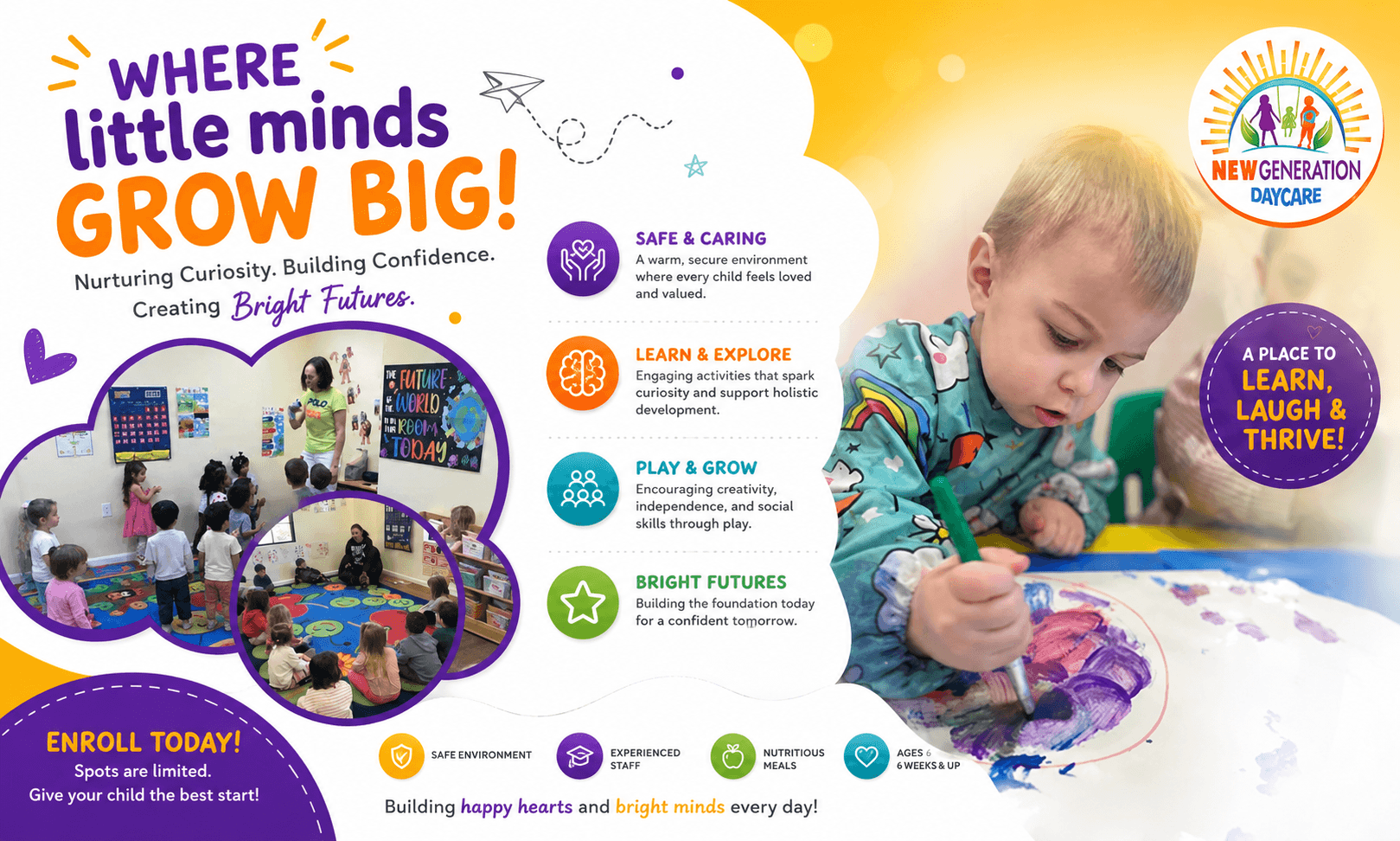
The preschool years are a time of growth. Children develop early academic skills while learning to communicate, socialize, solve problems, and become more independent. For families looking for a nurturing Pre-K Staten Island option, choosing a program that balances structured learning with hands-on discovery can make the transition to kindergarten more confident and enjoyable.
A Strong Foundation for Kindergarten
A designed Pre K program Staten Island families choose should prepare children for the classroom while making learning exciting. New Generation Learning Center offers a comprehensive pre-kindergarten approach that supports academic, social, emotional, and physical development through age-appropriate experiences.
Children can benefit from:
- Early literacy: Stories, sight words, letter activities, and foundational reading skills encourage a love of books.
- Early math: Counting, skip counting, measurement, time, and basic money concepts introduce children to practical mathematics.
- Science discovery: Hands-on activities encourage children to observe, ask questions, make predictions, and explore the world around them.
- Creative expression: Art, crafts, music, and imaginative activities give children opportunities to express ideas and build confidence.
- Social development: Group activities help children practice sharing, cooperation, communication, and respectful interactions.
- Motor development: Engaging activities strengthen fine and gross motor skills needed for writing, movement, and everyday independence.
Learning Through Exploration
Young children learn by participating and discovering. A quality Pre-K Staten Island program at New Generation Learning Center combines guided instruction with interactive experiences that encourage curiosity. Daily routines such as circle time can also strengthen listening, communication, attention, and classroom participation.
Individualized Support for Every Child
Every child develops differently. Effective early learning programs recognize individual learning styles and adapt activities to support each child’s needs. Personalized lesson planning can help children build confidence while developing skills at an appropriate pace. The curriculum also emphasizes emotional intelligence, independence, teamwork, empathy, critical thinking, and problem-solving.
Why Choose a Local Pre-K Program?
For Staten Island families, a located program can make daily routines easier while giving children a consistent learning environment close to home. A welcoming center with bright classrooms, nurturing teachers, enrichment activities, and family-focused support can create a positive experience for children and parents. The Staten Island location is at 389 Seaver Avenue, Staten Island, NY 10305.
The goal of a Pre K program Staten Island families can rely on is not simply to teach facts. It is to help children become confident learners ready to ask questions, build relationships, follow routines, and approach new experiences with enthusiasm.
Give Your Child a Bright Start
Choosing early education is a decision. Look for a program that combines learning, creativity, social development, and caring guidance in one environment. New Generation Learning Center provides Staten Island families with an engaging early learning experience designed to help children grow today and for tomorrow.
Schedule a tour to explore the classrooms, meet the teachers, and learn more about enrollment. A strong start today can help your child step into kindergarten with confidence and a lasting love of learning.
- Preschool Parent-Teacher Communication: What Staten Island Parents Should Know
- What to Pack for Preschool: A Complete Checklist for Staten Island Parents
- Preschool Learning Activities Parents Can Try at Home in Staten Island
- How to Help Your Child Adjust to a New Preschool in Staten Island
- What Age Does Preschool Start in Staten Island? A Parent's Guide
Building Bright Futures: Top Pre-K Programs in Staten Island

Early childhood education plays a critical role in preparing children for lifelong learning and success. For families in Staten Island, enrolling children in a quality Pre-K Staten Island program ensures they receive the guidance, support, and skills necessary to thrive academically and socially. A well-structured Pre K program Staten Island combines nurturing care with engaging learning experiences to develop curiosity, confidence, and a love for learning.
Why Pre-K Education Matters
Pre-K programs provide a foundation in cognitive, social, and emotional development. At a trusted Pre-K Staten Island center, children engage in age-appropriate activities that stimulate creativity, critical thinking, and problem-solving. Through play-based learning, arts and crafts, interactive Storytime, and group activities, children develop essential skills that prepare them for kindergarten and beyond.
A high-quality Pre K program Staten Island focuses on more than academics. Social-emotional learning is a core component, helping children build relationships, communicate effectively, and manage emotions. Educators guide children in collaborative activities, encouraging teamwork, empathy, and self-confidence while fostering a supportive and safe learning environment.
Key Features of a Strong Pre-K Program
When choosing a Pre-K Staten Island or Pre K program Staten Island, families should look for:
- Experienced and Caring Educators – Certified teachers trained in early childhood education who provide personalized attention.
- Structured Curriculum – Balanced programs combining play, academics, and social development.
- Safe and Stimulating Environment – Classrooms and play areas designed to encourage exploration while maintaining safety standards.
- Parent Engagement – Open communication, progress updates, and opportunities to participate in activities.
Benefits of Local Pre-K Programs
Choosing a nearby Pre-K Staten Island program allows families to stay closely involved in their child’s early learning journey. Proximity makes it easier to participate in events, meet teachers, and observe progress. Local center also fosters community connections, giving children the opportunity to build friendships in a familiar and supportive setting.
Why Choose New Generation Learning Center
At New Generation Learning Center, children receive individualized attention and comprehensive early education. Their Pre K program Staten Island combines a nurturing environment with a structured curriculum designed to support academic, social, and emotional growth. With experienced educators and a focus on holistic development, New Generation Learning Center provides children with the skills and confidence needed to succeed in school and in life.
Investing in quality early education through a trusted Pre-K Staten Island program lays the foundation for a lifetime of learning and growth. Families seeking a safe, engaging, and educational environment will find the guidance and support they need at New Generation Learning Center.
- Preschool Parent-Teacher Communication: What Staten Island Parents Should Know
- What to Pack for Preschool: A Complete Checklist for Staten Island Parents
- Preschool Learning Activities Parents Can Try at Home in Staten Island
- How to Help Your Child Adjust to a New Preschool in Staten Island
- What Age Does Preschool Start in Staten Island? A Parent's Guide
A Bright Start for Young Learners with Quality Pre-K Education in Staten Island

Early childhood education lays the groundwork for a child’s academic, social, and emotional success. Choosing the right Pre-K Staten Island program helps young learners build confidence, curiosity, and essential skills before stepping into kindergarten. Parents in Staten Island often look for programs that blend learning with play in a warm, supportive environment.
A well-structured Pre K program Staten Island focuses on age-appropriate learning experiences that encourage exploration and independence. Children are introduced to early literacy, math concepts, and creative expression through engaging, hands-on activities that make learning enjoyable and meaningful.
At New Generation Learning Center, the Pre-K experience is thoughtfully designed to support the overall development of each child. The program goes beyond academics, placing strong emphasis on emotional growth, social interaction, and positive behavior. Children learn to follow routines, express themselves confidently, and interact respectfully with peers and teachers.
A quality Pre-K Staten Island program prepares children for a smooth transition into kindergarten by helping them adapt to structured classroom settings. Daily schedules promote consistency, while guided activities strengthen listening skills, problem-solving abilities, and early critical thinking.
Key Benefits of a Strong Pre-K Program
A comprehensive Pre K program Staten Island typically includes:
- Early literacy development through storytelling, reading, and phonics
- Introduction to basic math skills using counting, sorting, and games
- Creative activities such as art, music, and imaginative play
- Social skill building through group activities and teamwork
- Development of independence and confidence through guided routines
- Safe, clean, and nurturing classroom environments
The Pre K program Staten Island at New Generation Learning Center is designed to keep children engaged while allowing them to learn at their own pace. Personalized attention from experienced educators ensures that every child receives the support they need to grow academically and socially.
Safety and communication are important priorities for families. A trusted Pre-K Staten Island program maintains structured supervision, secure facilities, and clear daily routines. Regular communication with parents helps keep families informed about milestones, classroom activities, and developmental progress.
Social interaction is another vital part of early education. Through shared play and collaborative learning, children develop empathy, cooperation, and communication skills. These abilities form the foundation for strong relationships and emotional intelligence later in life.
Families continue to choose New Generation Learning Center for its commitment to nurturing young learners and preparing them for future success. By combining academics, creativity, and care, the program creates a balanced and enriching early education experience.
In summary, selecting the right Pre-K Staten Island option is an important investment in a child’s future. A high-quality Pre K program Staten Island equips children with the skills, confidence, and enthusiasm they need to thrive in kindergarten and beyond.
- Preschool Parent-Teacher Communication: What Staten Island Parents Should Know
- What to Pack for Preschool: A Complete Checklist for Staten Island Parents
- Preschool Learning Activities Parents Can Try at Home in Staten Island
- How to Help Your Child Adjust to a New Preschool in Staten Island
- What Age Does Preschool Start in Staten Island? A Parent's Guide
Inspiring Early Learning: Premier Pre-K and Preschool in Staten Island

The early years of a child’s life are filled with discovery, growth, and important milestones. Choosing the right program sets the tone for lifelong success. If you are searching for exceptional Pre k Staten Island programs, high-quality Preschool Staten Island options, or nurturing Toddler care Staten Island families trust, finding a center that blends education with compassion is essential.
At New Generation Learning Center, we believe every child deserves a strong foundation built on encouragement, exploration, and individualized attention. Our welcoming environment supports children at every stage helping them gain confidence, independence, and essential academic skills.
Building Strong Foundations in Pre-K
Our structured Pre k Staten Island program prepares children for kindergarten and beyond. Through a balanced curriculum that combines hands-on learning and guided instruction, children develop early literacy, math readiness, and critical thinking skills.
Daily activities include:
- Letter and number recognition
- Early writing practice
- Science exploration
- Creative arts and music
- Social-emotional development exercises
We focus not only on academics but also on building self-confidence and positive peer relationships. Small class sizes ensure each child receives personal attention and encouragement from our experienced educators.
A Preschool Experience That Encourages Growth
Families seeking a dependable Preschool Staten Island program want more than childcare. They want an enriching learning experience. Our preschool classrooms are designed to inspire curiosity and imagination. Through play-based learning center, circle time discussions, and group activities, children develop communication skills and teamwork.
At New Generation Learning Center, our teachers guide children through structured routines that provide both stability and excitement. By encouraging exploration and creativity, we help young learners discover their unique strengths while preparing them for future academic success.
Compassionate and Engaging Toddler Care
Early development begins long before preschool. Our nurturing Toddler care Staten Island program focuses on language development, motor skills, and early social interaction. Toddlers learn best through movement, play, and sensory experiences, and our classrooms are designed to stimulate curiosity in a safe and caring setting.
We create daily schedules that balance structured activities with free exploration. From story time and music to hands-on play and outdoor fun, every moment is an opportunity for growth. Teachers provide gentle guidance to help toddlers build independence while feeling secure and supported.
A Trusted Partner for Families
New Generation Learning Center is proud to support families throughout every stage of early childhood. We prioritize safety, cleanliness, and open communication so parents feel confident in their choice. Flexible scheduling options and a welcoming atmosphere make our center a convenient solution for busy families.
When searching for reliable Pre k Staten Island, enriching Preschool Staten Island, or compassionate Toddler care Staten Island, families consistently choose our center for its dedication to excellence.
Schedule a tour today and discover how New Generation Learning Center can help your child build a strong, confident start toward a bright academic future.
- Preschool Parent-Teacher Communication: What Staten Island Parents Should Know
- What to Pack for Preschool: A Complete Checklist for Staten Island Parents
- Preschool Learning Activities Parents Can Try at Home in Staten Island
- How to Help Your Child Adjust to a New Preschool in Staten Island
- What Age Does Preschool Start in Staten Island? A Parent's Guide
