


What a Licensed Daycare in Staten Island Actually Means
Every childcare website in New York says licensed somewhere on it. It appears in the footer, on the about page, in the first paragraph of the homepage, and almost nowhere does anybody explain what the word actually covers. Which is a shame, because it is the one claim a parent can verify independently in about ninety seconds, without taking anyone’s word for anything.
This guide explains who licenses daycare in New York City, how to look up any center yourself including ours, and the more useful question of what licensing does and does not tell you. New Generation Learning Center holds a valid license issued by the NYC Department of Health and Mental Hygiene, Bureau of Child Care, and we would rather you check that than believe it.
Who Licenses Daycare in New York City
In most of New York State, child care programs are overseen by the Office of Children and Family Services. New York City is the exception. Group child care programs operating inside the five boroughs, which includes Staten Island, are licensed and inspected by the New York City Department of Health and Mental Hygiene, through its Bureau of Child Care.
That distinction matters when you are searching online, because a lot of general advice about checking a daycare license points parents at the statewide system, which will not list a Staten Island center. If you look us up in the wrong database and find nothing, the conclusion to draw is that you are in the wrong database.
How to Check Any Center Yourself
The Health Department runs a public tool called NYC Child Care Connect. It is free, it requires no account, and it is the single most useful thing a parent can use while shortlisting centers.
It lets you:
- Look up licensed child care programs in a given neighborhood, so you can see what actually exists near you rather than only what advertises well
- Search inspection records for a specific program
- Compare child care centers across the city against each other
- Sign up for text or email notices about a particular location, which is worth doing for the center you choose even after your child has started
That last one is the feature almost nobody uses and probably should. A license is not a permanent state. Signing up for notices means you hear about changes at your child’s center from the Health Department rather than from the parents’ group chat.
What to Do With What You Find
Inspection records take a little interpreting, and the instinct to treat any finding as disqualifying is usually the wrong one.
Centers are inspected regularly, and regular inspection of a busy building full of small children tends to surface something. What matters more than whether a center has ever had a finding is the pattern: how serious the findings were, whether they relate to health and safety or to paperwork, whether the same issue appears repeatedly across years, and how quickly things were corrected.
A center with a handful of minor administrative findings corrected promptly is in a very different position from one with repeated findings in the same area. And a center that is happy to discuss its record with you when you ask is telling you something that no document can.
Licensing Is the Floor, Not the Ceiling
Here is the part worth being honest about. A license means a center has met the city’s requirements to operate. It is a minimum standard, not a measure of quality, and two licensed centers on the same street can offer completely different experiences to a child.
So verify the license first, because a center without one should end the conversation immediately. Then stop treating it as the answer and start asking about everything licensing does not measure: who actually teaches in the room, how long staff stay, what the day is structured around, and how the center communicates when something goes wrong.
What We Do Beyond the License
Our own answers to those questions are on the site rather than held back for a sales conversation. Our programs run from age 2 through 5, across toddlers, preschool and Pre-K, and our preschool year is guided by certified Early Childhood Education teachers. We also run a summer camp for ages 5 to 13.
|
What parents ask about |
What we do |
|
Hours |
Monday to Friday, 6:30 AM to 6:30 PM |
|
Ages |
2 to 5 years old, plus summer camp for ages 5 to 13 |
|
Discipline |
Positive discipline, built on redirection and positive reinforcement |
|
Daily communication |
Photos and daily reports shared through Procare |
|
Outdoor space |
A renovated, fenced-in playground that includes a garden |
|
Conferences |
A back-to-school night annually, plus conferences on request at any point |
|
Closures |
Major holidays only, with the exact dates sent to families each August |
|
Billing |
Monthly, due by the 5th, paid by cash, credit card or check |
More on how we approach the whole thing is on our why New Generation page, and the FAQ answers the practical questions in more detail.
The Access Policy, and Why It Exists
This one deserves explaining properly because it surprises people. Parents are generally not permitted inside beyond scheduled office visits. Read cold, that can sound like a center with something to hide, and the opposite is true.
Controlled access only means something if it applies to everyone. A building where any adult can walk through the classrooms because they are somebody’s parent is a building with no access control at all, and the children it fails to protect are everybody’s. The policy is there for the same reason you would want it applied to the other twenty families. Our safety and security page covers how the building works in practice.
What to Verify on a Tour
Come with the license already checked, so you can spend the visit on the things the record cannot tell you. The questions worth asking, at any center:
- How long have the teachers in my child’s room been here? Staff consistency matters more to a young child than almost anything on a brochure.
- Can I see the license, and are you happy to talk through your inspection history?
- What does the day actually look like, hour by hour?
- How will I hear about my child’s day, and how quickly would I hear if something went wrong?
- Who is permitted to collect my child, and how is that verified at pickup?
- What happens when a child is having a difficult week?
On the second one, our answer is yes to both. Ask to see the license when you visit. A center that hesitates on that question has answered a different, more useful question.
Visiting Us in Staten Island
We are at 389 Seaver Avenue, Staten Island, NY 10305, and you can reach us on (718) 987-7596. Tours run at 6:00 PM on weekdays and we are happy to accommodate weekends, so you can schedule a tour around a working day rather than taking time off for it.
Enrollment forms and other paperwork are on our parent resources page, our extra activities bring dance and soccer into the building, and our services overview covers what we offer across every age group. Look us up on Child Care Connect first, then come and see the rooms.
Frequently Asked Questions
Who licenses daycare centers in Staten Island?
Group child care programs in New York City, including Staten Island, are licensed and inspected by the New York City Department of Health and Mental Hygiene through its Bureau of Child Care. This differs from the rest of New York State, where the Office of Children and Family Services has that role, which is why statewide lookup tools will not show a Staten Island center.
How do I check if a daycare is licensed in NYC?
Use NYC Child Care Connect, the Health Department’s free public tool. You can look up licensed programs in a neighborhood, search inspection records for a specific center, compare centers across the city, and sign up for text or email notices about a particular location. No account is needed.
Is New Generation Learning Center licensed?
Yes. New Generation holds a valid license issued by the NYC Department of Health and Mental Hygiene, Bureau of Child Care. You are welcome to look us up on NYC Child Care Connect before you visit, and to ask to see the license when you do.
Should a past inspection finding rule a center out?
Not automatically. Centers are inspected regularly and most records contain something. What matters is the pattern: how serious the findings were, whether they concern health and safety or administration, whether the same issue repeats across years, and how quickly it was corrected. A center willing to discuss its record with you is giving you information no document can.
Does a license mean a daycare is good?
No. A license means a center meets the city’s requirements to operate, which is a minimum standard rather than a measure of quality. Verify it first, because a center without one should end the conversation. Then ask about the things licensing does not measure, such as staff consistency, the structure of the day, and how the center communicates with families.
Why are parents not allowed inside the classrooms?
Parents are generally not permitted inside beyond scheduled office visits, because controlled access only protects children if it applies to every adult. A building where any parent can move freely through the classrooms has no meaningful access control, and the policy exists for the same reason you would want it applied to every other family.
Does My Child Have to Nap at Daycare?
This question comes up on almost every tour, usually in the same slightly apologetic tone, as though it were a small thing to be asking about. It is not a small thing. Sleep is the hinge the whole family routine swings on, and a parent who has finally got bedtime working does not want a childcare decision to undo it.
So here is a straight answer about how rest time works, what happens when a child will not sleep, and whether an afternoon nap at New Generation Learning Center is going to cost you your evening.
The Short Answer
No child can be made to sleep. Any center that promises your child will nap is promising something it cannot deliver, because sleep is not a behavior a teacher can instruct.
What a center can do, and what a good one does, is build a rest period into the day: lights down, voices down, a defined space for each child, and a stretch of time where the expectation is quiet. Children who need the sleep take it. Children who do not still get the pause, which for a two or three year old is almost as valuable as the sleep itself.
In our toddler program we provide comfortable sleeping cots for naptime rest, within a structured daily routine. The structure is the part that does the work. A rest period that happens at a predictable point every day, in the same place, is far more likely to produce actual sleep than one improvised around whatever else is happening.
Why the Pause Matters Even Without Sleep
It is worth separating two things that get bundled together. One is sleep. The other is the break in stimulation, and the second has value on its own.
A young child in a group setting is working hard all morning, and not mainly at the activities. They are managing noise, negotiating with other children, waiting for turns, and holding themselves together in a room full of people. That is genuinely tiring in a way that does not look tiring from the outside. An hour of lying still in a dim room, even wide awake, resets a lot of that.
Which is why the late afternoon is usually when behavior goes sideways in centers that skip the rest period. The child who falls apart at four o’clock is very often not hungry or bored. They are depleted.
What If My Child Will Not Sleep?
Extremely common, and more so at the start. A child who naps reliably at home may not sleep for the first week or two in a new room, because the room is new, the sounds are new, and there are eighteen other interesting people in it.
That usually settles as the routine becomes familiar, which is one of the better arguments for consistency in the early weeks. A child who attends on a predictable pattern finds the rhythm faster than one whose days vary.
If your child is past napping altogether, the thing to ask any center is what a non-sleeping child does during the rest period, and whether that answer sounds like something your child could sustain. This is a fair and specific question, and we would rather you asked it on a tour so you get our actual answer for your child’s age group rather than a general one here. You can schedule a tour at 6:00 PM on a weekday or on a weekend.
Will a Daycare Nap Ruin Bedtime?
This is the real question behind the question, and the honest answer is that it can, but usually it is the timing rather than the nap that causes the problem.
A nap that ends in the early afternoon leaves a long enough stretch of awake time before bedtime for a child to build up tiredness again. A nap that runs late, or starts late, compresses that stretch and pushes bedtime back. Two children napping the same length of time can have completely different evenings depending on when that nap finished.
If bedtime starts sliding after your child starts at a center, the useful thing is not to ask for the nap to be cut. It is to find out when it is happening and how long it ran. We share photos and daily reports through Procare, which means that information is available to you on the day rather than reconstructed from a tired child’s account of it.
The other half of the equation is daylight and movement, and it is frequently overlooked. Our toddler program includes supervised outdoor play sessions twice daily, and physical activity through dance, indoor activities and outdoor sports games, some of it through our extra activities. A child who has been outside twice and moved properly sleeps differently from one who has not.
Rest Time Across the Ages
Sleep needs change quickly between two and five, and the same child can move through all of these stages inside eighteen months.
|
Stage |
What is usually happening |
What tends to help |
|
Around age 2 |
A midday sleep is still genuinely needed most days |
A consistent time and place, and a predictable wind-down |
|
Around age 3 |
Sleep becomes less reliable, some days yes, some no |
Keeping the rest period whether or not sleep happens |
|
Around age 4 |
Many children are dropping the nap entirely |
Quiet occupation rather than an expectation of sleep |
|
Transition weeks |
Overtired evenings and earlier bedtimes |
Moving bedtime earlier for a while rather than fighting it |
None of that runs on a schedule, and children do not read the table. A child in our preschool room may still need the sleep, and a child in Pre-K may have dropped it a year earlier. Where your child sits is a conversation with their teacher rather than a function of which room they are in.
The Transition Away From Napping
The weeks when a child is giving up the nap are reliably the hardest, and they catch parents out because the trigger looks like progress. Your child stops sleeping in the afternoon, so you assume they no longer need it, and then the evenings get noticeably worse for a month.
What is usually happening is that they are between stages: no longer able to fall asleep in the afternoon, not yet able to run the full day without it. The most effective thing most families do is move bedtime earlier for that period rather than trying to restore the nap. It feels like going backwards and it generally is not.
It is also worth telling us when this starts happening at home, because the picture at the center and the picture at home are often different, and neither one is complete on its own. If you are genuinely concerned about your child’s sleep rather than just the logistics of it, that is a conversation for your pediatrician, who can look at the whole picture properly.
What to Ask Us
Rest time is one of the areas where general answers are least useful, because it depends on your child’s age, your child’s current stage, and your own evening routine. These are the questions worth bringing to a tour:
- When does rest time happen in my child’s room, and roughly how long does it run?
- What does a child who is not sleeping do during that period?
- Will you wake my child if the nap is running long, and will you tell me how long they slept?
- What does the wind-down into rest time look like?
- How does rest time change between the toddler, preschool and Pre-K rooms?
- Can I bring something from home for my child to rest with?
The third one matters more than it sounds. Knowing the length of the nap is what lets you adjust bedtime intelligently rather than guessing, and it is the single most useful piece of information a center can give a parent about sleep. Our FAQ covers daily communication and the rest of the practical detail.
Visiting Us in Staten Island
We are at 389 Seaver Avenue, Staten Island, NY 10305, on (718) 987-7596, and we are open Monday through Friday from 6:30 AM to 6:30 PM for children aged 2 to 5. Tours run at 6:00 PM on weekdays, and we are happy to accommodate weekends.
Come and see the room your child would actually rest in. You can read about our wider approach on the why New Generation page, see how the day is structured across our programs and our curriculum, and find enrollment forms on our parent resources page.
Frequently Asked Questions
Does my child have to nap at daycare?
No child can be made to sleep, and no center can promise that they will. What a center provides is a rest period: a quiet, defined time and place where the expectation is stillness. Children who need the sleep take it, and children who do not still get the break in stimulation, which has real value on its own.
What happens if my child will not sleep?
It is very common, especially in the first week or two in a new room, and it usually settles as the routine becomes familiar. If your child has stopped napping altogether, ask us what a non-sleeping child does during the rest period in their specific age group, since the answer differs by room.
Will a nap at daycare affect bedtime?
It can, and the timing matters more than the length. A nap that ends in the early afternoon leaves enough awake time for tiredness to rebuild before bedtime, while one that runs late compresses it. If bedtime starts sliding, find out when the nap happened and how long it lasted rather than asking for it to be cut.
How will I know how long my child slept?
We share photos and daily reports through Procare, so that information reaches you on the day rather than being reconstructed at pickup. Knowing the length of the nap is what lets you adjust bedtime deliberately instead of guessing.
When do children stop napping?
It varies widely. A midday sleep is still genuinely needed by most children around age 2, becomes less reliable around 3, and many children drop it around 4. Children do not follow a schedule, so a child in preschool may still need it while a child in Pre-K dropped it a year earlier. If you are concerned about your child’s sleep itself rather than the logistics, speak to your pediatrician.
What do you provide for rest time?
Our toddler program provides comfortable sleeping cots for naptime rest within a structured daily routine. The predictability is a large part of what makes rest time work, and the program also includes supervised outdoor play twice daily, which affects how well children settle.
Preschool vs Pre-K at New Generation in Staten Island
This is the question we field most often on tours, and it is a fair one, because the two words get used interchangeably almost everywhere except inside an actual classroom. Parents arrive assuming preschool and Pre-K are two names for the same thing, and then wonder why we are asking which one their child is ready for.
They are not the same year, and the difference is not a matter of branding. At New Generation Learning Center in Staten Island we run them as two separate programs with two different sets of goals, because a four year old and a three year old need genuinely different things. Here is what changes between them, and how to tell which one your child belongs in.
The Short Answer
Preschool comes first. Pre-K is the year immediately before kindergarten. Both sit inside the broader category of early childhood education, and both are preschool in the loose everyday sense of the word, but Pre-K is a specific, final, preparatory year with school readiness as its explicit job.
Our center welcomes children from 2 to 5 years old, and those years run as a ladder: toddlers, then preschool, then Pre-K. Each step is built to hand the child off to the next one ready. You can see how the whole sequence fits together on our programs page.
What Age Is Pre-K?
Pre-K is generally the year a child turns four, running into the year they turn five, immediately before kindergarten. Preschool is generally the year before that, around age three.
Age is the starting point rather than the whole answer. Two children can both be four and be in different places on handling a full group, sitting through circle time, or managing their own belongings. We look at where a child actually is rather than only at a birth date, which is why the conversation on a tour tends to be about your child specifically rather than about a cut-off.
What Actually Changes Between the Two Years
The clearest way to see the difference is to put the two sets of goals side by side. These are the real objectives from our own two programs, not general descriptions.
|
Preschool |
Pre-K |
|
|
Math |
Counting to 10, identifying and counting objects |
Counting to 100, skip counting by twos and fives |
|
Literacy |
Early writing techniques, proper pencil grip |
Sight words and foundational reading skills |
|
Main focus |
Building the foundations |
School readiness for kindergarten |
|
Science |
Exploration through play and the senses |
Hands-on projects, raising butterflies, observing ladybugs, exploring soil |
|
Structure |
Imaginative play with props, dramatic arts |
Daily circle time, lessons adapted to each learning style |
|
Also covered |
Gross and fine motor skills, art, performances |
Concepts of time, measurement, and basic financial literacy |
Look at the math row. Counting to 10 and counting to 100 with skip counting are not the same skill with a bigger number attached, they are a year of development apart. The same is true across the table. Preschool builds the machinery. Pre-K puts it to work on the things a kindergarten teacher will expect on day one.
Inside Our Preschool Program
Our preschool program is where children move from parallel play into genuine group learning. The year is built around foundations rather than output.
- Counting to 10 and accurately identifying and counting objects, which is where numerical sense actually begins
- Imaginative play with props, exploring dramatic arts and building creativity
- Social and emotional growth through activities that develop critical thinking
- Gross motor development through structured physical activities and games
- Fine motor skills, including proper pencil grip and early writing techniques
- Creative expression through art classes and annual performances
The whole year is guided by certified Early Childhood Education teachers and shaped by our curriculum, and it is designed explicitly to prepare children for our Pre-K program rather than to stand alone.
Inside Our Pre-K Program
Our Pre-K program has one job above all others, which is sending a child into kindergarten ready. That shapes everything in it.
- Sight words and foundational literacy skills, the groundwork for reading
- Counting to 100 and skip counting by twos and fives
- Concepts of time and basic measurement
- Basic financial literacy, including the concept of money
- Daily circle time to build interaction and communication
- Hands-on science, including raising butterflies, observing ladybugs and exploring soil
- Lessons adapted to each child’s individual needs and learning style
The butterflies are worth pausing on. Raising them is not a craft activity dressed up as science, it is a multi-week observation project with a life cycle a four year old can follow start to finish. That kind of sustained attention is itself a kindergarten readiness skill, separate from anything learned about insects.
Which One Does My Child Need?
In most cases age answers it. Where it does not, these are the questions we actually weigh:
- Has your child been in a group setting before, or would this be their first? A child starting with us at four with no prior experience often does better easing in rather than going straight to the most structured year.
- When will they start kindergarten? If it is next September, Pre-K is the year you want, because that window does not come round again.
- How do they handle a full day and a structured routine? Pre-K asks more of a child’s stamina and attention than preschool does.
- Where are they with language and communication? This matters more than counting, because almost everything else in a classroom runs through it.
If you are not sure, that is exactly what a visit is for. We are happy to look at your child’s situation specifically rather than give you a rule. You can schedule a tour and we will talk it through.
The Year Before, and the Year After
For children joining us earlier, our toddler program starts at age 2 and does the groundwork that makes preschool possible: a structured daily routine, circle time with story time, art, music and block play, rhymes and alliteration for early language, vocabulary building, sensory exploration, and supervised outdoor play twice daily. We also collaborate with Childcare Resources to provide early screening so that any child who needs extra support gets it early rather than late.
After Pre-K, children move on to kindergarten elsewhere, but many families stay connected to us through our summer camp, which runs for ages 5 to 13. It is a common pattern here: a child finishes Pre-K in June and is back in the same building a few weeks later with teachers they already know.
What Both Years Share
Some things do not change between the two programs, and they are often the things parents care about most.
Both run on the same positive discipline approach, built on redirection and positive reinforcement rather than punishment, and applied consistently so children are not reading different rules from different adults. Both share photos and daily reports through Procare, so you are not waiting until pickup to hear how the day went. Both have access to our extra activities, which bring dance and soccer into the building with trained coaches. And both use our fenced-in playground, which has been renovated and includes a garden.
We are open Monday through Friday from 6:30 AM to 6:30 PM and hold a valid license issued by the NYC Department of Health and Mental Hygiene, Bureau of Child Care. Our safety and security standards apply the same way across every classroom, and more on our overall approach is on the why New Generation page.
Visiting Us in Staten Island
We are at 389 Seaver Avenue, Staten Island, NY 10305, and you can reach us on (718) 987-7596. Tours run at 6:00 PM on weekdays, and we are happy to accommodate weekends. Enrollment forms, the handbook and other paperwork live on our parent resources page, and the FAQ covers hours, billing, licensing and daily communication.
Bring your questions about which program fits. It is a better conversation in person, standing in the room your child would actually be in, than it is over the phone.
Frequently Asked Questions
Is Pre-K the same as preschool?
No. Preschool comes first, generally around age three. Pre-K is the specific year immediately before kindergarten, generally the year a child turns four. Both are early childhood education, but Pre-K has school readiness as its explicit goal, and the classroom work reflects that.
What age is Pre-K?
Pre-K is generally the year a child turns four, running into the year they turn five, so that kindergarten follows directly after. At New Generation we take children from 2 to 5 years old across our toddler, preschool and Pre-K programs.
What is the difference between preschool and Pre-K?
The goals differ. Our preschool program focuses on foundations: counting to 10, proper pencil grip, early writing, imaginative play and motor development. Our Pre-K program focuses on kindergarten readiness: sight words, counting to 100 with skip counting, concepts of time and measurement, basic financial literacy, and sustained hands-on science projects.
Can my child skip preschool and go straight to Pre-K?
Sometimes, and it depends on the child rather than on a rule. A four year old starting kindergarten next September needs the Pre-K year, so that is usually the right placement. A child with no previous group experience may do better easing in. We would rather look at your child specifically on a tour than give a blanket answer.
What are your hours and ages?
We are open Monday through Friday from 6:30 AM to 6:30 PM, and we welcome children from 2 to 5 years old. We also run a summer camp program for ages 5 to 13.
Are you licensed?
Yes. New Generation holds a valid license issued by the NYC Department of Health and Mental Hygiene, Bureau of Child Care, and you are welcome to ask to see it when you visit.
Before and After School Care in Staten Island
The school day and the working day have never lined up, and for most families in Staten Island that mismatch shows up twice daily. School starts after you need to be out the door, and it finishes hours before you can get back. The arrangements families build to cover those two gaps tend to be held together with goodwill, grandparents and other people’s carpools, and they fall apart the moment one person gets sick.
We offer before and after school care for elementary school age children at New Generation Learning Center, and it exists to replace that patchwork with something steady. Here is how it works, what the building is like for a school-age child, and what to ask us when you visit.
Our Hours Are the Whole Point
We are open Monday through Friday from 6:30 AM to 6:30 PM. That twelve hour window is the single most important thing on this page, because it is what makes both ends of the day workable rather than just one.
A 6:30 AM opening means you can drop off and still make a commute into Manhattan or Brooklyn at a sensible hour, rather than negotiating with a program that opens at 7:30 and leaves you an hour short. A 6:30 PM close means a delayed ferry, a meeting that overruns or traffic on the expressway does not turn into a crisis. Most centers give you one of those two. The gap between a program’s hours and a parent’s actual day is where childcare arrangements usually break.
Before School
Mornings are deliberately calm. A child arriving at 6:45 is not ready to be organized at anybody, and the worst thing a morning program can do is run them through a schedule before the day has properly started.
The time is for settling: somewhere to sit, something to eat, quiet activities, and the company of other children doing the same thing. For a lot of families the real value is simply that the morning stops being a sprint. You are not waking a child at the last possible moment and moving them straight into a car, and that changes the tone of the whole day for both of you.
After School
Afternoons run the other way. Children arrive having been quiet and compliant since the morning bell, and what they need first is food and the chance to move, not a worksheet.
Our fenced-in playground has been renovated and includes a garden, and it does a lot of work in the afternoon for exactly this reason. Children who have been sitting all day need somewhere to be loud and physical before anything else is asked of them. Our extra activities also run in the building, bringing dance and soccer with trained coaches, so an activity your child does can happen where they already are rather than requiring another drive at the end of your workday.
Once children have eaten and moved, the afternoon settles into quieter time. The structure matters more than any individual activity in it. Children who know what comes next argue less, settle faster, and handle the long stretch between school and home far better than children managing a different arrangement every day of the week.
The Same Building Your Younger Child Already Knows
For families with more than one child, this is often the deciding factor. If you already have a two, three or four year old with us, before and after school care means one drop-off and one pickup rather than two stops in opposite directions.
It also means your older child is somewhere already familiar. A child who came through our preschool and Pre-K programs and then started elementary school does not have to start over somewhere new at three o’clock. Same building, same playground, staff they already know. That continuity is worth more to a six year old than any particular activity on a schedule.
The same logic runs through the year. Many families who use us during term time move into our summer camp, which runs for ages 5 to 13, so there is no gap in care and nothing new to adjust to in the one stretch of the year when the school routine disappears completely.
Licensing, Safety and Who Collects Your Child
New Generation holds a valid license issued by the NYC Department of Health and Mental Hygiene, Bureau of Child Care. That is the first thing worth verifying about any program you are considering, here or anywhere else, and you are welcome to ask to see it when you visit.
For the safety and privacy of every child in our care, parents are generally not permitted inside beyond scheduled office visits. We know that sounds restrictive, and the reason is straightforward: every adult moving freely through the building is somebody else’s child’s security. Controlled access is what makes the policy mean anything. Our safety and security page sets out how that works in more detail.
Discipline runs the same way for school-age children as for everyone else here. We use positive discipline built on redirection and positive reinforcement rather than punishment, applied consistently by every member of staff so children are not reading different rules depending on who is in the room.
Staying in the Loop During the Day
Photos and daily reports are shared through Procare, our communication platform. For a parent at work, that means you are not waiting until pickup to find out whether your child arrived, how the afternoon went, or whether anything came up.
Beyond the daily updates, we hold a back-to-school night annually at the start of the year, and you are welcome to schedule a conference with your child’s teacher at any point rather than waiting for a set slot. Enrollment forms and other paperwork are on our parent resources page.
Billing and Closures
Tuition is billed monthly and is due by the 5th of each month. We accept cash, credit cards and checks. Billing runs on a predictable monthly cycle rather than varying week to week, which makes it easier to plan around.
We close only on major holidays, and a detailed list of the exact dates is distributed to families annually, typically in August. That means you can book your own time off against a known calendar rather than discovering a closure the week before it happens.
What to Ask Us
Every family’s situation is slightly different, and some of what matters most to you will depend on your child’s school and your own schedule. These are the questions worth bringing to a tour, and we would rather answer them specifically for your family than give a general answer here:
- Which schools do the children in the program currently come from, and how do they get here?
- What ages are in the group at the moment, and where would my child sit within that?
- Can we use the program on some days and not others, and how is that billed?
- What does the afternoon actually look like between arrival and pickup?
- What happens on school half days, snow days and school holidays?
- Who is permitted to collect my child, and how is that verified?
Call us on (718) 987-7596 and we will give you straight answers, including if the answer is that a particular arrangement is not something we can cover. You can also look through our FAQ and our services overview before you call.
Come and See an Afternoon
An after school program is difficult to judge from a description, because what matters is the feel of the room at four o’clock rather than a list of activities. Tours run at 6:00 PM on weekdays and we are happy to accommodate weekends. Schedule a tour and come at a time when children are actually in the building.
We are at 389 Seaver Avenue, Staten Island, NY 10305. If you want more background on how we approach things across every age group we serve, the why New Generation page covers it, and our full programs run from age 2 through our summer camp for 5 to 13 year olds.
Frequently Asked Questions
What are your hours for before and after school care?
We are open Monday through Friday from 6:30 AM to 6:30 PM. The early opening covers morning drop-off before school and commuting time, and the 6:30 PM close gives working parents room at the other end of the day.
What ages do you take for before and after school care?
The program is for elementary school age children. Our main center programs run from ages 2 to 5, and our summer camp covers ages 5 to 13, so school-age children are familiar ground for us. Call us on (718) 987-7596 to confirm the fit for your child’s age.
Are you licensed?
Yes. New Generation holds a valid license issued by the NYC Department of Health and Mental Hygiene, Bureau of Child Care. You are welcome to ask to see it when you visit.
How will I know how my child’s day went?
Photos and daily reports are shared through Procare, our communication platform, so you get updates during the day rather than waiting for pickup. We also hold a back-to-school night annually and you can request a conference with your child’s teacher at any point in the year.
How is billing handled?
Tuition is billed monthly and is due by the 5th of each month. We accept cash, credit cards and checks.
What days are you closed?
We close only on major holidays. A detailed list of the exact closure dates is distributed to families annually, typically in August, so you can plan your own time off around it.
Can my younger child attend the center too?
Yes. We welcome children from 2 to 5 years old across our toddler, preschool and Pre-K programs, so families with children at different stages can use one drop-off and one pickup rather than two.
Daycare Sick Policy at New Generation Learning Center
It is 6:40 in the morning. Your child is a bit warm, slightly off, and has eaten about half their breakfast. You have a meeting you cannot move. Every parent has stood in that kitchen trying to work out whether this is a real illness or just a slow start, and nobody makes that call well under pressure.
We would rather you knew how we approach this before you are standing there. This page explains the thinking behind our health and illness policy, what licensed centers in New York generally look for, and how we work with families through a winter. We share our complete written policy with every family at enrollment, and we are glad to walk you through it on a tour before you commit to anything.
One note before we start. This page explains our general approach. It is not medical advice, and it does not replace your pediatrician. Anything concerning about your child’s health is a question for a doctor, and we will always say so.
Quick Reference
These are the thresholds licensed childcare centers in New York commonly work to. They are a guide to what to expect rather than a substitute for the written policy we give you at enrollment.
|
Symptom |
Usually |
Typical Return |
|
Fever of 100.4°F or higher |
Stay home |
24 hours fever-free without medication |
|
Vomiting, two or more episodes |
Stay home |
24 hours with no vomiting |
|
Diarrhea, frequent or not contained |
Stay home |
24 hours with normal stools |
|
Runny nose, no fever, child is well |
Usually fine to attend |
Not applicable |
|
Persistent cough disrupting activity |
Often stay home |
When settled and able to take part |
|
Unexplained or spreading rash |
Stay home |
After a doctor confirms it is not contagious |
|
Pink eye with discharge |
Stay home |
Commonly 24 hours after treatment begins |
|
Too unwell to join in |
Stay home |
When able to participate comfortably |
If you take one line from this page, make it the last row. Beyond any specific threshold, the question that settles most borderline mornings is whether your child can take part in a normal day with us. A child who cannot join activities, needs constant one-to-one comfort, or is too uncomfortable to settle is not going to have a good day here, whatever the thermometer says.
Fever, and the Rule Most Parents Miss
Fever is the clearest line and the one handled most strictly, because it is the most reliable signal that a body is fighting something. The common threshold is 100.4 degrees Fahrenheit, or 38 degrees Celsius.
The part that catches families out is the return rule, so it is worth being direct about it. A child generally needs to be fever-free for a full 24 hours without fever-reducing medication. Giving a dose at 7am and dropping off at 8am does not meet that. The medication suppresses the fever rather than resolving the illness, it wears off around mid-morning, and we then have to call you. Your child has had a worse day than they needed to, you have left work anyway, and other children have been exposed in the meantime. The 24 hour clock starts from the last time the temperature was normal on its own.
We say this plainly because it is not an attempt to be difficult. It is the one rule where working around it reliably produces a worse outcome for everyone, including the child.
Vomiting and Diarrhea
These are handled strictly almost everywhere, and for good reason. Stomach bugs move through a group of young children faster than almost anything else, and the common causes are highly contagious.
The usual standard is two or more episodes of vomiting within 24 hours meaning a day at home, with a return once there has been a full 24 hours without any. Diarrhea is generally judged on frequency and whether it can be contained, and a child in diapers with frequent loose stools will usually be asked to stay home even if they otherwise seem well.
One honest complication: not all vomiting is illness. A child can be sick from coughing hard, from crying, or from something that simply did not agree with them. If your child vomits once and seems entirely well afterwards with no other symptoms, tell us at drop-off rather than leaving it. We would far rather know and keep an eye out than be surprised at eleven o’clock.
Why We Do Not Exclude for a Runny Nose
This is the area where parents and centers most often disagree, so we want to be clear about where we stand.
A runny nose on its own is not a reason to keep a child home. Young children in group care get a great many colds, particularly in their first year with us, and a center that excluded every child with a runny nose would be empty from October to March. Colored mucus is not in itself a reason either, despite how often that comes up.
What changes the answer is the whole picture. A cough severe enough to interrupt activities or sleep, any difficulty breathing, a cold with a fever alongside it, or a child who is simply miserable all point toward a day at home. Difficulty breathing in particular is not a wait-and-see symptom, and it is a call to your pediatrician rather than a decision about attendance.
It is also worth saying that the frequency settles. The first winter in group care is genuinely the hardest, and families are often surprised by how often a child is unwell during it. By the second year the pattern is noticeably easier, which is a direct result of the immune exposure the first year provided. If your child is new to us, our guide on helping a child adjust to a new program covers the wider first-term picture, of which illness is one part.
Rashes and Common Childhood Illnesses
Any rash that appears without an obvious explanation should be looked at before a child attends, because several contagious illnesses show up first as a rash.
A few that come up regularly in early childhood settings, with the general pattern for each. Hand, foot and mouth disease is extremely common in young children and moves through a group quickly, and centers typically consider whether the child is fever-free, whether open sores can be kept covered, and whether a drooling child can be managed hygienically. Chickenpox generally means staying home until all lesions have crusted over. Strep throat usually requires 24 hours on antibiotics first. Conjunctivitis, commonly called pink eye, is typically 24 hours after treatment begins where there is discharge.
Your pediatrician’s guidance and our written policy both take precedence over any general pattern. What matters most practically is simply telling us the diagnosis. We often need to notify other families of an exposure, and we cannot do that if we do not know.
How We Communicate With You
A sick policy is only as good as the communication around it, and this is something we take seriously.
We share pictures and daily reports of your child’s activities through Procare, our communication platform, so you are not relying on a three-year-old’s summary of their own day. If your child seems off, you will usually hear about it from us before it becomes a collection call. If we do need you to collect, we will tell you what we are seeing rather than simply citing a rule.
It works in both directions, and the more you tell us the better we can look after your child. If they were up in the night, say so at drop-off. If a sibling has a stomach bug, mention it. If a doctor has diagnosed something, let us know what it is. None of this results in your child being excluded unnecessarily. It helps us watch for the right things. Our article on parent-teacher communication goes further into how we work with families generally, and you can arrange a conference with your child’s teacher at any point in the year.
Why We Hold the Line on This
We know the rules can feel inflexible when you are the parent rearranging a working day, so here is the reasoning.
A classroom of young children is an efficient transmission environment. They touch everything, they touch each other, and hand hygiene at that age is a work in progress no matter how carefully we manage it. One child attending while contagious can produce a wave affecting a dozen families over the following fortnight, including families with newborn siblings, elderly relatives at home, or someone undergoing medical treatment.
There is a staffing dimension too. A child who is unwell needs considerably more individual attention, which pulls a teacher away from the rest of the room. And a center relaxed about exclusion ends up with sick staff, which is how a center ends up short-handed in the middle of winter. The policy protects your child on the days they are the one at home, as well as the days they are here. Our safety and security page covers our broader approach, and we hold a valid license issued by the NYC Department of Health and Mental Hygiene, Bureau of Child Care.
Planning for Sick Days Before You Need To
Every family using childcare faces this repeatedly, and the ones who cope best worked it out in advance rather than at 6:40 in the morning.
- Give us two backup people who can collect your child at short notice, and keep those details current
- Know your own employer’s policy on sick dependents before you need to use it
- If two parents are working, agree in advance how you will split sick days rather than negotiating in the moment
- Keep a working thermometer somewhere accessible rather than buried in a cupboard
- Keep a full change of clothes here at all times, since illness is rarely tidy
- Read our written health policy at enrollment rather than discovering it mid-illness
- Build the expectation of several sick days into your first winter, particularly for a child new to group care
On the spare clothes, our preschool packing checklist covers what should be in a bag year-round, and it matters more in winter than at any other time. On billing during absences, our FAQ page sets out how tuition works, including that it is billed monthly with payment due by the 5th.
Get Our Full Written Policy
Everything above is the thinking. The document is the detail, and we would rather you read it before you enroll than during your first bad week.
Ask us for our health and illness policy on a tour and we will go through it with you properly, including exactly when a child can return, what we need from a doctor, and how we handle an illness that moves through a classroom. We run tours at 6:00 PM on weekdays or by arrangement at weekends, which keeps it off your working day. You can also see our programs and parent resources while you are here.
Frequently Asked Questions
What temperature is too high to send a child to daycare?
The common threshold is 100.4 degrees Fahrenheit, or 38 degrees Celsius. At or above that, a child should stay home, and we will call you to collect if it develops during the day. A child generally needs to be fever-free for a full 24 hours without fever-reducing medication before returning, since medication suppresses the fever rather than resolving the illness. We give every family our complete written policy at enrollment and will go through it on a tour.
Can my child come in with a runny nose?
Usually yes, if there is no fever and your child is otherwise well. Young children in group care get a great many colds, especially in their first year, and we do not exclude for a runny nose alone. Colored mucus is not in itself a reason either. What changes the answer is a cough severe enough to disrupt activities or sleep, any difficulty breathing, a fever alongside the cold, or a child who is clearly miserable.
How long should a child stay home after vomiting?
The usual standard is that two or more episodes within 24 hours means staying home, with a return after a full 24 hours with none. Stomach bugs spread through a group of young children very quickly, which is why this is handled strictly. If your child vomits once and seems entirely well afterwards with no other symptoms, tell us at drop-off rather than leaving us to discover it later.
What happens if my child becomes unwell during the day?
We will contact you, explain what we are seeing rather than simply citing a rule, and keep your child comfortable and apart from the group until you or a listed backup arrives. This is why we ask every family for at least two emergency contacts who can collect at short notice, and why keeping those details current matters. We also share daily updates through Procare, so you often have a sense of how the day is going before any call.
Do I still pay when my child is home sick?
At most centers, yes, because tuition reserves a space rather than paying for days attended, and staffing and other costs continue regardless. Our tuition is billed monthly with payment due by the 5th of each month, and we accept cash, credit cards and checks. Ask us about absences specifically on a tour so there are no surprises on a first invoice.
Talk to Us Before You Enroll
We would rather answer these questions before you join than during your first difficult week. New Generation Learning Center is a licensed childcare center at 389 Seaver Avenue in Staten Island, serving children ages 2 to 5 with before and after school care and a summer camp for ages 5 to 13, open Monday through Friday from 6:30 AM to 6:30 PM. Call (718) 987-7596 or book a tour and ask for our health and illness policy. For any question about your own child’s health, your pediatrician is always the right first call.
Summer Camp at New Generation Learning Center in Staten Island
Summer is long, and for most working families on Staten Island it arrives as a logistics problem before it arrives as a holiday. Ten weeks of school is out, the routine disappears, and children who were busy all day suddenly are not. Our summer camp exists to solve exactly that, and to do considerably more than fill the hours. Every week brings somewhere new, something to watch, something to build and somewhere to cool off, in a licensed center your child may already know well.
New Generation Learning Center runs summer camp for children ages 5 to 13 at 389 Seaver Avenue in Staten Island, open Monday through Friday from 6:30 AM to 6:30 PM. Here is what the summer actually looks like.
A Full Day, Not a Supervised Room
The difference between a camp children ask to return to and one they tolerate is whether the day has a shape. Ours is built so that something is genuinely happening, and so that the high-energy parts and the quieter parts are balanced rather than relentless.
- Full days of activities and shows, including magic, science demonstrations and bubbles
- Weekly themed field trips, so each week takes children somewhere new
- Weekly themed guest entertainment, bringing fresh faces and experiences on site
- Water activities when the weather allows, with children encouraged to bring bathing suits
- Movie screenings on our state-of-the-art projector, perfect for the hottest part of the afternoon
- Hours of play on our large, safe, modern playground
- Hands-on gardening under shaded tents, which teaches patience and is quietly one of the most popular activities we run
- A welcoming environment where children make new friends and build memories that last past September
The gardening and the movie sessions matter more than they might appear in a list. A full day of constant activity through a New York July is too much for any child, and the calmer blocks are what make the active ones sustainable. Our camp follows the same thinking as our year-round curriculum and extra activities, where variety and rhythm are designed in rather than left to chance.
Why Weekly Themes Change the Summer
Most children attend camp for several weeks, and this is where a lot of programs quietly fail. Week four looks like week one, the novelty is gone, and children who were enthusiastic in June start resisting by late July.
We build the summer around weekly themes, with field trips and guest entertainment that change alongside them. A child attending six weeks with us has six genuinely different weeks rather than the same week repeated. That is the single thing parents mention most when they tell us their child wants to come back the following year.
Ages 5 to 13, and Why the Range Works
Our camp spans a wider age range than our school-year programs, and parents sometimes ask how a five-year-old and a twelve-year-old share the same summer.
In practice, children are grouped for most activities and brought together for the things that genuinely work across ages, such as a magic show, a science demonstration, a movie screening or a water day. The mixed-age element turns out to be a benefit rather than a compromise. Older children grow noticeably in confidence from being the capable ones, and younger children stretch to keep up in a way they simply do not among children of exactly their own age.
It is also practical for families with more than one child. Siblings several years apart can attend the same camp, at the same place, on the same schedule, which removes a genuine headache from the summer.
A Camp Built on a Year-Round Center
This is what separates us from a camp that exists only in July and August, and it is worth understanding before you compare us against a seasonal program.
New Generation operates all year. Our programs run from the toddler room at age 2, through preschool and pre-kindergarten, and we offer before and after school care for elementary school age children. Summer camp then carries the same children through to age 13.
For many of our families that means a child arrives at camp already knowing the building, the playground and the staff. There is no settling-in period and no anxious first morning, because for them it is not a new place. For families joining us only for the summer, it means the camp is staffed and run by people who work with children professionally every week of the year rather than for ten weeks.
Hours That Fit a Working Summer
Summer childcare only works if it covers the day you actually work, and this is where a lot of camps fall short for Staten Island parents.
We are open Monday through Friday from 6:30 AM to 6:30 PM, twelve hours a day, right through the summer. For a parent commuting off the island by ferry or over the Verrazzano, that is early enough to drop off and still make the morning crossing, and late enough to absorb a delayed return without a penalty or a scramble. A camp that runs nine until three does not solve the summer problem, it reshapes it.
We also close only on major holidays, with the exact dates distributed to families annually in August, so the summer schedule is predictable from the start. Tuition is billed monthly with payment due by the 5th, and we accept cash, credit cards and checks. More of our operational detail is on our FAQ page.
Licensed, Safe and Properly Staffed
Summer camp is a category where standards vary widely, and some programs operate with far less oversight than a year-round childcare center.
New Generation Daycare holds a valid license issued by the NYC Department of Health and Mental Hygiene, Bureau of Child Care. Licensing covers staffing ratios, health and safety standards and facility requirements, and it is something you can verify independently rather than take on trust. Our playground is fenced in, recently renovated, and has a garden attached, which is where the gardening sessions happen.
We share pictures and daily updates with parents through Procare, our communication platform, so you see what your child actually did rather than relying on the answer to “what did you do today?” at pickup. Our safety and security page covers our approach in more detail, and why families choose us sets out what we believe distinguishes the center overall.
Reserving a Place
One practical note. Families already with us often re-register for the following summer well before it is advertised, and the weeks around the start of summer and either side of July 4th tend to fill first.
If summer is on your mind, the sensible sequence is to visit now, see the space while the center is running normally, and reserve the weeks you need once school calendars are confirmed. Visiting commits you to nothing. We offer tours at 6:00 PM on weekdays, or by arrangement at weekends, which keeps it off your working day.
For the safety and privacy of the children in our care, parents are generally not inside the classrooms during the day outside of a scheduled visit, which is exactly why the tour matters. It is your opportunity to see the playground, the classrooms and the team properly.
Frequently Asked Questions
What ages is New Generation summer camp for?
Our summer camp is for children ages 5 to 13. That is wider than our school-year programs, which serve children ages 2 to 5. Children are grouped for most activities and brought together for shows, screenings and water days. The range also means siblings several years apart can attend the same camp on the same schedule, which removes a real complication from the summer.
What do children do at your summer camp?
Full days of activities and shows including magic, science demonstrations and bubbles, weekly themed field trips, weekly themed guest entertainment, water activities when the weather allows, movie screenings on our projector, hours on our large fenced playground, and hands-on gardening under shaded tents. Weekly themes mean a child attending several weeks gets genuinely different weeks rather than the same one repeated.
What are your summer camp hours?
We are open Monday through Friday from 6:30 AM to 6:30 PM, twelve hours a day, right through the summer. For parents commuting off Staten Island by ferry or over the Verrazzano, that is early enough to drop off and make the morning crossing and late enough to absorb a delayed return. We close only on major holidays, with exact dates given to families annually in August.
Is your summer camp licensed?
Yes. New Generation Daycare holds a valid license issued by the NYC Department of Health and Mental Hygiene, Bureau of Child Care. Licensing covers staffing ratios, health and safety standards and facility requirements, and you can verify it independently. We are a year-round childcare center rather than a seasonal program, so camp is staffed by people who work with children professionally every week of the year.
When should we register for summer camp?
Earlier than most families expect. Current families often re-register for the following summer before it is advertised, and the weeks at the start of summer and either side of July 4th usually fill first. The sensible approach is to visit now, see the center while it is running normally, and reserve your weeks once school calendars are confirmed. A tour commits you to nothing.
Come and See It Before You Decide
The only reliable way to judge a camp is to stand in it. New Generation Learning Center is a licensed childcare center at 389 Seaver Avenue, Staten Island, running summer camp for ages 5 to 13 alongside year-round programs for children 2 to 5, open Monday through Friday from 6:30 AM to 6:30 PM. Call (718) 987-7596 or schedule a tour at 6:00 PM on a weekday or on a weekend, meet the team, see the playground, and reserve your child’s weeks for the summer.
Nanny vs. Daycare in Staten Island: How to Choose
Most comparisons of nannies and daycare centers are written for nowhere in particular. They weigh one-to-one attention against socialization, quote national average costs, and leave you no closer to a decision. That is not much use if you live on Staten Island, because the choice here is shaped by something those articles never mention: the commute. A parent who takes the ferry or crosses the Verrazzano every morning is solving a different problem from a parent who works ten minutes from home, and the right answer changes accordingly. This guide works through the real numbers, the legal obligations that come with hiring a nanny in New York, and the specific scenarios where each option genuinely wins.
The Short Answer
|
Nanny |
Licensed Daycare Center |
|
|
Cost structure |
Per family, per hour |
Per child, per month |
|
Typical cost, one child |
Roughly 2 to 3 times higher |
The more affordable option |
|
Cost with three children |
Often comparable or lower |
Multiplies with each child |
|
Regulation |
None, you are the employer |
Licensed and inspected |
|
If your caregiver is sick |
You have no coverage |
The center still opens |
|
If your child is sick |
Care continues at home |
Your child stays home |
|
Peer socialization |
Limited, must be arranged |
Built into every day |
|
Hours |
Whatever you agree |
Fixed, set by the center |
For most Staten Island families with one or two children, a licensed center costs considerably less and carries less risk. For families with three young children, unpredictable shift work, or a child with needs that require one-to-one support, a nanny can be the better fit. The sections below explain where those lines actually fall.
What Each Option Really Costs Here
New York City is an expensive place to pay for childcare in either form. Staten Island generally sits below Manhattan on both, but these are still city rates rather than national averages.
|
Weekly |
Monthly |
Notes |
|
|
Nanny, 40 hours |
$880 to $1,200 |
$3,800 to $5,200 |
Before employer taxes |
|
Nanny share, split |
$500 to $700 |
$2,150 to $3,000 |
Two families, one nanny |
|
Licensed center, full time |
$300 to $500 |
$1,300 to $2,200 |
Per child |
|
Licensed center, 3 days |
$200 to $330 |
$870 to $1,430 |
Per child |
These are planning ranges for the local market rather than quotes. The figure that matters most, though, is not in the table. It is the structure. A nanny charges per family. A center charges per child. That single difference is what decides the comparison for most households, and it moves sharply depending on how many children you have.
With one child, a nanny typically costs two to three times what a center does. With two children in care at once, the gap narrows considerably, because your center bill doubles while your nanny bill does not. With three young children, a nanny is often comparable and sometimes cheaper. If you are expecting a second or third child, run the arithmetic for the household you will have in two years rather than the one you have today.
For a sense of what a center costs for your specific schedule, the fastest route is to schedule a tour and ask directly. Our billing arrangements are set out on our FAQ page, including that tuition is billed monthly with payment due by the 5th.
The Part Most Comparisons Leave Out
When you hire a nanny in New York, you are not buying a service. You are becoming a household employer, and that carries obligations the hourly rate does not capture.
New York State has a Domestic Workers’ Bill of Rights, the first of its kind in the country, and it establishes real protections for nannies and other household workers. Alongside it, household employers in New York are generally responsible for payroll taxes, workers’ compensation coverage, and disability insurance, and overtime applies once a nanny works beyond a standard full-time week. New York City’s paid safe and sick leave requirements extend to domestic workers as well.
In practice this means the true cost of a nanny is meaningfully higher than the hourly rate multiplied by the hours. It also means paperwork, a payroll process, and a set of responsibilities most parents do not anticipate when they start looking. Many families use a payroll service to handle it, which is sensible and is another line item.
We are a childcare center rather than a law firm or an accounting practice, and these rules change. Confirm your specific obligations with a qualified employment attorney or accountant before hiring. The point here is simply that they exist, and that a fair comparison has to include them. A licensed center carries none of this, because the center is the employer.
The Staten Island Commute Changes the Math
This is the local factor that genuinely separates Staten Island from the rest of the city, and it is the reason a national comparison article will mislead you.
Staten Island is the only borough with no subway link to Manhattan. Parents who work in Manhattan commute by ferry, which means getting to the St. George terminal, crossing, and then continuing on from Whitehall, or they drive over the Verrazzano-Narrows Bridge and take their chances with the traffic. Door to door, an hour each way is common and ninety minutes is not unusual. Parents working in New Jersey face the Goethals or the Outerbridge and the same arithmetic in the other direction.
That commute is why a nanny appeals to a lot of Staten Island families. The hours bend to your schedule. If your train is delayed or the bridge is backed up, nobody is standing at a locked door with your child. That flexibility is genuinely worth something, and it is the strongest argument for a nanny in this borough specifically.
But it is only a decisive argument if the center you are comparing against keeps short hours. A center open from eight until five leaves a commuting parent with a real problem at both ends of the day. New Generation Learning Center is open Monday through Friday from 6:30 AM to 6:30 PM, twelve hours a day, which was designed around exactly this. That is early enough to drop off and still make a morning boat, and late enough to absorb a delayed return without penalty. Before you pay nanny rates for flexibility, check whether the hours you actually need are already covered. Our guide on how long a preschool day runs goes through the scheduling question in more detail.
Where a Nanny Genuinely Wins
A fair comparison has to say plainly where the other option is better, and there are real cases.
- Three or more children in care at once, where the per-family rate stops being a disadvantage
- Shift work, overnight work or genuinely irregular hours that no center can accommodate
- A child with medical needs or a disability requiring consistent one-to-one support
- A child who is frequently ill, since a nanny continues to work when your child cannot attend a center
- Households where someone also needs to manage school runs for older children at awkward times
- The first year or so of life, when group settings bring heavy exposure to common illnesses
- Families who want household tasks covered alongside childcare, within what is agreed and lawful
That fourth point deserves honesty, because it is the complaint parents raise most often about centers. Group care in the first year or two does mean more coughs and colds, and a center will send a sick child home. A nanny does not. Over time that exposure builds immunity and the pattern settles down, but the first winter is genuinely harder, and anyone telling you otherwise is selling something.
Where a Center Genuinely Wins
The advantages of a licensed center are less about any single feature and more about what happens when things go wrong.
Reliability. A nanny is one person. When she is sick, on vacation, has a family emergency, or gives notice, you have no childcare and usually very little warning. For a parent who cannot simply not show up to work, that is a significant exposure. A center has multiple staff and opens regardless.
Oversight. A nanny works unobserved in your home. A center operates with several adults in the building, all day, every day. New Generation Daycare holds a valid license issued by the NYC Department of Health and Mental Hygiene, Bureau of Child Care, which means inspection, staffing ratios, and health and safety standards that are externally verified rather than taken on trust. Our safety and security page covers how we approach this.
Peer learning. This is the one that is hardest to replicate at home. Children in the two to five range acquire an enormous amount of language from other children, not only from adults, and the social skills of sharing, turn taking and recovering from a disagreement can only be practiced with peers. A nanny can arrange playdates, but it is not the same as a classroom every day. Our articles on how preschool builds social skills and play-based learning go into why this matters developmentally.
Structure and school readiness. A center runs a curriculum with a consistent routine, which is what prepares a child for the shape of a school day. By pre-kindergarten that includes early literacy, counting and the independence skills schools expect. A good nanny may do wonderful things with your child, but she is not running a program toward a defined outcome. Our kindergarten readiness checklist sets out what that preparation should produce.
The Middle Options
It is not strictly a choice between two things, and a few arrangements sit between them.
A nanny share, where two families employ one nanny between them, cuts the cost substantially while keeping much of the flexibility. It works best between families who live close together, agree on approach, and are willing to coordinate schedules and holidays. It also gives your child one consistent peer, which is better than none. The practical difficulty is that when one family’s circumstances change, the arrangement often collapses for both.
A combination is more common than people expect. Some families use a center for the core of the week and a part-time sitter for the awkward edges, or run a part-time center schedule alongside a grandparent. If your situation is unusual, it is worth asking a center what schedules it can actually accommodate before assuming it has to be all or nothing. We also offer before and after school care for elementary school age children, and a summer camp for ages 5 to 13, which can fill gaps as a family grows. Our programs page lays out the full range.
A Simple Way to Decide
If you are stuck, work through these in order and the answer usually becomes obvious.
- How many children will be in care at the same time, now and in two years
- What are the earliest and latest times you genuinely need covered on a bad commute day
- What happens to your job if your childcare does not show up on a Tuesday morning
- Are you willing to take on payroll, insurance and the responsibilities of being an employer
- How much does daily contact with other children matter to you for this particular child
- Does anyone in the household have an irregular or overnight schedule
- What is your realistic monthly budget, including the employer costs if you hire directly
In our experience, the third question settles it for more Staten Island families than any other. Flexibility is appealing until it depends on one person, and a commute that already runs an hour each way leaves very little room to absorb a morning when childcare falls through.
Frequently Asked Questions
Is a nanny or daycare cheaper in Staten Island?
For one child, a licensed center is considerably cheaper. A full-time nanny in the New York City area typically runs around $880 to $1,200 per week before employer taxes, while full-time care at a licensed center generally falls between about $300 and $500 per week. The reason is structural: a nanny charges per family and a center charges per child. With two children the gap narrows, and with three young children a nanny is often comparable or cheaper.
Do I have to pay taxes if I hire a nanny in New York?
Hiring a nanny generally makes you a household employer, which in New York typically brings responsibilities for payroll taxes, workers’ compensation and disability insurance, along with overtime rules and New York State’s Domestic Workers’ Bill of Rights. New York City paid safe and sick leave requirements also extend to domestic workers. These rules change and depend on your situation, so confirm your obligations with a qualified employment attorney or accountant. A licensed center carries none of this, since the center employs its own staff.
What happens if my nanny is sick or quits?
That is the central risk of the arrangement, and it is the one parents most often underestimate. A nanny is a single point of failure, so illness, vacation, a family emergency or a resignation leaves you without childcare, often at short notice. A licensed center has multiple staff and continues to operate regardless. For a parent facing an hour-long commute to Manhattan, losing childcare without warning on a workday is a serious problem.
Will my child miss out on socialization with a nanny?
Not necessarily, but it has to be deliberately arranged rather than built in. Children between two and five pick up a great deal of language from other children rather than only from adults, and skills such as sharing, turn taking and resolving small conflicts can only be practiced with peers. A nanny can organize playdates and outings, but it takes consistent effort to approximate what a classroom provides every day without anyone planning it.
Can I use both a daycare center and part-time help?
Yes, and more families do this than you might think. Common arrangements include a center for the core of the week with a part-time sitter for the edges, a part-time center schedule alongside a grandparent, or a nanny share split between two local families. Before assuming it has to be all or nothing, ask a center what schedules it can actually accommodate, since many are more flexible than their website suggests.
See What a Center Actually Offers
The honest advice is to price both properly before deciding, including the employer costs on the nanny side, and to visit at least one center before ruling it out. New Generation Learning Center is a licensed childcare center at 389 Seaver Avenue in Staten Island, serving children ages 2 to 5, open Monday through Friday from 6:30 AM to 6:30 PM, with before and after school care and a summer camp for older children. Call (718) 987-7596 or book a tour at 6:00 PM on a weekday or on a weekend, see the classrooms, meet the teachers, and get a real figure for the schedule your commute actually requires.
How Much Does Daycare Cost in Staten Island?
For most families, childcare is the second largest line in the household budget after housing, and it arrives at exactly the point in life when money is tightest. So it is understandable that cost is the first question parents ask, and frustrating that it is the question centers are slowest to answer. This guide explains what daycare and preschool actually cost in Staten Island, what makes one quote higher than another, what should already be included in the number you are given, and the questions worth asking before you commit to a program.
The Short Answer
Center-based childcare in Staten Island generally falls within the ranges below. These are market planning figures for the borough rather than any one center’s rates, and they are intended to help you judge whether a quote you receive is reasonable.
|
Type of Care |
Typical Weekly Range |
Typical Monthly Range |
|
Full-time, toddler age 2 |
$300 to $475 |
$1,300 to $2,050 |
|
Full-time, preschool age 3 to 4 |
$275 to $425 |
$1,200 to $1,850 |
|
Full-time, Pre-K age 4 to 5 |
$260 to $400 |
$1,125 to $1,725 |
|
Part-time, three days per week |
$180 to $300 |
$780 to $1,300 |
|
Half-day program |
$150 to $260 |
$650 to $1,125 |
Two patterns are worth noticing. Younger children cost more, because state-regulated staff-to-child ratios are tighter for two-year-olds than for four-year-olds, and staffing is the largest cost any center carries. And part-time is rarely proportional. Three days a week usually costs more than three fifths of the full-time rate, because the center still has to hold the place and staff the room.
For an exact figure rather than a range, the practical step is a tour. At New Generation Learning Center, tuition is billed monthly, payments are due by the 5th of each month, and we accept cash, credit cards and checks. You can schedule a tour at 6:00 PM on a weekday or at a time that suits you on a weekend, and we will walk you through pricing for your child’s age group.
What Actually Drives the Price
Four factors explain almost all of the variation between one center and another in the same neighborhood.
Your child’s age. This is the largest single factor. A room of two-year-olds requires more adults per child than a room of four-year-olds, and those ratios are set by regulation rather than preference. Expect the toddler year to be the most expensive year you pay, with the cost easing as your child moves up through preschool and Pre-K.
Hours of operation. A center open from 9:00 to 3:00 and a center open from 6:30 in the morning to 6:30 in the evening are not offering the same product, and the difference shows in the price. The longer day costs more to staff, but for two working parents it is often the difference between workable and not. Our own hours are Monday through Friday, 6:30 AM to 6:30 PM.
Days open per year. This is the one families consistently overlook. A center that closes for a week at Christmas, a week in spring, and several additional staff development days is giving you fewer weeks of care for a similar annual fee, and every closed day you cannot cover is a day of your own leave. We close only on major holidays, and the exact list is distributed to parents each August so you can plan the year around it.
What is actually included. Two centers quoting the same weekly rate can differ substantially once extras are counted. The next section covers what to check.
What Should Be Included, and What Often Is Not
When you compare two quotes, work through this list for both. A lower headline rate with several add-ons can easily cost more over a year.
- Registration or enrollment fee, usually annual and typically non-refundable
- Supply or materials fee, sometimes charged separately each term
- Meals and snacks, and whether you are expected to send lunch daily
- Diapers, wipes and spare clothing, if your child is not yet potty trained
- Enrichment or extra activities, which some centers price as optional add-ons
- Late pickup charges, and how they are calculated, since these add up quickly
- Holiday and vacation weeks, specifically whether you pay for weeks the center is closed
- Whether you pay when your child is absent through illness or family vacation
- Summer programming, and whether it is included or billed as a separate camp
The last three are where most of the hidden cost sits. Almost every center charges for closure weeks and absences, which is normal and reflects the fact that your child’s place is being held, but you should know it going in rather than discovering it on an invoice. At our center, extra activities are part of the program rather than a separate line, and our summer camp runs for ages 5 to 13.
Full Day Versus Part Day
A part-time schedule looks like the obvious saving, and for some families it genuinely is. It is worth doing the arithmetic properly before assuming so.
Part-time rates are rarely proportional, for a straightforward reason: the center holds your child’s place in the room whether they attend three days or five, and staffs that room accordingly. So three days typically costs well above sixty percent of the full-time fee. If both parents work full time, the gap between a three-day rate and a five-day rate is often smaller than the cost of covering the other two days some other way. Our guide on how long a preschool day runs in Staten Island goes through the scheduling side of this in more detail.
Where part-time genuinely works is when one parent is home part of the week, when a grandparent covers set days reliably, or when the goal is social and educational exposure rather than full working-day coverage. In that case a shorter schedule is the right purchase, not a compromise.
Ways Families Reduce the Cost
Several of these are commonly missed, and they can make a material difference to what you actually pay out of pocket.
- A Dependent Care Flexible Spending Account through an employer, which lets you set aside pre-tax income for childcare
- The federal Child and Dependent Care Credit, claimed when you file your taxes
- New York State and New York City childcare assistance programs, for families who meet the income criteria
- Sibling discounts, which many centers offer but few advertise, so it is worth asking directly
- Employer childcare benefits or subsidies, which more employers now offer than publicize
- Paying monthly or annually rather than weekly, where a center offers any reduction for doing so
These are general options rather than tax advice, and eligibility rules change, so confirm the current position with a tax professional or the relevant agency before relying on any of them. The point is simply that the sticker price is often not the net cost, and families who never check end up paying more than they needed to.
Why the Cheapest Option Is Rarely the Right Measure
Cost matters, and pretending otherwise helps nobody. But childcare is one of the few purchases where the cheapest option can carry a real cost of its own, and it is worth being clear about what you are actually comparing.
Three things are worth more than a small weekly saving. The first is licensing, which is not optional and is straightforward to verify. New Generation Daycare holds a valid license issued by the NYC Department of Health and Mental Hygiene, Bureau of Child Care, and any center you consider should be able to confirm its license without hesitation. The second is staff consistency, because a center with high turnover means your child forms attachments to adults who then leave. The third is communication. We share daily reports and photographs through Procare, so you can see how the day actually went rather than relying on a two-minute handover at pickup. Our guide on parent-teacher communication in preschool covers what good communication should look like.
If you are still deciding between types of care, our comparison of what to expect at different ages may help, including what age preschool starts in Staten Island and our kindergarten readiness checklist, which sets out what a program should be building toward by the time your child leaves it.
Questions to Ask Before You Enroll
Take this list to every tour. The answers will tell you more about the real cost than the headline rate does.
- What is the all-in annual cost, including registration, supplies and any mandatory fees
- Which days are you closed each year, and do I pay for those weeks
- Do I pay when my child is absent through illness or vacation
- What are the late pickup charges and how are they applied
- Are meals and snacks included, or do I send lunch
- Is there a sibling discount, and are there any other reductions available
- How much notice is required to withdraw, and is any deposit refundable
- When does tuition increase, and by roughly how much in recent years
That final question is the one almost nobody asks and the one that matters most over a three year enrollment. A center that raises fees modestly and predictably each September is a very different financial proposition from one that does not, and most directors will answer honestly if you ask directly.
Frequently Asked Questions
How much does daycare cost per week in Staten Island?
Full-time center-based care in Staten Island generally runs between roughly $260 and $475 per week depending on your child’s age, with toddler care at the higher end and Pre-K at the lower end. Part-time schedules typically range from $180 to $300 per week. These are market ranges rather than any single center’s rates, and the only way to get an exact figure is to ask the center directly for pricing for your child’s age group.
Why does daycare cost more for younger children?
Because of staff-to-child ratios. Regulations require more adults per child in a room of two-year-olds than in a room of four-year-olds, and staffing is the largest cost a center carries. The result is that the toddler year is usually the most expensive year a family pays, with the cost easing as a child moves up into preschool and Pre-K rooms where ratios allow larger groups.
Is part-time daycare cheaper than full-time?
It costs less overall, but not proportionally. A three-day schedule usually costs well above three fifths of the full-time rate, because the center holds and staffs your child’s place in the room regardless of how many days they attend. If both parents work full time, the saving from a part-time schedule is often smaller than the cost of arranging care for the remaining days.
What hidden costs should I ask about?
Registration and supply fees, whether meals are included, late pickup charges, and most importantly whether you pay for weeks the center is closed and for days your child is absent through illness or vacation. Most centers do charge for both, which is normal, but it should be clear before you enroll rather than a surprise on an invoice. Ask for the all-in annual cost rather than the weekly rate.
How can I reduce the cost of childcare?
A Dependent Care Flexible Spending Account through your employer lets you use pre-tax income for childcare. The federal Child and Dependent Care Credit is claimed at tax time. New York State and New York City run childcare assistance programs for families meeting income criteria. Many centers also offer sibling discounts without advertising them, so ask directly. Eligibility rules change, so confirm current details with a tax professional or the relevant agency.
See the Center for Yourself
New Generation Learning Center serves children ages 2 to 5 in Staten Island, open Monday through Friday from 6:30 AM to 6:30 PM, licensed by the NYC Department of Health and Mental Hygiene. The clearest way to understand what you would be paying for is to come and see the classrooms, meet the teachers and ask about pricing in person. Call (718) 987-7596 or schedule a tour. You can also read more about our programs or browse the FAQ for practical details before you visit.
How Early Childhood Education Builds Independence in Young Children
If you’ve ever watched a two-year-old insist on putting on their own shoes (usually on the wrong feet, with great determination), you’ve seen independence taking shape. Young children want to do things themselves, and that drive is worth nurturing.
Quality early childhood education can help channel it in healthy ways. In a well-run classroom, children get regular chances to try new things, make small choices, and learn from the results. For Staten Island families weighing childcare and preschool options, understanding how independence develops makes it easier to know what to look for.
What Does Independence Mean for Young Children?
Independence doesn’t mean children do everything alone. It means they gradually build the skills and confidence to handle age-appropriate tasks with less help over time.
For a toddler, that might look like holding a cup, choosing between two books, or helping put toys away. For a preschooler, it might mean washing hands without reminders, zipping a jacket, or telling a teacher what they need.
Independence also shows up in quieter ways. A child who can wait for a turn, ask for help when stuck, or try a puzzle again after a frustrating attempt is practicing independence of thought and emotion, not just physical skill.
Why Independence Matters in Early Childhood
Children who get chances to do things for themselves often develop a stronger sense of capability. That feeling of “I can do this” tends to support willingness to try new activities, join in with other children, and keep going when something is hard.
Independence also helps with transitions. Starting preschool, moving to a new classroom, and eventually entering kindergarten all call for more self-reliance. Children who have practiced simple routines and communication skills are often better prepared, though every child develops at their own pace and the range of what’s typical is wide.
Independence isn’t about rushing children to grow up. The goal is to match expectations to what a child is ready for, with support close by.
How Early Childhood Education Encourages Independence
A good early learning environment is designed so children can participate, not just watch. That might mean materials children can reach on their own, predictable daily rhythms, and teachers who invite children to help rather than doing everything for them.
Group settings also give children a natural reason to do things for themselves. When a teacher is caring for several children, a child learns to hang up a coat, wait briefly, and use words to get attention. These small moments add up.
For the youngest learners, a toddler program in Staten Island can offer age-appropriate opportunities to practice these skills, such as feeding themselves, helping with simple cleanup, and choosing between activities, always with caring adults nearby.
Giving Children Age-Appropriate Choices
Choice is one of the simplest ways to build decision-making. Toddlers and preschoolers often feel they have little control over their day, which can lead to power struggles. Small, manageable choices give them a healthy sense of agency.
In practice, that sounds like “Do you want to read this book or that one?” or “Would you like to start with the blocks or the art table?” Offer only options you’re comfortable with. Too many choices can overwhelm young children, so two or three is usually plenty.
Over time, children learn that their decisions have consequences. Picking the red cup instead of the blue one is low-stakes, which is exactly what makes it good practice.
Building Self-Help Skills Through Daily Routines
Routines are where much of early independence happens. Handwashing, snack time, clean-up, getting ready to go outside, and rest time repeat each day, and repetition helps children learn what comes next.
When routines are predictable, children start anticipating the steps themselves. A preschooler who knows clean-up comes before circle time may begin putting materials away without being asked. That’s a real moment of independence, and it grows out of consistency.
Self-help skills like using the bathroom, dressing, and feeding oneself take practice and patience. Progress is rarely linear. A child may master a zipper one week and need help again the next, especially when tired or dealing with change.
A preschool program in Staten Island can build on these routines by gradually inviting children to take on more responsibility, such as setting out materials, tidying their area, or helping classmates with simple tasks.
Encouraging Problem-Solving
Problem-solving starts with small frustrations: a tower that keeps falling, a lid that won’t fit, a puzzle piece in the wrong spot. How adults respond matters.
Teachers who pause before stepping in give children room to try. They might ask, “What could we try next?” rather than fixing the problem right away. That doesn’t mean leaving a child to struggle alone. It means offering just enough support for the child to keep thinking.
Open-ended play, such as building, pretend play, and art, is especially useful because there’s no single right answer. Children experiment, adjust, and try again.
Helping Children Communicate Their Needs
Being able to say “I need help,” “I’m not finished,” or “I don’t like that” is a form of independence. Children who can express needs in words, or in gestures if language is still developing, rely less on adults to guess what’s wrong.
Classrooms support this by modeling language throughout the day. Teachers name feelings, offer words children can use, and encourage them to speak for themselves. A teacher might say, “Can you tell your friend you’re still using that?” instead of taking the toy back.
Communication skills develop on different timelines. If you have questions about your child’s speech or language, a pediatrician or early intervention specialist is the best place to start.
Developing Social Independence
Social independence means interacting with other children without an adult managing every moment. Children practice sharing space, taking turns, joining a game, and working through disagreements.
These skills are rarely smooth at first. Toddlers often play beside each other rather than together, and preschoolers are still learning to manage big feelings. A classroom offers repeated, low-pressure chances to practice, with teachers guiding when needed.
Eventually, children may suggest solutions on their own, like taking turns or finding a second toy. That kind of peer problem-solving reflects growing social confidence.
Building Confidence Through Small Responsibilities
Confidence tends to grow when children contribute in ways that matter. Watering a plant, passing out napkins, or being the line leader are simple jobs, but they tell a child, “You’re a valued part of this group.”
A thoughtful early childhood curriculum can support this by pairing learning goals with hands-on participation, so children aren’t only listening but doing. When activities build step by step, children can experience success at each stage, which encourages them to keep trying.
Some families also look for enrichment beyond the core classroom day. Extra activities for children can open up chances to explore interests like art, movement, or music and practice new skills in a different setting.
The Role of Teachers and Caregivers
Teachers shape independence through the way they respond every day. Supportive adults balance warmth with expectations. Children need to feel safe and cared for, and they also benefit from being trusted to try.
Good teachers notice when a child is ready for a little more challenge and when they need extra support. They celebrate effort rather than only results, saying “You kept trying” instead of focusing on whether the task was done perfectly.
They also stay patient. Letting a child take three minutes to button a coat can feel slow, but the practice is the point.
How Parents Can Support Independence at Home
What happens at home matters just as much. A few simple habits can reinforce the same skills:
- Build in extra time. Mornings go smoother when a child can try dressing themselves before you step in.
- Set up the space. A low hook for a backpack, a step stool at the sink, or a shelf of toys they can reach all make independence easier.
- Offer limited choices. Two options for breakfast or pajamas can reduce battles.
- Let small mistakes happen. Spilled milk is part of learning to pour.
- Use encouraging language. “You did it yourself!” often means more than general praise.
Consistency between home and school helps children feel secure, so ask your child’s teachers which skills they’re working on and how you can support them.
Choosing an Early Learning Environment That Supports Independence
When you visit programs, watch how children and teachers interact. Are children invited to take part in daily tasks? Do teachers give them time to try before helping? Are materials arranged so children can reach them? Does the classroom feel calm, organized, and welcoming?
It’s also fair to ask how teachers handle struggles, how routines are structured, and how they keep families updated on progress. Every child is different, so the right fit depends on your child’s age, temperament, and needs.
Seeing a classroom in person often tells you more than any brochure. If you’re exploring options nearby, you can schedule a tour to observe the environment, meet the teachers, and ask questions about daily routines and learning activities.
Final Thoughts
Independence isn’t built in a single lesson. It grows through hundreds of small moments: choosing a book, putting away a toy, asking for help, trying again after a mistake. Quality early childhood education creates space for those moments, with caring adults who know when to step in and when to step back.
For Staten Island families, the most helpful approach is often to stay observant and patient. Notice what your child is ready to try, offer support without taking over, and look for learning environments that treat children as capable, curious people. Progress may be uneven, and that’s normal. With steady encouragement at home and at school, children can build the confidence to take on the next step.
FAQs:
At what age do children start becoming independent?
Often around toddlerhood, when children start wanting to do things themselves, like holding a cup or choosing a toy. Every child develops at their own pace.
How does early childhood education help with independence?
It gives children regular chances to practice self-help skills, make small choices, solve problems, and communicate their needs, with teachers nearby to guide them.
What are simple ways to encourage independence at home?
Build in extra time for tasks like dressing, set up spaces children can reach, offer two or three choices, and let small mistakes happen.
Is it normal for a child to be independent one day and need help the next?
Yes. Tiredness, changes in routine, and big transitions can make a child need more help for a while, even with skills they’ve already shown.
How can I tell if a preschool supports independence?
Watch whether children are invited to help with daily tasks, whether materials are within reach, and whether teachers give children time to try before stepping in.
Should I be concerned if my child is less independent than other children their age?
Children develop on different timelines. If you have concerns, talk with your pediatrician about next steps.
Preschool Separation Anxiety: Tips for Helping Your Child Feel Comfortable
The first few drop-offs at preschool can be emotional for everyone. Your child may cry, cling to your leg, or ask you over and over not to go. And you may spend the rest of the morning wondering whether they’ve settled down yet.
If this sounds familiar, take a breath. Struggling with goodbyes is very common among young children, and it doesn’t mean something is wrong with your child or with the choices you’ve made. This guide covers why it happens, what it can look like, and practical ways Staten Island families can make the transition easier.
What Is Preschool Separation Anxiety?
Separation anxiety is the distress a young child feels when they’re apart from a parent or another primary caregiver. It tends to show up most strongly during big changes, and starting preschool is one of the biggest early on. Your child is suddenly spending hours in an unfamiliar place with new adults and new rules.
For most children, this is a normal part of development rather than a problem to be solved. Young children are still learning that people who leave will come back. Preschool gives them plenty of chances to practice that lesson, though it can take a little while to sink in.
Why Do Some Children Experience Separation Anxiety?
There’s rarely one clear cause. A few things can shape how a child reacts to being away from home:
- Temperament. Some children are naturally more cautious and need extra time to warm up to new people and places.
- Limited experience apart from parents. A child who has rarely been cared for by anyone else may find the first separation more jarring.
- Other changes at home. A new baby, a move, or a change in family routine can make a child want to stay close.
- Age and stage. Children develop at different paces, and their comfort with separation develops on its own timeline.
None of these is something to fix. They simply help explain why two children in the same classroom can have very different first weeks.
Common Signs of Separation Anxiety
Separation anxiety doesn’t always look like tears at the door. Depending on the child, you might notice:
- Crying, clinging, or refusing to let go at drop-off
- Asking again and again where you’re going and when you’ll be back
- Complaining of a stomachache or feeling “sick” on school mornings
- Hanging back from activities or staying close to a teacher
- Taking a long time to calm down after you leave
- Trouble separating at bedtime or in other situations
Seeing a few of these doesn’t mean your child is struggling more than average. Many children show some of them in the early weeks and gradually ease up as the classroom becomes familiar.
How Parents Can Prepare Before Preschool Starts
A little groundwork at home can take some of the surprise out of the first day.
If the school allows it, visit the classroom with your child beforehand. Let them look around, meet a teacher, and see where the toys and books are kept. A place they’ve already seen feels less intimidating on day one.
You can also practice short separations in the weeks leading up to the start date. Leave your child with a grandparent, relative, or trusted sitter for an hour or two, and make a point of returning when you said you would. Small successes like these show your child that goodbyes are temporary.
Other simple steps can help too:
- Read picture books about starting school
- Talk through what a typical day might look like
- Move bedtime and wake-up times toward the school schedule
- Let your child pick out a backpack or a lunchbox
Create a Consistent Goodbye Routine
Young children feel safer when they know what’s coming. A goodbye ritual gives them something predictable to hold onto during a moment that otherwise feels uncertain.
It doesn’t need to be elaborate. Maybe it’s a hug, a high five, and a favorite phrase like “See you after snack time!” The specific routine matters less than doing it the same way each day. Over time, your child learns the pattern: we say goodbye, you go to school, and I come back.
Keep Goodbyes Short and Positive
It’s tempting to stay a few extra minutes when your child is upset, but long goodbyes usually make things harder. Lingering can signal that there’s something to be worried about, and it gives your child more time to build up distress.
Aim for a warm, brief goodbye with a calm, confident tone. Then go, even if your heart is aching. Teachers are used to this moment and know how to comfort and redirect a child once a parent has left. Many parents are surprised to learn that their child settled down and joined in not long after they walked out the door.
Help Your Child Build Confidence Gradually
Comfort with separation grows through repetition. Each time your child is dropped off, has a good day, and sees you at pickup, the lesson gets a little stronger. A consistent daily rhythm in a preschool program in Staten Island can support this by giving children a familiar setting and a predictable routine to return to each day.
Celebrate small wins along the way. A drop-off with fewer tears, a new friend, or a moment of laughter at school are all signs your child is adjusting, even if the mornings aren’t perfect yet.
Talk About Preschool in a Positive, Realistic Way
The way you talk about school sets the tone for how your child feels about it. Be upbeat, but honest.
It’s fine to say that new places can feel a little scary at first. In fact, acknowledging your child’s feelings often helps more than brushing them aside. You might say, “It’s okay to feel nervous. Lots of kids do. And I will always come back to get you.”
Try to avoid promising that school will be nothing but fun, or that they won’t feel sad. If the reality doesn’t match the promise, your child may trust your reassurance less. Concrete details tend to work better than general promises: who will be there, what they’ll do first, and when you’ll pick them up.
Encourage Independence at Home
Children who feel capable tend to feel braver. Giving your child small, everyday jobs at home builds that sense of “I can do it.”
Let them practice putting on their own shoes, washing their hands, hanging up a jacket, or helping tidy up toys. These skills come in handy in the classroom, where children are often asked to manage small tasks on their own. A preschool curriculum built around predictable routines and age-appropriate activities can reinforce those same habits, so what your child practices at home carries over to school.
What Parents Should Avoid
Even well-meaning habits can sometimes make separation harder. Try to steer clear of the following:
- Sneaking out. Disappearing without a goodbye may seem easier, but it can leave your child feeling confused and more watchful the next time.
- Promises you can’t keep. Saying “I’ll stay the whole time” or “I’ll be right outside” sets up a letdown later.
- Showing your own worry. Children pick up on a parent’s anxious face and voice. If you need to cry, wait until you’re back in the car.
- Dragging out the goodbye. Repeated hugs and “one more minute” requests can stretch out the hard part.
- Comparing your child to others. Some children adjust in days and others need weeks. Both are normal.
If you’ve done any of these, don’t be hard on yourself. Every parent has. You can simply adjust tomorrow.
When Separation Anxiety May Need Extra Attention
Most children gradually settle in, but it’s worth paying attention if things don’t seem to be improving. Consider talking with your child’s pediatrician if:
- Intense distress continues for many weeks without easing
- Your child has frequent physical complaints, such as stomachaches or headaches, tied to school
- Sleeping or eating is noticeably affected
- Your child seems unusually withdrawn, fearful, or upset in other settings, too
You know your child best. If something feels off, asking for guidance is always reasonable. Families looking for more general support on early childhood transitions can find helpful information in these parent resources.
How a Supportive Preschool Environment Can Help
A warm, well-organized classroom makes a real difference. Teachers who understand how young children think and feel can offer comfort, draw a hesitant child into an activity, and help the day feel manageable.
When you’re choosing a preschool, it helps to see how drop-offs are handled in person. Notice how teachers greet children, how the room is arranged, and how the day flows from one activity to the next. You can schedule a tour to ask questions about the daily routine and what a typical morning looks like, ideally before your child’s first day.
Final Thoughts
Separation anxiety can be hard to watch, but it’s usually a temporary stage on the way to greater confidence. Short, loving goodbyes, steady routines, honest conversations, and a little patience go a long way. Your child is learning something important: that they can be away from you and be okay, and that you will always come back.
If you’re exploring preschool options for your family, you can learn more about New Generation Learning Center and see whether it feels like the right fit for your child.
Frequently Asked Questions
How long does preschool separation anxiety usually last?
It varies from child to child. Many children begin to settle in within a few weeks as the routine becomes familiar, while others need more time. Progress is rarely a straight line, so a good week followed by a rough morning is common. If distress stays intense or keeps getting worse, it’s worth talking with your child’s pediatrician.
Is it normal for my child to cry at drop-off every day?
Yes, it can be. Some children cry at drop-off for a while even if they’re doing fine once the day gets going. A helpful sign to watch for is how quickly your child recovers after you leave and how they seem at pickup. If you’re unsure, ask your child’s teacher how the rest of the morning goes.
Should I stay a little longer if my child is really upset?
It’s natural to want to, but a short, warm, consistent goodbye usually works better than a long one. Staying longer can make the moment of separation harder to get through. If your child is very distressed, let the teacher know so they can help comfort and redirect your child after you leave.
Is it okay to sneak out while my child is distracted?
It’s best to avoid it. Leaving without saying goodbye may feel like it spares your child some upset, but it can make them more anxious about when you might disappear again. A quick, loving goodbye every day helps build trust that you’ll always return.
What can I do at home to help my child get ready for preschool?
Practice short separations with a trusted relative or sitter, read picture books about starting school, and talk about the daily routine in simple terms. Encouraging small acts of independence, like putting on shoes or tidying up toys, can also help your child feel more capable and confident.
My child was fine at first but now cries at drop-off. Why?
This can happen. Once the novelty of preschool wears off, some children realize that school is a regular part of life and may protest more. Changes at home, a break from school, or illness can also bring on a bout of separation anxiety. Keeping your goodbye routine steady and staying calm usually helps. If it continues, check in with your child’s teacher.
When should I talk to a pediatrician about separation anxiety?
Consider reaching out if your child’s distress is severe or lasts for many weeks without improving, if it’s affecting sleep or eating, or if you see frequent physical complaints, such as stomachaches. You can also reach out any time you feel something doesn’t seem right. You know your child best.
Preschool Parent-Teacher Communication: What Staten Island Parents Should Know
A preschool classroom is often the first place a child spends significant time away from home on a regular basis. Because of that, the relationship between parents and teachers plays a real role in how smoothly a child’s day-to-day experience goes. Good communication doesn’t need to be complicated or time-consuming. It just needs to be consistent, honest, and two-way.
For Staten Island parents navigating preschool for the first time, understanding what to communicate, how often, and through which channels can make the whole experience feel a lot less uncertain.
Why Parent-Teacher Communication Matters in Preschool
Preschool teachers spend hours each day observing your child in a group setting, something most parents don’t get to see firsthand. At the same time, parents know their child’s history, habits, and personality in ways a teacher is still learning. When both sides share what they know, it becomes much easier to support a child consistently between home and the classroom.
Regular communication can also help catch small issues early, whether that’s a change in mood, a new friendship, or a skill a child seems ready to work on next. None of this requires constant back-and-forth. It’s more about keeping a steady, open line of communication throughout the year.
What Parents Should Communicate to Teachers
There are a few areas worth sharing regularly, since they can directly affect how a child’s day goes.
Daily Routine
Let teachers know about anything unusual in your child’s morning, like a late bedtime, a skipped breakfast, or a rushed drop-off. Small details like this can explain behavior that might otherwise seem out of character.
Behavior and Social Interactions
If your child has mentioned a friend, a disagreement, or a specific classmate at home, sharing that with the teacher can help connect the dots between what’s happening at school and what your child is processing afterward.
Learning Progress
Teachers can offer helpful updates on how a child is doing with early academic or developmental skills, and parents can share what they’re noticing at home, like new vocabulary or emerging interests.
Eating and Sleeping Habits
Changes in appetite or sleep can affect a child’s mood and energy at school. If your child skipped a nap or had a rough night, a quick note to the teacher can provide helpful context.
Emotional Changes
If your child seems more clingy, anxious, or emotional than usual, letting the teacher know allows them to offer extra support during the day.
New Interests or Concerns
Whether it’s a new obsession with dinosaurs or a fear of loud noises, sharing new interests or concerns helps teachers plan activities and respond appropriately.
Important Changes at Home
Big life changes, such as a new sibling, a move, a family illness, or a change in caregivers, often affect how a child behaves at school. Teachers can better support your child if they know what’s going on, even in general terms.
Ways Parents Can Communicate With Preschool Teachers
Preschools typically offer a few different ways for parents and teachers to stay in touch.
- Daily conversations during drop-off or pickup, even brief ones, can be a simple way to share quick updates.
- Parent-teacher meetings, often scheduled once or twice a year, allow for a more in-depth conversation about a child’s overall progress and development.
- Phone calls may be used for longer conversations or when something can’t be easily discussed in passing.
- Emails or childcare communication apps are increasingly common ways for teachers to share daily updates, photos, or reminders, and for parents to ask quick questions.
- Progress updates, whether informal notes or more structured reports, can give parents a clearer picture of how their child is developing over time.
Every school handles these differently, so it’s worth checking with your child’s specific preschool program to understand which communication methods they use most often.
Practical Questions Parents Can Ask Teachers
If you’re not sure where to start, these questions can help open up a useful conversation:
- How is my child interacting with other classmates?
- What does a typical day look like for my child specifically?
- Are there any skills my child seems ready to work on next?
- How is my child handling transitions during the day?
- Is there anything I can reinforce at home to support what’s happening in the classroom?
- Has my child mentioned any friends, activities, or interests that stand out?
Asking specific, open-ended questions tends to lead to more useful answers than a general “How’s everything going?”
Sharing Concerns Respectfully and Constructively
If something is bothering you, whether it’s a behavior issue, a scheduling concern, or something your child said about their day, it helps to approach the conversation calmly and with curiosity rather than assumptions.
A few tips:
- Start with a specific example rather than a general complaint
- Ask the teacher what they’ve observed before drawing conclusions
- Frame the conversation as working together toward a solution
- Avoid raising sensitive concerns during a rushed drop-off or pickup moment
Most concerns are easier to resolve when both sides feel like they’re on the same team, rather than in opposition.
Maintaining Positive Communication Throughout the Year
Communication doesn’t need to be constant to be effective. A few habits can help keep things steady over the course of the school year:
- Check in briefly during regular drop-off or pickup, even just to say hello
- Read any newsletters, updates, or communication app notifications teachers send
- Respond to teacher messages in a reasonably timely way
- Share positive feedback, not just concerns, when something is going well
- Attend scheduled parent-teacher meetings when possible
Consistency, even in small doses, tends to build a stronger relationship than infrequent, lengthy conversations.
What to Do If You Have an Urgent or Private Concern
For anything sensitive or time-sensitive, it’s usually best to request a private conversation rather than discussing it during a busy drop-off or pickup window. A quick note, email, or phone call asking to schedule a short call or meeting is generally the most effective approach. This gives the teacher time to prepare and gives both of you space to talk without interruptions or an audience of other children and parents.
If a concern feels urgent, don’t hesitate to ask directly how the school prefers to handle time-sensitive issues, since policies can vary by center.
How Teachers and Parents Can Work Together
The most effective preschool experiences tend to happen when teachers and parents see themselves as partners rather than separate parties. Teachers bring insight into how a child functions in a group setting, while parents bring context about their child’s personality, history, and needs at home.
When both sides stay engaged, whether through casual updates, more organized parent resources, or scheduled meetings, it becomes easier to notice patterns, celebrate progress, and address challenges before they grow.
Final Thoughts
Strong communication between parents and preschool teachers doesn’t require anything elaborate. It’s built through small, consistent moments: a quick update at drop-off, an honest conversation about a concern, or a shared observation about how a child is growing. For Staten Island families, understanding these communication habits early can make the preschool year feel more collaborative and less like guesswork.
If you’re exploring preschool in Staten Island and want to learn more about how a program supports ongoing communication between parents and teachers, feel free to schedule a tour and ask directly about their approach.
Frequently Asked Questions
How often should I communicate with my child’s preschool teacher?
There’s no fixed requirement, but brief regular check-ins, along with more detailed updates during scheduled meetings, tend to work well for most families.
What should I do if I have a concern about my child’s teacher?
Start by scheduling a private, calm conversation to share your specific concern. Most issues can be worked through with open, respectful communication.
Is it okay to email a preschool teacher directly?
Many preschools do allow email or app-based communication, though it’s best to confirm your specific school’s preferred method and typical response time.
What if I don’t hear much from my child’s teacher?
It’s reasonable to ask directly how often updates are typically shared and through which channels, since communication styles vary by teacher and by school.
Can I request a private meeting with my child’s teacher outside of scheduled conferences?
In most cases, yes. Reaching out to request a short call or meeting is usually welcomed, especially for concerns that need more time or privacy than a quick conversation allows.
What to Pack for Preschool: A Complete Checklist for Staten Island Parents
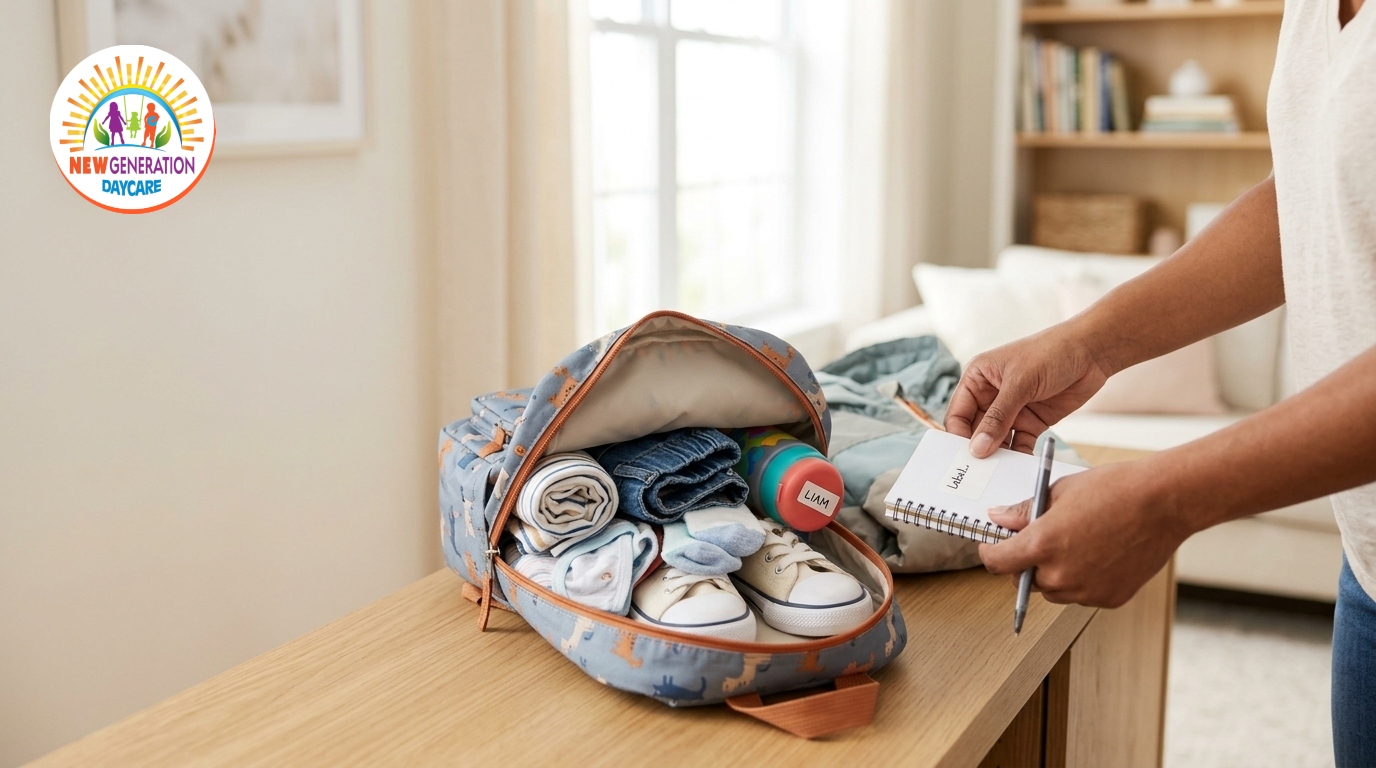
Packing for preschool is one of those tasks that sounds simple until you’re standing in front of an empty backpack wondering what your child actually needs. Every school has its own specific requirements, but there are some common essentials most preschoolers benefit from having on hand, whether it’s their first week of class or their fiftieth.
This checklist walks through what to pack for preschool, what’s usually optional, and a few seasonal considerations worth thinking about for families here in Staten Island.
Preschool Packing Checklist: The Essentials
Most preschools ask parents to send a similar core set of items, though the exact requirements will vary by program. Here’s a general starting point.
A Reliable Backpack
A backpack sized appropriately for a young child makes it easier for them to carry and manage their own belongings. Look for one that’s:
- Lightweight and easy for a small child to put on and take off
- Roomy enough for a change of clothes and a water bottle
- Simple to open and close independently, when possible
A backpack that’s too bulky or complicated can actually make mornings harder, so simplicity is usually the better choice at this age.
A Full Change of Clothes
Accidents, spills, and messy art projects are a normal part of preschool life. Most programs ask parents to keep a complete backup outfit at school, including:
- A shirt
- Pants or leggings
- Socks
- Underwear
It’s worth packing a full outfit rather than just a partial one, since even small spills can mean a top-to-bottom change is needed.
Extra Underwear and Socks
Beyond the full backup outfit, some preschools ask for an additional pair of underwear and socks, especially for children who are newly potty trained. This isn’t the case everywhere, so it’s worth checking with your specific program.
Comfortable, Practical Shoes
Preschoolers spend a lot of their day moving: running outside, climbing on play structures, and sitting on the floor for group activities. Comfortable, well-fitting shoes that are easy for a child to walk and play in matter more than style at this age. Sneakers or similar closed-toe shoes are usually a safe, practical choice, especially in classrooms with an active preschool program that includes daily physical activity.
A Labeled Water Bottle
A reusable, easy-to-open water bottle helps keep your child hydrated throughout the day. Choose one that’s simple enough for your child to manage on their own, and make sure it’s clearly labeled with their name.
Weather-Appropriate Clothing
Depending on the season, your child may need an extra layer packed in their bag or hung on a coat hook at school. This is covered in more detail in the seasonal section below.
Items That May Be Required Depending on the Preschool
Some items aren’t universal but come up often enough to be worth checking on:
- Nap or rest items; If the program includes a rest period, some schools ask for a small blanket, mat cover, or comfort item specifically for naptime.
- Bibs or smocks; Useful for messy art projects or snack time in some classrooms.
- Indoor shoes or slippers; A few programs ask children to change into indoor footwear once they arrive.
- Diapers or pull-ups and wipes; Relevant for children who aren’t yet fully potty trained.
Because policies differ so much from one preschool to another, it’s always worth checking your child’s specific preschool requirements directly with the school before the first day, rather than assuming what worked at one program applies everywhere.
Personal Comfort Items: When They’re Appropriate
Many young children feel more settled with a small piece of home nearby, especially during the early weeks of adjusting to a new classroom. Some preschools allow a single small comfort item, such as:
- A small stuffed animal
- A family photo
- A soft blanket for rest time
If your child’s school allows this, one small item is usually enough. Sending too many personal items can lead to mix-ups, distraction, or lost belongings, so it’s worth keeping this to a minimum and confirming the school’s specific policy first.
Labeling and Organizing Belongings
With a room full of preschoolers, it’s easy for backpacks, water bottles, and jackets to get mixed up. A little organization at home goes a long way.
A few practical tips:
- Label everything, including clothing, shoes, water bottles, and backpacks, with your child’s name using permanent marker, iron-on labels, or sticker labels.
- Pack a spare outfit in a labeled bag inside the backpack so it’s easy for a teacher to find quickly if needed.
- Choose distinct or colorful items when possible, since a plain black backpack or water bottle can easily be confused with another child’s.
- Do a weekly check of your child’s bag to restock anything that’s been used, like a spare outfit that hasn’t been replaced after an accident.
These small habits make mornings smoother and help teachers quickly identify what belongs to whom.
Seasonal Packing Considerations for Staten Island Families
Staten Island’s weather shifts noticeably across the year, so what your child needs in their bag will change with the seasons.
Winter
- A warm coat, hat, and gloves or mittens
- Waterproof or insulated boots for snow and slush
- An extra pair of socks, in case shoes or boots get wet
Rainy days
- A lightweight rain jacket or poncho
- Rain boots, if your child’s school allows outdoor play in wet weather
- An umbrella, if your school’s drop-off routine involves walking outside
Warm weather
- Lightweight, breathable clothing
- A sun hat, if outdoor play is part of the daily routine
- Sunscreen, if the school permits parents to send it (some require it to be provided in advance with written permission)
Layering is often the easiest approach during transitional seasons, when mornings can be cool but afternoons warm up.
What Not to Pack for Preschool
Just as important as knowing what to bring is knowing what to leave at home. In general, it’s best to avoid packing:
- Valuable or sentimental items that could be lost or damaged
- Toys from home, unless specifically permitted by the school
- Candy, gum, or snacks that haven’t been approved by the classroom’s food policy
- Electronics, including tablets or handheld games
- Items with small, detachable parts that could pose a choking hazard for younger classmates
Since policies vary by school, it’s always a good idea to ask directly about any restricted items before your child’s first day.
Final Thoughts
Packing for preschool doesn’t need to be complicated once you know the basics: a labeled backpack, a spare outfit, comfortable shoes, a water bottle, and a few seasonal extras cover most of what a young child needs during the school day. From there, it’s mostly about checking in with your specific preschool to confirm any additional requirements, like nap items or comfort objects.
If you’re exploring preschool options in Staten Island and have questions about what your child will need on their first day, scheduling a tour is a good way to see the classroom firsthand and get accurate, up-to-date guidance tailored to your child’s future school.
Frequently Asked Questions
Do all preschools require the same packing list?
No. While many preschools ask for similar basics, like a change of clothes and a water bottle, specific requirements vary by school. It’s best to confirm your child’s preschool’s exact list before their first day.
Should I send snacks with my child to preschool?
This depends on the school’s policy. Some preschools provide snacks, while others ask parents to send their own. Always check with your specific program before packing food.
How many extra outfits should I pack for preschool?
Most schools recommend at least one full backup outfit. Some may ask for an additional set of underwear or socks, particularly for children who are newly potty trained.
Can my child bring a stuffed animal or comfort item to preschool?
Many preschools allow one small comfort item, especially during the early weeks of adjustment, but policies vary. Check with your child’s school to see what’s permitted.
What should I do if my child’s clothes get lost at preschool?
Clearly labeling every item with your child’s name is the best way to prevent mix-ups. If something does go missing, checking in with your child’s teacher is usually the quickest way to track it down.
Preschool Learning Activities Parents Can Try at Home in Staten Island
Preschoolers learn constantly, often without realizing they’re learning at all. A simple game of counting spoons at dinner or sorting socks by color can build real skills, the same way structured classroom activities do. For parents in Staten Island looking for ways to support their child’s development outside of the classroom, a few household materials and a bit of time are usually all it takes.
Below are practical, easy preschool activities at home that support different areas of early childhood learning, using items most families already have on hand.
Early Literacy Activities
Building early literacy skills doesn’t require flashcards or workbooks. Everyday conversation and play go a long way.
Letter Hunt Around the House
Choose a letter and see how many objects your child can find around the house that start with that sound. This simple game builds letter and sound awareness in a low-pressure, playful way.
Storytelling With Toys
Use stuffed animals or action figures to act out a simple story together. Ask your child what happens next, encouraging them to build their own narrative and practice vocabulary.
Read and Pause
While reading a favorite book, pause occasionally and ask, “What do you think happens next?” This encourages listening skills and early comprehension, and it turns reading time into an interactive activity rather than a passive one.
Counting and Early Math Activities
Basic math concepts show up naturally in everyday routines, and preschoolers benefit from seeing numbers used in context.
Snack Time Counting
Ask your child to count out crackers, grapes, or pretzels before a snack. This builds one-to-one counting skills in a natural, motivating way.
Sorting Socks or Toys
Sorting laundry or toys by color, size, or type introduces early classification skills, which support later math and logical thinking.
Shape Hunt
Walk around the house or yard and look for shapes, like a circle-shaped plate or a rectangular window. This helps children connect shape names to real objects rather than just pictures.
Drawing and Creative Activities
Creative play gives preschoolers room to experiment without a “right” or “wrong” outcome, which supports both fine motor skills and imagination.
Free Drawing Time
Set out paper and crayons or markers and let your child draw whatever comes to mind. Ask open-ended questions about their drawing rather than guessing what it is.
Collage Making
Save old magazines, cardboard, or fabric scraps and let your child glue pieces together to create their own collage. This activity supports creativity along with fine motor control.
Building With Recycled Materials
Empty boxes, paper towel tubes, and bottle caps can become building materials for a fort, a tower, or an imaginary vehicle. Open-ended building activities like this encourage problem-solving and spatial thinking.
Science and Nature Activities
Preschoolers are naturally curious, and simple science activities can turn everyday observations into learning moments.
Backyard or Park Exploration
Take a short walk and encourage your child to notice leaves, bugs, or weather changes. Asking simple questions like, “Why do you think that leaf is a different color?” encourages early scientific thinking.
Sink or Float Experiment
Fill a bowl or bathtub with water and test different household objects to see which ones sink and which float. This introduces basic cause-and-effect thinking in a hands-on way.
Growing Something Together
Planting a seed in a small cup, even a quick-growing one like grass or beans, gives children a simple way to observe change over time and practice patience.
Sensory Play Activities
Sensory activities help preschoolers explore textures, materials, and cause-and-effect relationships through touch and movement.
Homemade Playdough
A simple flour, salt, and water dough gives children a hands-on material to squeeze, roll, and shape, supporting fine motor development along the way.
Water Play
Filling containers of different sizes with water and pouring between them introduces early measurement concepts and cause-and-effect learning.
Sensory Bins
Fill a shallow container with rice, dried pasta, or beans, and hide small toys inside for your child to find. This kind of activity supports focus and fine motor skills through digging and sorting.
Problem-Solving Activities
Simple, everyday challenges give preschoolers a chance to think through solutions on their own.
Puzzles
Age-appropriate puzzles help children practice patience, spatial reasoning, and persistence when a piece doesn’t fit right away.
Simple Obstacle Courses
Set up pillows, chairs, or blankets as an indoor obstacle course. Children have to figure out how to move through it, which builds both problem-solving and gross motor skills.
Matching Games
Simple matching card games help children practice memory and pattern recognition while also learning to follow game rules.
Fine Motor Skill Activities
Many everyday household tasks double as fine motor practice, even when they don’t look like a formal activity.
Practicing With Child-Safe Scissors
Cutting along drawn lines on paper helps build hand strength and coordination, both important for early writing skills.
Threading Activities
Stringing large beads or pasta onto a shoelace or piece of string builds hand-eye coordination.
Helping With Simple Chores
Tasks like pouring cereal, buttoning a shirt, or zipping a jacket give children real, functional practice with fine motor control.
Social-Emotional Learning Activities
Social-emotional skills grow through everyday interaction, play, and conversation, not just formal lessons.
Emotion Charades
Take turns acting out different feelings, like happy, sad, or surprised, and guessing what emotion is being shown. This helps children build vocabulary around emotions.
Turn-Taking Games
Simple board games or card games that require waiting for a turn help children practice patience and cooperation.
Talking Through Feelings
When your child seems upset or frustrated, naming the feeling out loud (“It looks like you’re feeling frustrated”) can help them build emotional awareness over time.
Bringing Learning Activities Into Everyday Life
None of these activities require special equipment or a lot of preparation. The goal isn’t to turn every moment into a structured lesson, but to notice the everyday opportunities already built into daily life, from grocery shopping to bath time, and use them as natural chances for learning.
For families exploring early childhood learning options in Staten Island, activities like these can also complement what a child is already practicing in a classroom setting, reinforcing skills like counting, communication, and problem-solving in a comfortable, familiar environment at home.
Final Thoughts
Supporting a preschooler’s development at home doesn’t require a curriculum or a trip to the store. Everyday household items, combined with a bit of intentional conversation and play, can support early literacy, math, creativity, motor skills, and social-emotional growth. Whether you’re looking to build on what your child is learning in preschool or simply want some easy activity ideas for a rainy afternoon, small, consistent moments of play tend to add up over time.
Frequently Asked Questions
Do I need special educational toys for these activities?
No. Most of these activities use common household items, like paper, crayons, containers, or pantry staples, rather than specialized educational materials.
How often should I do learning activities with my preschooler?
There’s no set requirement. Even occasional, short activities woven into daily routines, like counting snacks or sorting laundry, can support learning over time.
What if my child loses interest quickly during an activity?
This is normal for young children. Keep activities short, follow your child’s interest, and don’t worry about finishing every step. The process matters more than completing the activity perfectly.
Can these activities replace preschool or structured early education?
These activities are meant to complement early learning, not replace a structured preschool program. They work well alongside a classroom setting to reinforce similar skills at home.
How do I know which activities are right for my child’s age?
Watch your child’s interest and skill level, and adjust activities accordingly. If something feels too easy or too frustrating, it’s fine to simplify or add complexity as needed.
How to Help Your Child Adjust to a New Preschool in Staten Island
preschool in Staten IslandStarting preschool is a big step, both for children and for parents. Even when a child is excited about the idea of school, the first few days or weeks in a new classroom can bring some uncertainty. That’s completely normal. With a bit of preparation and patience, most children settle into their new routine and begin to feel comfortable in their new environment.
If you’re getting ready to enroll your child in a preschool in Staten Island, here are some practical ways to make that transition smoother for everyone involved.
Visit the Preschool Before the First Day
If possible, arrange a visit to the classroom before your child’s official start date. Walking through the space, meeting a teacher, and seeing where drop-off and pickup happen can take away some of the unknown.
Many preschool programs welcome a short tour or visit ahead of enrollment. Seeing the room, the toys, and the general layout in advance can help a child feel a little more familiar with the space once the first real day arrives.
During the visit, you might:
- Point out where your child will hang their backpack or coat
- Show them the play area or reading corner
- Let them meet a teacher, even briefly
- Talk through what a typical day might look like
A short visit won’t erase every nervous feeling, but it often helps take the edge off that first morning.
Build a Consistent Routine Before School Starts
Children tend to feel more secure when their days follow a predictable pattern. In the days or weeks leading up to the preschool start date, it can help to introduce a simple daily rhythm that mirrors what school mornings might look like.
This might include:
- A consistent wake-up and bedtime schedule
- A morning routine for getting dressed and eating breakfast
- Practicing simple tasks like putting on shoes or a backpack
Starting this routine early, rather than waiting until the first day of preschool, gives your child a chance to adjust gradually instead of facing several changes all at once.
Talk About Preschool in a Positive, Simple Way
How you talk about preschool at home can shape how your child feels about it. Keep conversations simple, honest, and upbeat, without overselling or overwhelming them with detail.
A few ideas:
- Read books about starting school or preschool
- Talk about fun parts of the day, like playing with toys or making friends
- Answer questions honestly, even the ones about missing home
- Avoid framing preschool as something to “get through” or worry about
Children often pick up on a parent’s tone. If you feel calm and positive when discussing preschool, that reassurance tends to come across.
Prepare Belongings Together
Getting your child involved in preparing their things for preschool, such as a backpack, a lunch box, or a favorite small item, can create a sense of ownership and excitement.
Simple ways to involve your child:
- Let them choose their backpack or lunch box, if possible
- Practice opening and closing containers they’ll use at school
- Pack a comfort item, if the classroom allows it, like a small photo or a favorite toy
- Label belongings clearly so they’re easy for staff and your child to recognize
These small steps can help your child feel a bit more prepared and in control heading into a new environment.
Handling Separation Anxiety
Separation anxiety is one of the most common challenges during this transition, and it’s rarely a sign that something is wrong. Many young children feel some anxiety about being away from a parent, especially in the first few days of a new setting.
A few approaches that often help:
- Keep goodbyes short, warm, and consistent
- Avoid lingering, which can sometimes make separation harder
- Create a simple goodbye ritual, like a specific wave or phrase
- Reassure your child that you will return at pickup time
Trust that most children settle down within a few minutes of a parent leaving, even if the goodbye itself is hard.
If separation anxiety continues beyond the first couple of weeks, it’s worth talking with your child’s teacher about what they’re observing during the day.
Communicate Openly With Teachers
Teachers spend significant time with your child during the day, and they can often offer valuable insight into how the adjustment is going. Don’t hesitate to ask questions or share information that might help your child settle in.
Helpful things to share with a teacher:
- Your child’s typical routines or comfort habits
- Words or phrases your child uses for common needs
- Anything specific that seems to help your child feel calm
- Updates on how mornings or drop-offs are going at home
Regular, open communication between home and the classroom can make a real difference in how quickly a child settles into their new preschool.
Give Your Child Time
Adjustment doesn’t happen overnight, and that’s okay. Some children settle in within the first few days, while others take a few weeks to feel fully comfortable. Both are normal.
During this period, try to:
- Stick with your established routine, even if some mornings are harder than others
- Avoid comparing your child’s adjustment timeline to another child’s
- Celebrate small signs of progress, like a smoother drop-off or a new friend’s name mentioned at dinner
- Stay patient, since most children do adjust with time and consistency
Every child adjusts at their own pace, and a little extra patience during this stage tends to pay off.
Final Thoughts
Helping a child adjust to a new preschool is rarely about doing everything perfectly. It’s about creating consistency, staying positive, and giving your child the time and support they need to settle in. Whether you’re exploring options for early childhood education or preparing for a preschool start date already on the calendar, small, steady steps at home can make a real difference in how smoothly that transition goes.
If you’re currently comparing childcare in Staten Island or looking into preschool for children in your family, taking time to prepare together, both practically and emotionally, can help set the stage for a positive start.
Frequently Asked Questions
How long does it usually take for a child to adjust to preschool?
Adjustment timelines vary by child. Some settle in within the first few days, while others take a few weeks. Both are considered normal.
Is it normal for my child to cry at drop-off?
Yes, this is a common part of the adjustment process for many young children. Keeping goodbyes short and consistent often helps ease this over time.
Should I stay in the classroom to help my child feel comfortable?
This depends on the specific preschool’s approach. Many programs recommend a brief, warm goodbye rather than staying, since lingering can sometimes make separation harder for a child.
What can I do if my child still seems upset after a few weeks?
If adjustment challenges continue beyond the first couple of weeks, it’s a good idea to talk with your child’s teacher about what they’re observing and whether any additional support might help.
How can I prepare my child at home before their first day?
Building a consistent daily routine, talking positively about school, visiting the classroom in advance if possible, and involving your child in preparing their belongings can all help ease the transition.
What Age Does Preschool Start in Staten Island? A Parent’s Guide
Many children begin preschool around age 3 or 4, but there’s no single “correct” starting age that applies to every child or every school. The right time to start preschool depends on your child’s individual development, your family’s needs, and the specific enrollment requirements of the program you’re considering.
If you’re a Staten Island parent trying to figure out when preschool makes sense for your child, it helps to understand the general age ranges involved, what programs typically look for, and how to recognize readiness in your own child.
What Age Does Preschool Usually Start?
Preschool programs commonly serve children starting around age 3, with many also welcoming 4-year-olds. That said, this is a general pattern, not a fixed rule.
- Preschool around age 3: Many programs consider age 3 a common starting point, often as children gain more language, independence, and comfort in group settings.
- Preschool around age 4: Some children start a year later, either because a program’s age requirements start there or because families choose to wait based on their child’s development.
- Program-to-program differences: Some early childhood centers accept children younger than 3, while others set their minimum age higher. Class structure, staffing, and licensing requirements can all influence this.
Because starting ages vary so much between schools, it’s important to check the specific age requirements of any program you’re considering rather than assuming a universal standard.
Is 2 Too Young for Preschool?
Not necessarily. Some early childhood programs accept children starting at age 2, often in a classroom designed specifically for toddlers before they move into a more structured preschool setting. Whether age 2 is the right time depends heavily on the individual child and the specific program’s approach.
A few factors parents often consider at this age include:
- Communication skills, even simple ones
- Ability to participate in basic group activities
- Comfort being away from a parent for periods of time
- Ability to follow simple routines
- Interest in exploring and trying new things
- Basic self-help skills, like attempting to feed themselves
These are general considerations, not a rigid checklist a child must fully meet before starting. Every child develops differently, and many programs designed for younger toddlers build in extra support for skills that are still developing.
How Do You Know Your Child Is Ready for Preschool?
Readiness looks different for every child, but there are some general signs parents can look for when deciding if the timing feels right:
- Shows curiosity about new activities or environments
- Can participate in simple, predictable routines
- Is beginning to communicate basic needs
- Shows interest in interacting with other children
- Is becoming more independent with small tasks
- Can separate from a parent with some support and reassurance
- Enjoys stories, songs, games, or hands-on activities
It’s worth remembering that children reach these milestones at different rates, and that’s completely normal. A child who isn’t fully independent yet, for example, can still do well in a supportive preschool classroom.
Preschool vs. Toddler Care vs. Pre-K
Understanding how these stages generally differ can help make the decision less confusing:
|
Toddler Care |
Preschool |
Pre-K |
|
|
Typical stage |
Younger, early developmental stage |
Early-to-mid preschool years |
Year(s) before kindergarten |
|
Main focus |
Care, routines, early exploration |
Early academic and social skill-building |
More structured school-readiness skills |
|
Social development |
Early peer exposure |
Regular group interaction |
More advanced group participation |
|
Independence |
Just beginning |
Actively developing |
More established |
|
Kindergarten prep |
Not a primary focus |
Builds foundational skills |
Often a core focus |
These are general patterns, not exact age brackets that apply to every program. Different early learning centers structure their classrooms differently, so it’s worth asking a specific school how it defines and separates these stages.
What Do Children Learn in Preschool?
Preschool generally supports development across several connected areas, including:
- Early literacy and language exposure
- Early math concepts
- Communication skills
- Social-emotional development
- Fine motor skills
- Gross motor skills
- Creative expression
- Simple problem-solving
- Growing independence
At New Generation Learning Center, for example, the preschool classroom includes activities like counting to 10 and identifying objects to build early numerical skills, imaginative play to encourage creativity, and activities that support social and emotional growth alongside critical thinking. The program also includes structured physical activities for gross motor development, practice with pencil grip and early writing for fine motor skills, and art classes and performances for creative expression, guided by certified Early Childhood Education teachers.
What Age Does New Generation Learning Center Accept?
According to New Generation Learning Center’s website, the center welcomes children from age 2 through age 5. This doesn’t mean every child in that range is automatically placed in the same classroom; early learning centers typically group children by age and developmental stage, moving them through different programs as they grow.
For families exploring options in this age range, it’s worth looking specifically at New Generation’s preschool program to understand how it fits into the center’s broader age range and how the classroom supports early academic, social, and physical development.
Questions Parents Should Ask Before Choosing a Preschool
Whether you’re considering New Generation Learning Center or another program, these questions can help you evaluate fit:
- What age range does the program accept, and how are classrooms grouped?
- What does a typical day look like?
- How does the program support social development?
- What learning activities are included in the daily routine?
- How does the program prepare children for the next stage of learning?
- How are parents updated on their child’s progress?
- What are the school’s hours and enrollment procedures?
Asking these questions directly gives you accurate, current answers specific to the program you’re considering, rather than relying on general assumptions.
Final Thoughts
There’s no single perfect age for every child to start preschool. The right decision depends on your child’s developmental stage, your family’s circumstances, the structure of the program you’re considering, that school’s specific age requirements, and how comfortable your child is with routines and group settings.
If you’re weighing your options in Staten Island, reaching out to a program directly, like New Generation Learning Center, is a good way to get clear answers about enrollment and to see whether the classroom environment feels like the right fit for your child.
Frequently Asked Questions
What age do children usually start preschool?
Many children start preschool around age 3 or 4, though this varies by program. Some schools accept children as young as 2, while others set a higher minimum age.
Can a 2-year-old start preschool?
Some early childhood programs do accept 2-year-olds, often in a classroom designed for younger children. Readiness at this age depends on the individual child and the specific program’s approach.
Is 3 a good age to start preschool?
Age 3 is a common starting point for many preschool programs, as children often begin developing more language, independence, and comfort in group settings around this age. However, readiness varies by child.
What is the difference between preschool and Pre-K?
Preschool generally focuses on early academic and social skill-building for younger children, while Pre-K typically involves more structured school-readiness activities in the year or two before kindergarten. Exact ages and structure vary by program.
How do I know if my child is ready for preschool?
Signs of readiness can include curiosity, growing independence, basic communication skills, and interest in interacting with other children. Children develop at different rates, so readiness looks different for every child.
What should parents look for in a preschool program?
Consider the program’s age requirements, daily structure, balance of learning and play, teacher support, and how well the schedule and environment fit your child’s needs and your family’s routine.
How Long Is a Preschool Day in Staten Island? What Parents Should Know
If you’re researching preschool options, one of the first practical questions that comes up is simple: how long is the school day actually going to be? The honest answer is that it depends. Preschool schedules vary based on the program itself, the age group being served, whether it’s structured as part-day or full-day, and how each individual school organizes its time.
Rather than focusing only on the number of hours, it often helps to look at how a preschool uses that time. A well-structured day balances learning, play, meals, rest, and social interaction, which usually matters more to a young child’s experience than the total hour count on its own.
How Long Is a Typical Preschool Day?
Preschool programs generally fall into a few broad categories:
- Part-day preschool: Often just a couple of hours, focused on a shorter block of structured activities and play.
- Half-day preschool: Typically covers a morning or afternoon session, longer than a part-day program but shorter than a full workday.
- Full-day preschool: Usually spans most of a standard workday, giving time for learning, play, meals, and often a rest period.
There’s no single “standard” schedule across all preschools. Program length often depends on the school’s overall structure, the age group in a given classroom, and the needs of the families it serves. Because of this range, it’s worth asking any specific program directly about its actual hours rather than assuming one schedule applies everywhere.
What Does a Typical Preschool Day Include?
While exact timing varies by school, many preschool days are built around a similar general flow:
- Arrival and morning routine: Children settle in, greet teachers, and transition into the classroom.
- Circle time: A group gathering often used for songs, discussion, or introducing the day ahead.
- Learning activities: Structured or guided activities focused on early academic or developmental skills.
- Creative activities: Art, music, or imaginative play.
- Indoor and outdoor play: Time for movement, exploration, and physical activity.
- Snack or mealtime: A break that also supports social interaction.
- Rest or quiet time: Common in longer or full-day programs, though not universal.
- Storytime: Often used to support early literacy and listening skills.
- Social activities: Group play or collaborative tasks.
- Departure routine: A wind-down period before pickup.
Not every preschool includes all of these elements, and the order and timing can look different from one classroom to the next, especially across different age groups.
Why Preschool Schedules Matter for Young Children
The structure of a preschool day isn’t just about logistics; it plays a real role in how comfortable and engaged a young child feels. A predictable routine can help children:
- Feel more comfortable and secure in the classroom
- Build independence by knowing what comes next
- Develop social skills through consistent group interaction
- Practice communication during structured and unstructured moments
- Transition more smoothly between activities
- Begin forming early learning habits
Children generally do well when they can anticipate the general shape of their day, even if they don’t know the exact clock time for each activity.
What Should Staten Island Parents Look for in a Preschool Schedule?
When comparing preschool programs in Staten Island, it can help to think beyond the total number of hours and consider:
- The overall length of the school day
- Whether activities are age-appropriate for your child
- A reasonable balance between structured learning and free play
- Whether outdoor activity is part of the daily routine
- How meals or snacks are handled
- Whether a rest or quiet period is included
- How flexible the schedule is for your child’s developmental needs
- How convenient drop-off and pick-up times are for your family
- Whether the schedule realistically fits your household’s routine
Since these details vary by school, it’s worth asking directly about a program’s daily structure before enrolling.
Understanding the New Generation Learning Center’s Preschool Program
At New Generation Learning Center, the preschool program in Staten Island is built around a mix of early academic and developmental activities. Children work on foundational numerical skills, including counting to 10 and identifying and counting objects, as part of the center’s curriculum. The program also includes imaginative play with props to encourage creativity and dramatic arts, along with activities that support social and emotional growth and critical thinking.
Physical development is part of the day as well, with structured activities and games that support gross motor skills, along with practice with pencil grip and early writing techniques to build fine motor coordination. The program is guided by certified early childhood education teachers, and creative expression is encouraged through art classes and annual performances.
For specific details on daily hours and scheduling, it’s best to contact the center directly, since exact timing can vary and isn’t something to assume from general program information.
Questions Parents Should Ask About Preschool Hours
When you’re evaluating preschool programs, whether at New Generation Learning Center or elsewhere, these questions can help you get a clearer picture:
- How long is the preschool day, from drop-off to pickup?
- Is the program structured as part-day, half-day, or full-day?
- What does a typical day look like from start to finish?
- Are meals or snacks included as part of the schedule?
- Is there a rest or quiet period built into the day?
- How much time is spent on structured learning versus open play?
- What are the drop-off and pick-up procedures?
Asking these questions directly gives you accurate, up-to-date answers specific to the program you’re considering.
Final Thoughts
There’s no single “right” length for a preschool day; the best schedule is the one that offers a healthy mix of learning, play, social interaction, and routine while genuinely fitting your family’s needs. Paying attention to how a program structures its time, not just how many hours it runs, can tell you a lot about what your child’s day will actually feel like.
If you’d like to learn more about how a typical day unfolds at New Generation Learning Center, or you have specific questions about scheduling, reaching out to the center directly is the best way to get current, accurate details.
Frequently Asked Questions
How long is a typical preschool day?
Preschool day length varies by program, ranging from a couple of hours for part-day options to a full workday for full-day programs. It’s best to check directly with a specific school for its exact hours.
Is preschool usually half-day or full-day?
Both formats are common, and which one a family chooses often depends on work schedules and childcare needs. Many preschools offer one or both options.
What does a preschool child do during the day?
A typical day often includes circle time, learning activities, creative projects, indoor and outdoor play, snack time, and storytime, though the specific mix varies by school and age group.
Do preschoolers have naps or quiet time?
Many full-day preschool programs include a rest or quiet period, especially for younger preschool-age children, though this isn’t universal across all schools.
How many hours should a preschooler spend in school?
This depends on the family’s needs and the child’s age and temperament. There’s no single number that fits every child, which is why it’s worth discussing options directly with a preschool.
What should parents consider when choosing preschool hours?
Consider your family’s daily schedule, your child’s stamina and temperament, whether the program includes rest and meal times, and how well the overall daily structure fits your routine.
How Play-Based Learning Supports Early Childhood Development
Watch a young child for even a few minutes and you’ll notice something: they’re always doing something. Stacking blocks, pretending to cook dinner, chasing a ball, asking why the sky is blue. Children explore the world by moving, experimenting, imagining, and interacting with the people around them. This is how they learn, long before formal instruction ever enters the picture.
Play isn’t just downtime between “real” learning. When it’s thoughtfully supported, play can become a rich, natural context for children to build skills across nearly every area of development. This is often referred to as play-based learning, and understanding how it works can help parents feel more confident about what their child is really gaining through everyday play, whether at home or in a classroom setting in Staten Island.
What Is Play-Based Learning?
Play-based learning is an approach where children build skills and understanding through activities that involve exploration, imagination, problem-solving, movement, creativity, communication, and social interaction. Instead of sitting through direct instruction, children learn concepts by doing: building, pretending, sorting, moving, and talking with others along the way.
It’s worth noting the difference between play-based learning and simply letting children play unsupervised. Both involve genuine, child-led play, but play-based learning also involves some intentional thought behind it. A teacher or parent might set up an environment with specific materials, ask an open-ended question at just the right moment, or introduce a new word during pretend play. The child still leads the activity and stays actively engaged, but the surrounding environment is designed to support learning along the way.
Why Is Play Important in Early Childhood?
Play gives young children a low-pressure way to explore their surroundings, make their own choices, and try out new skills without the fear of getting something “wrong.” Through play, children test ideas, learn from small mistakes, and build confidence as they figure things out.
Play also gives children regular chances to interact with others, which naturally supports curiosity and social awareness. A child stacking blocks isn’t just building a tower, they’re testing balance, adjusting their approach when it falls, and often inviting a friend to help. None of this requires play to guarantee specific academic outcomes; it simply creates meaningful, repeated opportunities for growth across many areas at once.
7 Ways Play-Based Learning Supports Child Development
1. Cognitive Development and Problem-Solving
Activities like puzzles, block building, sorting games, and pretend scenarios ask children to think through choices, notice patterns, and work out simple problems on their own. A child trying to fit puzzle pieces together, for example, is practicing spatial reasoning and trial-and-error thinking without even realizing it.
Sorting toys by color or size, figuring out how to balance a block tower, or working out how many spoons are needed for a pretend tea party are all small, everyday moments of problem-solving.
2. Language and Communication Skills
Pretend play, storytelling, and group activities give children real reasons to use language. A child narrating a pretend story, asking a friend to pass a toy, or explaining the rules of a made-up game is practicing vocabulary, listening, and conversation skills all at once.
Role-play in particular tends to encourage new vocabulary, since children often try out words and phrases they’ve heard adults use in real-life situations, like “May I take your order?” during pretend restaurant play.
3. Social Skills and Cooperation
Group play naturally requires children to practice sharing, taking turns, and working with others toward a shared goal, whether that’s building a fort together or acting out a story with friends. These moments also involve negotiation, like deciding who plays which role in a pretend game.
Children often need some adult guidance while learning these skills. A teacher or parent stepping in to help two children take turns with a toy isn’t interrupting play, it’s supporting the social learning happening within it.
4. Emotional Development and Self-Regulation
Play gives children a safe space to express emotions and try out different perspectives. Pretend play, in particular, often lets children act out situations that mirror real feelings, like putting a stuffed animal “to bed” after a hard day or acting out a disagreement between characters.
This kind of play can support coping and confidence over time, though it doesn’t eliminate emotional ups and downs. Big feelings are still a normal part of growing up.
5. Creativity and Imagination
Open-ended play, such as drawing, building, dress-up, or inventing stories, gives children room to come up with their own ideas rather than following a single set of instructions. There doesn’t need to be one “correct” way to build a tower or one “right” ending to a pretend story.
This kind of freedom is part of what makes creative play valuable: children get to practice generating and testing their own ideas, which is a skill that extends well beyond the playroom.
6. Fine and Gross Motor Development
Physical play supports both small and large muscle movements. Fine motor skills get practice through activities like drawing, cutting, building with small blocks, and completing puzzles. Gross motor skills develop through running, jumping, climbing, balancing, dancing, and outdoor games.
Both types of movement help children build physical coordination and confidence, whether they’re carefully stacking small blocks or racing across a playground.
7. Independence, Confidence, and Decision-Making
Play often involves small, age-appropriate decisions: which materials to use, how to build something, which role to take in a pretend game, or whether to try a new activity. Making these choices, even small ones, helps children practice independence and build confidence in their own ideas.
Supportive adults play an important role here too, stepping back enough to let a child work through a decision or a challenge on their own, rather than taking over the activity for them.
Examples of Play-Based Learning Activities
Here are a few everyday activities and the kinds of skills children can practice through them:
|
Activity |
What Children Can Practice |
|
Building with blocks |
Problem-solving, spatial awareness, creativity |
|
Pretend restaurant |
Language, social skills, counting |
|
Puzzles |
Problem-solving, concentration |
|
Storytelling |
Vocabulary, communication, imagination |
|
Water or sand play |
Exploration, sensory learning, coordination |
|
Art activities |
Creativity, fine motor skills |
|
Outdoor obstacle courses |
Balance, coordination, confidence |
|
Sorting games |
Early math, classification, observation |
These are simply examples of skills children can practice through play, not guarantees of a specific developmental outcome.
How Teachers Can Support Play-Based Learning
In a classroom setting, effective play-based learning usually involves intentional teaching rather than simply stepping back and letting children play alone. Teachers often support this kind of learning by:
- Preparing engaging, age-appropriate learning environments
- Offering materials that invite exploration
- Observing children’s interests and building on them
- Asking open-ended questions during play
- Introducing new vocabulary naturally
- Helping children navigate cooperation and turn-taking
- Extending a child’s thinking with a follow-up question or idea
- Allowing room for experimentation and mistakes
- Balancing child-led play with more guided activities
This kind of intentional support is really what separates play-based learning from unstructured playtime.
How Parents Can Encourage Learning Through Play at Home
You don’t need a room full of educational toys to support learning through play. Some simple, low-cost ideas include:
- Reading stories together and acting them out
- Building with blocks or household items
- Letting your child help sort laundry or toys by color or type
- Playing pretend games together
- Counting objects during everyday tasks, like setting the table
- Drawing or creating simple art projects
- Playing turn-taking games as a family
- Exploring outdoors and talking about what you notice
- Asking “What do you think will happen?” during an activity
- Letting your child make small choices during play
The real value comes from interaction, curiosity, and conversation, not from expensive materials.
Play-Based Learning in Preschool
A quality preschool environment often brings play-based learning to life by combining play with early academic concepts, social interaction, language development, creative activities, physical movement, and daily routines, all guided by a teacher who understands how young children learn.
If you’re comparing early-learning options, it’s worth asking a prospective preschool program in Staten Island how play is incorporated into their daily learning environment, and how teachers connect that play to their broader early childhood curriculum. As children grow older and move toward a Pre-K program in Staten Island, play often continues to play a role even as academic structure increases.
What Should Parents Look for in a Play-Based Learning Environment?
When evaluating an early-learning center, it can help to look for:
- Safe, age-appropriate materials
- Opportunities for child-led exploration
- Supportive, attentive teachers
- Open-ended activities without a single “correct” outcome
- A mix of indoor and outdoor play
- Regular opportunities for group interaction
- Room for creativity and imagination
- A thoughtful balance between guided learning and independent play
- Activities suited to each child’s developmental stage
If you’re weighing several options, it can help to understand more generally what to look for in an early learning center before making a decision.
Final Thoughts
Play is one of the most natural and effective contexts for early childhood learning. Through everyday play, children have the chance to build cognitive, language, social, emotional, creative, physical, and independence skills, often all within a single afternoon of building, pretending, and exploring.
If you’d like to see how play and learning come together for young children, feel free to explore early learning in Staten Island with New Generation Learning Center.
Frequently Asked Questions
What is play-based learning?
Play-based learning is an approach where children build skills through activities involving exploration, imagination, and hands-on experiences, often supported by intentional guidance from a teacher or parent rather than direct instruction alone.
Why is play important for early childhood development?
Play gives children low-pressure opportunities to explore, make choices, test ideas, and interact with others, which supports growth across cognitive, social, emotional, and physical development.
What are the benefits of play-based learning?
Play-based learning can support problem-solving, language development, social skills, emotional growth, creativity, motor coordination, and independence, often through the same everyday activities.
How can parents use play-based learning at home?
Parents can encourage learning through play by reading together, building with blocks, playing pretend games, counting during daily routines, and asking open-ended questions during everyday activities.
Is play-based learning appropriate for preschool children?
Yes. Play-based learning is widely used in early childhood settings because it aligns with how young children naturally explore and understand the world around them.
Kindergarten Readiness Checklist: 10 Skills Your Child Should Develop Before Kindergarten
Kindergarten is a big milestone, and it’s natural for parents to wonder whether their child is truly ready for it. Many families in Staten Island start asking this question during the preschool or pre-K year, often after hearing about “kindergarten readiness” from a teacher, a friend, or a school open house.
Here’s something worth knowing upfront: kindergarten readiness is about a lot more than knowing letters and numbers. It also includes how a child communicates, plays with others, manages emotions, follows routines, and handles simple daily tasks on their own. This checklist is meant to give you a realistic, supportive picture of the skills that tend to help children settle into kindergarten, not a pass-or-fail test.
What Does Kindergarten Readiness Mean?
Kindergarten readiness is really a mix of several areas of development working together. It generally includes:
- Academic foundations, like early letter and number awareness
- Social skills, such as sharing and cooperating with peers
- Emotional regulation, including coping with frustration
- Communication skills, like expressing needs and following directions
- Independence with everyday tasks
- Physical and motor development
- The ability to follow classroom routines and instructions
No child arrives at kindergarten with every single one of these skills fully developed, and that’s expected. Teachers plan for a wide range of abilities in any classroom. Readiness is best thought of as a general direction of growth, not a checklist that has to be fully checked off before day one.
Kindergarten Readiness Checklist: 10 Skills to Develop
- Recognizing Letters and Basic Sounds
At this stage, many children are becoming familiar with letters, especially the ones in their own name, and starting to understand that letters represent sounds. This early awareness lays some groundwork for reading, though most children are still in the early stages of this process.
To help at home, point out letters during everyday moments, like on signs or cereal boxes, and spend time sounding out your child’s name together. - Early Number and Counting Skills
Basic number sense includes counting objects, recognizing a few numbers, and understanding simple comparisons like “more” and “less.” Children don’t need to do complex math, but a general comfort with counting can help in a kindergarten classroom.
Everyday counting, like counting stairs, snacks, or toys during cleanup, is a simple way to build this skill naturally. - Listening and Following Instructions
Kindergarten classrooms rely heavily on children being able to listen to a teacher and follow simple, multi-step directions, like “put your folder away and sit on the carpet.” This skill takes practice and develops gradually.
At home, try giving two-step instructions during daily routines, such as “put your shoes on, then grab your backpack.” - Communication and Expressing Needs
Being able to speak clearly enough to communicate basic needs, ask questions, and answer simple questions helps children participate in classroom life and interact with teachers and classmates.
Everyday conversation, encouraging your child to describe their day, and asking open-ended questions all support this kind of communication growth. - Social Skills and Playing With Others
Sharing, taking turns, cooperating during group activities, and beginning to understand classroom expectations are all part of the social side of kindergarten readiness. These skills often develop through repeated practice with other children.
Playdates, group activities, and simple turn-taking games at home all give children a chance to practice. - Emotional Regulation
Kindergarten asks children to manage a full day of transitions, group activities, and new social situations. Part of readiness involves gradually learning to identify feelings, cope with frustration, and know when to ask an adult for help.
This doesn’t mean children shouldn’t cry or get upset — that’s a normal part of growing up. It simply means they’re slowly building the tools to handle big feelings with support.
Naming emotions together (“It looks like you’re feeling frustrated”) can help children build this awareness over time. - Independence and Self-Help Skills
Kindergarten classrooms expect a certain level of self-sufficiency with daily tasks, including:- Using the bathroom independently
- Washing hands
- Putting on and taking off simple clothing items
- Managing a backpack
- Cleaning up after activities
- Eating independently
- Practicing these tasks at home, even in small ways, can build confidence before the school year starts.
- Fine Motor Skills
Many classroom activities rely on fine motor coordination, including:- Holding crayons or pencils
- Drawing and coloring
- Cutting with child-safe scissors
- Using glue
- Manipulating small classroom materials, like puzzle pieces or blocks
- These skills tend to develop through regular hands-on play, drawing, and craft activities rather than formal practice.
- Attention and Classroom Participation
Kindergarten requires children to sit for group activities, listen during instruction, and transition between tasks throughout the day. This ability builds gradually, and it’s worth keeping expectations realistic — most five-year-olds are still developing longer attention spans, not mastering them.
Reading together, playing simple games with rules, and practicing short focused activities at home can all help build this skill over time. - Gross Motor Skills and Physical Confidence
Basic movement skills, like running, jumping, balancing, and climbing, support recess, physical education, and general classroom mobility. Comfort with movement also tends to support overall confidence in a new environment.
Outdoor play, active games, and simple movement activities all contribute to this kind of physical development.
How Parents Can Prepare Their Child for Kindergarten
Beyond the specific skills above, there are simple, everyday habits that support kindergarten readiness as a whole:
- Read together daily, even for just a few minutes
- Practice counting during everyday activities, like grocery shopping
- Let your child help with simple household tasks
- Practice getting dressed independently
- Play turn-taking games as a family
- Encourage your child to explain how they’re feeling
- Practice opening lunch containers, backpacks, and zippers
- Create simple, predictable routines at home
- Visit a school or classroom environment ahead of time if possible
None of these need to feel like formal lessons. Most of this readiness-building happens naturally through everyday family life.
What If My Child Isn’t Ready for Every Skill?
If you read through this checklist and notice a few areas where your child could use more practice, that’s completely normal. Children develop at different rates, and being less confident in one area doesn’t mean a child isn’t ready for kindergarten overall.
A few helpful next steps:
- Talk with your child’s current preschool or pre-K teacher about their observations
- Identify one or two specific areas to focus on through everyday play
- Build skills gradually rather than trying to “fix” everything at once
- Avoid comparing your child’s progress to other children’s
- Give your child time, patience, and encouragement along the way
Readiness tends to come together over time, often with support from both home and school.
How Preschool and Pre-K Can Support Kindergarten Readiness
A quality early-learning environment can support many of the skills covered above at once. A good preschool program in Staten Island typically builds early academic awareness alongside social skills, communication, and independence through daily classroom routines and guided play.
As children move into pre-K programs in Staten Island, the focus often shifts toward more structured preparation for kindergarten, including early literacy, number sense, and classroom participation. This kind of progression, supported by a thoughtful early childhood curriculum, gives children repeated, age-appropriate practice with the exact areas that tend to matter most once kindergarten begins.
If you’re considering an early-learning program for your child, visiting in person and asking about daily routines is a good way to see how a classroom supports these skills firsthand — many families find it helpful to schedule a tour before making a decision.
Final Thoughts
Kindergarten readiness isn’t about passing a test or checking every box on a list. It’s about a child building a balanced set of skills over time, including academics, social connection, emotional awareness, independence, and physical confidence. Progress, curiosity, and a willingness to try are often just as meaningful as any single skill.
If you’d like to learn more about how early-learning programs can support your child’s growth before kindergarten, feel free to explore New Generation Learning Center and our early-learning programs in Staten Island.
Frequently Asked Questions
What should a child know before starting kindergarten?
Children benefit from a mix of skills, including early letter and number awareness, communication, social skills, independence with daily tasks, and the ability to follow simple routines. No single skill determines readiness on its own.
How can I tell if my child is ready for kindergarten?
Look at overall progress across academic, social, emotional, and independence skills rather than one specific ability. Talking with your child’s current teacher can also offer helpful, personalized insight.
What social skills are important for kindergarten?
Sharing, taking turns, cooperating during group activities, and beginning to understand classroom routines are all valuable social skills that support a smoother kindergarten transition.
How can I prepare my child for kindergarten at home?
Simple daily habits help, such as reading together, practicing counting, encouraging independence with dressing and cleanup, and playing turn-taking games as a family.
Does my child need to know how to read before kindergarten?
No. Most kindergartens expect early literacy awareness, like recognizing some letters and sounds, rather than full reading ability. Reading skills typically develop further during the kindergarten year itself.
How Preschool Helps Children Build Social Skills and Friendships
The preschool years are often when children start spending real time away from home, interacting with other kids their own age on a regular basis. For many families, this is the first time a child has to share space, take turns, and work out small disagreements without a parent stepping in immediately. It’s a big shift, and it’s also one of the most valuable parts of early childhood education.
For parents in Staten Island exploring preschool options, social development is often just as important as academics. A good preschool environment gives children consistent, low-pressure opportunities to communicate, cooperate, and start building friendships, all while learning at their own pace.
Why Social Skills Matter During the Preschool Years
Preschool-age children are still learning the basics of getting along with others. Skills like communicating clearly, listening, sharing, and taking turns don’t come naturally right away. They develop gradually, through repeated practice and guidance.
Some of the social skills children typically work on during this stage include:
- Communicating wants and needs
- Listening to others
- Sharing materials and toys
- Taking turns during games or activities
- Cooperating with classmates
- Following group routines
- Expressing feelings in appropriate ways
- Asking an adult for help when needed
- Building early relationships with peers
It’s worth remembering that children reach these milestones at different rates. A preschool classroom simply gives them regular chances to practice.
How Preschool Helps Children Make Friends
Spending time in a classroom with the same group of peers day after day naturally creates opportunities for friendship. Preschool gives children a chance to meet other kids, start simple conversations, and take part in shared play on a consistent basis.
Over time, children often discover common interests with classmates, whether that’s a favorite game, a shared love of building blocks, or an interest in the same story. Repeated interaction also builds familiarity and trust, which are the early building blocks of friendship.
That said, not every child forms friendships at the same pace, and preschool can’t guarantee specific social outcomes. What it can offer is a steady, supportive setting where those relationships have room to grow.
Social Skills Children Can Practice in Preschool
Sharing and Taking Turns
Classroom activities and group play regularly call for waiting, sharing materials, and taking turns, whether it’s during a game or while using a popular toy. These small, repeated moments help children get more comfortable with patience and fairness.
Communication
Preschool gives children daily chances to practice listening, speaking up, asking questions, and expressing their needs in words rather than frustration.
Cooperation
Group projects, games, and collaborative play all require children to work with others toward a shared goal, which helps build early teamwork skills.
Managing Feelings
Preschoolers are also learning to recognize their own emotions and express them appropriately, and to seek out an adult when they need support working through a big feeling.
Conflict Resolution
Disagreements are a normal part of group play. With a teacher’s guidance, children can begin learning simple, age-appropriate ways to work through conflicts, like taking turns talking or finding a compromise.
Preschool Activities That Encourage Social Development
Many everyday preschool activities create natural opportunities for social interaction, including:
- Group story time
- Circle time
- Cooperative games
- Pretend and imaginative play
- Art projects
- Building activities
- Music and movement
- Outdoor play
- Small-group activities
These activities work well for social development because they require communication and cooperation as a natural part of the task, not as a separate lesson.
The Role of Teachers in Building Social Skills
Preschool teachers play a big part in how comfortable children feel navigating social situations. A supportive teacher can help by:
- Modeling respectful, clear communication
- Guiding children through group activities
- Helping children understand classroom expectations
- Supporting children through disagreements
- Encouraging cooperation between classmates
- Making sure every child has a chance to participate
This kind of steady guidance helps children build confidence in social settings over time.
What Staten Island Parents Should Look for in a Preschool
When comparing preschool options in Staten Island, it helps to look specifically at how a program supports social development, not just academics. Consider:
- A safe, nurturing classroom environment
- Regular opportunities for peer interaction
- Age-appropriate activities and games
- Teachers who actively support children through group activities
- A healthy balance between structured learning and free play
- Clear, consistent classroom routines
- Open communication between teachers and parents
- A mix of group and individual activities
A preschool program in Staten Island that pays attention to these details tends to give children a more well-rounded early experience.
Supporting Social Skills at Home
Preschool isn’t the only place children build social skills. Parents can reinforce this growth at home with simple, everyday habits:
- Arrange age-appropriate playdates or group activities
- Practice taking turns during games at home
- Read stories about friendship and emotions together
- Encourage your child to name and express their feelings
- Model respectful, calm communication
- Notice and praise positive social behavior when you see it
Small, consistent efforts at home can complement what children are already practicing in the classroom.
Building Social Skills at New Generation Learning Center
At New Generation Learning Center, our preschool program includes activities that naturally support social and emotional growth alongside early academics. Children take part in imaginative play using props to explore dramatic arts, which gives them regular chances to interact and build ideas together with classmates.
The program also promotes social and emotional growth through activities that develop critical thinking, helping children practice working through situations as part of a group. This is guided by certified Early Childhood Education teachers as part of our broader curriculum.
If you’d like to see how our preschool classroom supports social interaction firsthand, you’re welcome to schedule a tour of our Staten Island location.
Frequently Asked Questions
How does preschool help children develop social skills?
Preschool gives children regular, structured opportunities to interact with peers through group activities, play, and daily routines, which helps them practice communication, sharing, and cooperation.
How do preschoolers learn to make friends?
Consistent interaction with the same group of classmates over time helps children discover shared interests, build familiarity, and practice social skills that support early friendships.
What social skills should a preschooler develop?
Common social skills include communicating needs, listening, sharing, taking turns, cooperating with others, and beginning to manage emotions and simple conflicts. Children develop these at their own pace.
What preschool activities help children build friendships?
Activities like group story time, circle time, cooperative games, pretend play, and small-group projects all create natural opportunities for children to interact and connect with peers.
How can parents support social skills at home?
Parents can reinforce classroom learning by arranging playdates, practicing turn-taking, reading books about friendship and emotions, and modeling respectful communication at home.
Preschool Daily Schedule: What Does a Typical Day Look Like for Children?
If you’re a parent researching preschool options, you’ve probably wondered what your child’s day actually looks like once you drop them off. It’s a fair question. A preschool day is built around more than just supervision; it usually follows a rhythm designed to help children feel settled, engaged, and ready to participate.
Understanding a typical preschool daily schedule can also help you compare programs and figure out what matters most for your child’s age and personality.
What Does a Typical Preschool Day Look Like?
Most preschool programs follow a general daily routine that balances structured learning, free play, movement, and rest. While the exact order and timing differ from school to school, a typical preschool day usually includes:
- A welcoming arrival period
- Group or circle time
- Hands-on learning activities
- Snack or mealtime
- Outdoor or active play
- Creative activities like art or music
- Story or reading time
- A calm wind-down before pickup
The specific mix depends on the school, the age group, and even the day itself.
Sample Preschool Daily Schedule
To give you a general sense of what a preschool day might include, here’s a sample daily routine. This is an illustrative example only; actual schedules vary by program, classroom, and children’s individual needs.
Arrival and Greeting
Children arrive and are welcomed into the classroom, often with a simple morning routine like hanging up belongings or choosing a quiet activity.
Morning Circle Time
The class gathers as a group for songs, a calendar routine, or a discussion about the day ahead. This is often when early literacy and communication skills get practiced.
Learning Activities
Teachers guide small or large groups through hands-on activities focused on early math, language, or problem-solving.
Snack Time
A short break for a snack, which also gives children a chance to socialize in a more relaxed setting.
Outdoor or Active Play
Time outside or in a gym space supports physical activity and gross motor development.
Creative Activities
Art, music, or imaginative play activities give children room for creative expression.
Story or Reading Time
A quieter part of the day focused on listening skills and early literacy.
Rest or Quiet Time
Depending on the age group, this may include a nap or a calmer, low-stimulation activity.
End-of-Day Routine
A wind-down period before pickup, often including cleanup and a closing group activity.
Again, this is a general example; every preschool structures its day a little differently based on its own approach and the needs of its students.
What Do Children Learn During the Day?
Even in a single day, preschool activities tend to touch on several areas of development at once:
- Language and literacy, through conversation, story time, and vocabulary-building activities
- Early math concepts, through counting, sorting, and hands-on activities
- Social skills, through group activities, sharing, and cooperative play
- Communication, through group discussions and everyday interactions with peers and teachers
- Creativity, through art, music, and imaginative play
- Fine and gross motor skills, through activities like drawing, building with blocks, and outdoor play
- Independence, through daily routines like cleaning up or making simple choices
These areas naturally build on each other throughout the day rather than being taught in isolation.
Why Is a Preschool Routine Important?
A predictable routine gives young children something to rely on. When kids know roughly what to expect next, they tend to transition between activities more smoothly and feel more comfortable participating.
Routines also give children repeated opportunities to practice independence, like following classroom steps without constant reminders, and to build confidence in a familiar structure. Over time, this consistency can make the classroom feel like a safe, understandable place rather than an unpredictable one.
What Should Parents Look for in a Preschool Schedule?
When comparing preschool programs, it helps to look at how a school structures its day. A few things worth considering:
- Age-appropriate activities suited to your child’s developmental stage
- A reasonable balance between structured learning and free play
- Built-in time for movement and physical activity
- Regular opportunities for social interaction
- Flexible, well-managed transitions between activities
- Appropriate meal, snack, or rest periods for the age group
- An overall environment that feels safe and nurturing
Asking a school directly about its daily schedule is one of the best ways to understand whether the pacing and structure will suit your child.
Preschool at New Generation Learning Center in Staten Island
At New Generation Learning Center, our preschool program incorporates many of the developmental areas parents look for in a preschool day. Children work on early numeracy skills like counting to 10 and identifying objects, take part in imaginative play and dramatic arts, and build both gross and fine motor skills through structured activities and early writing practice.
Certified Early Childhood Education teachers guide the program and is part of our broader curriculum, which continues to build on these skills as children progress toward our Pre-K program.
If you’d like to see how a day unfolds in our classroom, you’re welcome to schedule a tour and get a firsthand look at our preschool program in Staten Island.
Frequently Asked Questions
What does a typical preschool day look like?
A typical preschool day generally includes arrival time, group activities, hands-on learning, outdoor play, creative activities, and a rest or quiet period, though the exact schedule varies by program.
How long is a preschool day?
Preschool day length varies significantly by program, ranging from a few hours to a full day. It’s best to check directly with a specific school about its hours.
What activities do children do in preschool?
Common preschool activities include circle time, early math and literacy exercises, art and creative play, outdoor time, and group social activities.
Why is a daily routine important for preschoolers?
A predictable routine helps children understand what to expect, transition more easily between activities, and build independence and confidence in the classroom.
How should parents choose a preschool program?
Consider the school’s daily structure, teacher qualifications, classroom environment, and how well the schedule and activities suit your child’s age and needs. Visiting the school and asking about a typical day can help you evaluate fit.
How to Prepare Your Child for Preschool in Staten Island: A Parent’s Guide
If you’re a few months out from your child’s first day of preschool, you’ve probably asked yourself some version of the same question more than once: Is my child ready?
It’s a fair question, and one almost every parent asks. The good news is that preschool readiness has very little to do with academics. Your child doesn’t need to know their letters, count to twenty, or sit quietly for an hour. What actually helps a child settle into preschool is something simpler: a bit of comfort with routines, some practice being away from you, and a few basic social and communication skills. This guide walks through what preschool readiness really looks like and how you can help your child feel more prepared without turning your living room into a classroom.
What Does Preschool Readiness Really Mean?
Preschool readiness isn’t a checklist of academic skills. It’s really about a handful of everyday abilities:
- Social development, some comfort being around other children, even if turn-taking is still a work in progress
- Emotional development, the beginning of self-regulation, like calming down after a frustration with some help
- Communication, being able to express basic needs, even in simple words or gestures
- Independence, trying small self-care tasks, even imperfectly
- Following simple routines, recognizing patterns like “after breakfast, we get dressed”
- Curiosity, a general interest in exploring, asking questions, and trying new things
It’s worth saying clearly: children develop at different rates. A child who’s more hesitant in groups or less verbal than a sibling was at the same age isn’t behind; they’re just on their own timeline. Preschool itself is part of how these skills develop, not something a child needs to have already mastered before walking in the door.
1. Practice Short Periods Away From You
If your child hasn’t spent much time away from you, preschool will be a big adjustment on day one. You can soften that by building in short separations ahead of time, a few hours with a grandparent, a trusted neighbor, or a babysitter.
Start small. Even 30–60 minutes apart, done a few times, helps a child learn that you leaving doesn’t mean you’re gone for good and that you always come back. Some children handle this easily; others get upset every time, even after repeated practice. That’s not unusual, and it doesn’t mean something is wrong; some kids just take longer to feel settled with separation. If you notice ongoing distress that doesn’t ease with time and practice, it’s worth mentioning to your pediatrician, who can offer guidance specific to your child.
2. Build a Consistent Preschool-Friendly Routine
Before the first day arrives, it helps to have a general daily rhythm in place, not a rigid schedule, just a predictable order to the day:
- Waking up around the same time each morning
- Getting dressed (even with help)
- Breakfast
- A bathroom routine
- Leaving the house at a similar time
- A rest or nap period
- A consistent bedtime
Predictability does a lot of the emotional work here. When a child already knows “this happens, then this happens,” a new setting like preschool feels less overwhelming, because at least part of the day still feels familiar.
3. Encourage Independence With Everyday Tasks
Preschool classrooms move through the day fairly independently; children put away their own things, wash their own hands, and manage small parts of their day on their own. You can start building these habits at home with simple, low-pressure practice:
- Putting toys away after playing
- Washing hands (even if you help finish the job)
- Practicing using the bathroom
- Putting on shoes, even if the fit isn’t perfect
- Carrying their own small backpack
- Eating independently at meals
- Asking an adult for help when something’s hard
None of these need to be mastered before day one. The goal is exposure and practice, not perfection; a child who’s tried these things a few times will adjust faster than one who’s never attempted them at all.
4. Help Your Child Practice Social Skills
A lot of what makes early group settings work smoothly comes down to a small set of social skills:
- Sharing (even if it’s still hard)
- Taking turns
- Listening when someone else is talking
- Joining an activity that’s already in progress
- Using words to ask for something instead of just reacting
- Playing near or with other children
- Following simple group rules, like raising a hand or lining up
These are skills that develop through repetition, not lectures. Playdates, library story times, or park visits all give kids low-stakes chances to practice being around peers, alongside the group interaction built into a good preschool program.
5. Make Communication a Daily Habit
The more comfortable a child is expressing themselves, the easier it is for a teacher to understand and support them. You can build this at home just through everyday conversation:
- Asking your child to describe how they’re feeling (Are you frustrated or tired?)
- Encouraging questions, even repetitive ones
- Practicing asking an adult for help
- Talking through the day at dinner or bedtime
- Giving simple, one- or two-step instructions to follow
This isn’t about vocabulary size; it’s about your child getting practice using words (or gestures, for children who are still developing verbal language) to express what they need.
6. Introduce Learning Through Play
Preparing for preschool doesn’t mean drilling flashcards or turning the house into a classroom. Some of the most useful preparation looks a lot like ordinary play:
- Reading together, even the same book repeatedly
- Simple puzzles
- Drawing and coloring
- Building with blocks
- Counting everyday objects, like stairs or snacks
- Singing songs, especially ones with repetition or hand motions
- Storytelling, including making up stories together
- Pretend play, kitchen sets, dress-up, stuffed animal “school”
These activities build language, problem-solving, and fine motor skills naturally, without pressure, and they mirror much of what’s built into an early childhood curriculum, helping a child feel that learning is something enjoyable, not stressful.
7. Talk About Preschool Before the First Day
Kids handle new situations better when they have some idea of what to expect. A few practical ways to prepare your child:
- Talk about preschool in a positive, matter-of-fact way
- Describe what a typical day might look like: playing, snack time, story time, friends
- Read children’s books about starting school
- Practice saying goodbye, even in a playful way
- Visit the center ahead of time if that’s an option
- Let your child ask questions, and answer them honestly
It’s fine to be honest that your child might feel a little nervous at first; most kids do. The goal isn’t to promise they’ll feel nothing at all, but to help them understand that nervous feelings at drop-off are normal and temporary.
8. Let Your Child Help Prepare for Preschool
Giving your child small choices in the preparation process can build a real sense of ownership and confidence:
- Picking out their backpack
- Choosing their first-day outfit
- Practicing opening their lunch container on their own
- Helping organize their supplies or cubby items
- Choosing a comfort item, if the center allows one
These are small decisions, but for a young child, having some say in the process can make the whole idea of preschool feel less like something that’s happening to them and more like something they’re part of.
9. What Children Do NOT Need to Know Before Preschool
This part matters, because a lot of parents feel unnecessary pressure here. Your child does not need to already:
- Read independently
- Write neatly, or at all
- Count to a high number
- Know every letter of the alphabet
- Sit still for long stretches
A good early learning environment is built to teach these skills gradually, through play and repetition, not to test for them on day one. If your child doesn’t have these skills yet, that’s not a readiness problem. That’s simply what preschool is for.
10. Questions to Ask a Preschool Before Enrollment
Whether you’re touring New Generation Learning Center or comparing a few preschools in Staten Island, it helps to go in with a few specific questions:
- What does a typical day look like for this age group?
- How do teachers help children adjust during the first few weeks?
- How are families updated about their child’s day?
- What does the classroom routine look like?
- How is social and emotional development supported in the classroom?
- What kinds of learning activities are included day to day?
- What are realistic expectations for independence at this age?
- How can parents reinforce learning at home?
A good preschool should be able to answer these clearly and specifically; vague answers are worth noting, and the center’s FAQ page is often a useful starting point for these kinds of questions.
How the New Generation Learning Center Supports Early Learning in Staten Island
At New Generation Learning Center, the approach to early learning is built around the same idea this guide has focused on: readiness develops gradually, through routine, play, and social experience, not through pressure or early academic drilling. Staten Island families considering preschool are encouraged to think of the first weeks as an adjustment period for both parent and child, not a test to pass on day one.
If you’re weighing preschool options in Staten Island and want to see how a classroom actually runs day to day, the most useful next step is usually a visit; it’s much easier to judge fit in person than from a website alone.
Preschool Readiness FAQ
What age should a child start preschool?
Most children start preschool between ages two and four, though the right age depends on the individual child and family circumstances rather than a fixed rule.
How can I tell if my child is ready for preschool?
Look for general comfort with brief separations, basic communication of needs, and some interest in being around other children, not academic skills. Readiness is more about temperament and daily habits than test-like milestones.
What skills should a child have before preschool?
Helpful (not required) skills include some independence with self-care tasks, basic communication, and comfort following simple routines. Academic skills like reading or counting high numbers aren’t expected.
How can I help my child with separation anxiety?
Practice short separations ahead of time, keep goodbyes brief and consistent, and talk about preschool positively beforehand. Some anxiety at drop-off is common and typically eases within the first few weeks; if it doesn’t, it’s worth discussing with your pediatrician.
What should my child know before starting preschool?
There’s no required academic knowledge. Familiarity with basic routines and some comfort communicating needs are more useful than specific facts or skills.
How can I establish a preschool routine at home?
Start a consistent daily rhythm a few weeks before preschool begins, with similar wake times, mealtimes, and bedtime, so the structure feels familiar once the school routine begins.
What should I ask when choosing a preschool in Staten Island?
Ask about a typical day, how teachers support adjustment, how families are kept informed, and how the classroom balances social, emotional, and early academic development.
What to Look for When Choosing a Child Care Center in Staten Island
Choosing a child care center isn’t like picking a restaurant or a gym. You’re deciding where your child will spend a significant part of their day, possibly most of their waking hours during the week. That makes it worth slowing down and actually knowing what to look for, rather than relying on a website’s photos or a five-star review.
A good child care center does more than supervise children until pickup. It provides responsive caregiving, age-appropriate learning, consistent routines, opportunities for social interaction, and clear communication with families. Some of that is visible in a website description. Most of it isn’t; you have to see it, ask about it, and sometimes compare it against another center to know if it’s actually a good fit.
This guide walks through what to look for, what to ask, and how to evaluate what you see, so that by the time you’re comparing options, you’re doing it with real information instead of guesswork.
1. Check Licensing and Basic Safety Standards
Licensing is the baseline, not the whole picture, but it’s still the first thing worth confirming. A licensed center is required to meet specific health, safety, and operational standards set by the relevant regulatory body, and parents are generally entitled to ask about this directly.
Questions worth asking:
- Is the center currently licensed, and by which agency?
- Can parents see or verify licensing information?
- What health and safety procedures are followed day to day?
- How does the center handle medical emergencies?
- Who is authorized to pick up a child, and how is that verified?
- How is access to the building controlled during the day?
New Generation Learning Center is licensed by the NYC DOHMH – Bureau of Child Care, according to the center’s FAQ page. That’s a reasonable example of the kind of licensing detail worth confirming with any center you’re considering, not because licensing alone guarantees quality, but because it’s the regulatory floor everything else should be built on top of.
2. Observe How Teachers Interact With Children
This is one of the most telling things you can observe in person, and it’s hard to get a real sense of it from a website. During a visit, pay attention to:
- Do teachers speak to children respectfully, even during correction?
- Do adults get down to a child’s eye level when talking with them?
- Are children’s questions and comments actually listened to?
- Do teachers respond to frustration or conflict calmly, rather than with sharpness?
- Are there visible moments of warmth, a teacher noticing a child’s drawing, responding to a request, redirecting gently?
- Do children seem comfortable approaching staff, or do they seem hesitant?
Responsive, attentive interaction between adults and children is one of the strongest indicators of a healthy early childhood environment. It’s also something you can only really judge by watching it happen, which is part of why an in-person visit matters more than a brochure.
3. Look at the Classroom Environment
Once you’re in the classroom, look past the surface impression and pay attention to specifics:
- Is the space clean and reasonably organized, without being sterile or overly controlled?
- Are toys and materials within children’s reach, or locked away and inaccessible?
- Do the activities set up in the room look appropriate for the ages in that classroom?
- Is there enough space for children to move without constant collisions or crowding?
- Are children supervised in a way that feels attentive rather than absent?
- Does the room feel welcoming, or does it feel like children are being managed rather than engaged?
- Is there a mix of quiet space and more active space?
A good classroom doesn’t need to look picture-perfect or silent. Some noise and mess is a normal part of active, engaged learning. What matters more is whether the space is organized with intention and whether children seem genuinely engaged in what’s happening around them.
4. Ask About the Daily Schedule
A center’s daily rhythm tells you a lot about how the day actually runs for your child. Ask what a normal day looks like from arrival to departure, including:
- Drop-off and morning routine
- Meal and snack times
- Structured learning activities
- Free play
- Outdoor time
- Rest or quiet time
- Group or circle time
- Transitions between activities
- Pickup routine
Predictable daily structure helps young children feel secure because they start to anticipate what comes next. That said, a good schedule should also have some flexibility built in; young children don’t always transition on a fixed timeline, and a center that’s too rigid may struggle to accommodate individual needs on a given day.
5. Understand the Learning and Curriculum Approach
For preschool-age children especially, child care and early education tend to overlap. It’s worth understanding what “learning” actually looks like at a given center before assuming it matches what you picture.
Ask:
- What do children typically learn or work on during the day?
- Is the approach age-appropriate, or does it lean toward formal academics too early?
- How much of the day involves play versus structured activity?
- Are activities hands-on and exploratory?
- Are early literacy and math concepts introduced naturally, through conversation and activities?
- Are art, music, movement, and creative play part of the regular routine?
- How is social-emotional development supported alongside academics?
Quality early childhood education generally isn’t built around worksheets and academic drills; it’s built around exploration, play, and guided activity. New Generation Learning Center’s programs, for example, are described as including language development, science exploration, arts and crafts, music, dance, yoga, physical exercise, and self-help skills alongside hands-on learning. That’s a useful reference point for the kind of well-rounded approach worth looking for at any center, one that treats early learning as broader than academics alone.
6. Consider the Program for Your Child’s Age
The right fit depends partly on your child’s age and stage of development. A program built for toddlers looks very different from one built for Pre-K children, even within the same center.
Worth asking:
- Is this specific classroom or program designed for my child’s age group?
- Are the activities I’m seeing developmentally appropriate for that age?
- How does the center handle the range of developmental levels that naturally exist within one age group?
- What happens if a child needs more support or extra time with something?
Every child develops at their own pace, and a good program should have some flexibility to accommodate that range rather than expecting every child in a classroom to be at the same point.
7. Ask About Social and Emotional Support
Big emotions are part of early childhood: frustration, separation anxiety, conflicts over toys, difficulty switching from one activity to another. How a center handles these moments says a lot about its overall approach.
Ask:
- How do teachers respond to challenging behavior?
- What discipline approach does the center use?
- How are conflicts between children typically handled?
- How are children comforted when upset?
- How are parents kept informed if a concern comes up repeatedly?
New Generation Learning Center’s FAQ describes a positive discipline approach that includes redirection and positive reinforcement, an example of the kind of specific, concrete answer worth getting from any center you’re evaluating, rather than a vague assurance that “we handle it well.” It’s worth noting that child care staff are generally supporting everyday social-emotional development, not providing clinical behavioral services; if a child has more significant needs, that’s a separate conversation with a pediatrician or specialist.
8. Ask About Communication With Parents
Communication expectations vary a lot between families, so it’s worth being specific about what you actually want to know and how often.
Ask:
- How are parents updated about their child’s day?
- How are day-to-day questions or concerns communicated?
- Are there scheduled parent meetings or conferences?
- How are developmental observations shared over time?
- Who should parents contact with a question, and how quickly can they expect a response?
There’s no single “right” amount of communication; some parents want a daily update, others check in weekly. What matters is whether the center’s communication style matches what you actually need to feel informed.
9. Check Meals, Hygiene, and Daily Care Routines
These day-to-day details matter more than they might seem at first glance. Ask about:
- Meal and snack schedules
- Food and allergy policies
- Handwashing routines
- Diapering or toileting support, where applicable
- Cleaning routines throughout the day
- Illness policies: what happens if a child gets sick during the day
- Rest or nap time
- How personal belongings are managed
These are the kinds of practical questions that are easy to overlook during a tour but come up constantly once your child is actually enrolled. It’s worth confirming specifics directly with any center rather than assuming based on general impressions.
10. Ask About Outdoor Play and Physical Activity
Movement and outdoor time matter for young children’s physical development, energy regulation, and overall well-being. Ask:
- Is there an outdoor play area, and how is it maintained?
- How often do children go outside during the day?
- What happens on days with bad weather?
- Are physical activities appropriate for different ages?
New Generation Learning Center’s Staten Island location has a fenced-in playground area, according to the center’s FAQ, a specific, verifiable detail worth confirming for any center, since outdoor access varies significantly between programs, especially in more urban settings.
11. Review the Hours, Location, and Daily Logistics
Even an excellent program isn’t the right fit if it doesn’t work with your family’s schedule. Consider:
- Opening and closing times
- Commute distance and traffic patterns
- Drop-off and pickup procedures
- Holiday closures and how much notice you get
- Before- or after-school options, if you need care beyond preschool age
- Current enrollment availability
New Generation Learning Center’s FAQ lists operating hours as Monday through Friday, 6:30 AM to 6:30 PM. Hours and closures can change, so it’s worth confirming current details directly with any center before enrolling, rather than relying solely on a website.
12. Take a Tour Before You Decide
If it’s possible, visit in person before making a decision. A tour tells you things a website simply can’t.
During the visit, pay attention to:
- How children behave around teachers when they’re not “on display”
- The overall atmosphere of the classroom
- Cleanliness and organization
- Noise level and general energy
- Variety of activities and materials
- How staff communicate with you and with the children
- Security and access to the building
- Outdoor spaces, if available
- How openly and specifically staff answer your questions
If you’re able to, compare more than one center rather than making a decision based on a single visit or a website alone. Seeing two or three programs in person makes it much easier to notice differences you wouldn’t otherwise catch.
13. Questions to Ask a Child Care Center Before Enrollment
A practical checklist to bring with you:
- Is the center licensed, and by whom?
- What age groups does the program accept?
- What does a typical day look like?
- What is the learning or curriculum approach?
- How do teachers handle challenging behavior?
- How does the center communicate with parents?
- What are the meal and allergy policies?
- What happens if a child gets sick during the day?
- How are emergencies handled?
- What are the hours and holiday closures?
- What should a child bring each day?
- What does the enrollment process involve?
- What are the tuition and payment policies?
- Is it possible to schedule a tour?
- What happens if a child has a hard time adjusting?
Bringing a written list helps you compare answers across centers instead of relying on memory or general impressions later.
Red Flags Parents Should Not Ignore
Most centers will have small imperfections, a slightly delayed answer, an off day, a minor scheduling mix-up. That’s normal. But a few patterns are worth taking seriously:
- Staff consistently speaking sharply or dismissively to children
- Reluctance or refusal to answer reasonable safety or licensing questions
- Unclear or evasive answers about licensing status
- Visibly poor cleanliness, beyond normal classroom mess
- Children who appear consistently unsupervised
- No clear sense of daily routine or structure
- Vague or dismissive answers about policies
- Pressure to enroll immediately without time to ask questions
- Communication that’s inconsistent or hard to reach
- Promises that sound too good to be realistic, guaranteed outcomes, no-issues assurances, etc.
One awkward answer or a single off moment isn’t necessarily a dealbreaker. What matters more is the overall pattern, if several of these show up together, or if a center becomes defensive rather than direct when you ask follow-up questions, that’s worth taking seriously.
How to Compare Child Care Centers in Staten Island
If you’re weighing more than one option, a simple side-by-side comparison can make the decision clearer:
| Factor | What to Check |
|---|---|
| Safety | Licensing status, building security, emergency procedures |
| Staff | Interaction style, responsiveness, how they handle a tour |
| Learning | Age-appropriate activities, curriculum approach, balance of play and structure |
| Environment | Cleanliness, organization, visible supervision |
| Routine | Meal schedule, rest time, transitions, daily structure |
| Communication | How updates are shared, response time, parent meetings |
| Convenience | Hours, location, holiday closures |
| Cost | Tuition, fees, payment policies |
| Child Fit | How comfortable your child seemed during the visit |
Filling this out for each center you visit turns a set of gut impressions into something you can actually compare side by side.
Choosing a Child Care Center at New Generation Learning Center
New Generation Learning Center in Staten Island serves children ages 2 to 5, and also offers before- and after-school care for elementary school-age children. The center is licensed by NYC DOHMH – Bureau of Child Care, and its programs are described as covering language development, science exploration, arts and crafts, music, movement, self-help skills, and hands-on learning, the kind of well-rounded approach discussed throughout this guide.
If you’re in the process of comparing child care centers in Staten Island, New Generation Learning Center offers tours for families who want to see the classroom environment and ask questions in person. Whether or not it ends up being the right fit for your family, using the questions and observations in this guide during your visit will give you a much clearer picture than a website alone can provide.
Child Care Center FAQ
How do I choose the right child care center in Staten Island?
Start by confirming licensing, then visit in person to observe teacher-child interaction, classroom environment, and daily routines. Compare your observations against your family’s specific priorities; schedule, learning approach, and communication style all matter.
What should I look for when touring a daycare?
Pay attention to how teachers interact with children, whether the classroom feels organized and age-appropriate, how supervision looks in practice, and how directly staff answer your questions.
How do I know if a child care center is safe?
Confirm licensing status, ask about emergency procedures and pickup authorization, and observe building access and supervision during your visit. Safety is shown through specific, verifiable answers rather than general assurances.
What questions should I ask a daycare before enrolling?
Ask about licensing, daily schedule, curriculum approach, discipline methods, communication practices, meal and allergy policies, and enrollment or tuition details; the checklist above covers the most important ones.
How important is daycare licensing?
Licensing establishes the baseline health, safety, and operational standards a center is required to meet. It’s not the only factor to evaluate, but it’s an important starting point.
What should a good child care daily schedule include?
A well-structured day typically balances meals, learning activities, free play, outdoor time, rest, and group activities, with predictable transitions that help children feel secure.
How can I tell if my child feels comfortable at a daycare?
Watch how your child responds during a visit or trial period; comfort approaching staff, willingness to explore the space, and general ease are good early signs, though adjustment can take time even at a great fit.
Should I visit more than one child care center before deciding?
Where possible, yes. Comparing two or three centers in person makes it much easier to notice real differences in environment, staff interaction, and communication than judging a single center in isolation.
Daycare vs. Preschool in Staten Island: What’s the Difference and Which Is Right for Your Child?
If you’re a parent in Staten Island searching for childcare, you’ve probably noticed that “daycare” and “preschool” are often used interchangeably online. Some centers call themselves a daycare, others call themselves a preschool, and many use both words on the same page. That overlap is understandable, but it can leave parents unsure which type of program actually fits their child’s needs.
The truth is, daycare and preschool generally serve different primary purposes, even though the line between them has blurred over the years. Understanding what each one is designed to do can make it much easier to choose the right fit for your family, your schedule, and your child’s stage of development.
What Is Daycare?
Daycare is primarily designed around care and supervision for children while parents are at work or otherwise unavailable during the day. The main focus is on:
-
A safe, consistent, and nurturing environment
-
Daily routines such as meals, rest, and playtime
-
Supervised play and social interaction with other children
-
Support for a child’s basic developmental needs
Daycare programs often accept a wide age range, and the exact ages served can vary from provider to provider. Many daycare centers, including our toddler program, offer full-day and extended-hour scheduling to accommodate the realities of a working parent’s day.
Because daycare is built around flexibility and reliability, it tends to be the first choice for families who need consistent, full-day child care from an early age. That said, many daycare programs today also weave in learning activities, so “just care” isn’t always an accurate description of what happens during the day.
What Is Preschool?
Preschool is generally structured around early learning and school-readiness skills. While care and supervision are still part of the experience, the primary focus shifts toward guided developmental activities, including:
-
Language and early literacy skills
-
Social-emotional growth, such as sharing, cooperation, and self-regulation
-
Early math concepts, like counting and number recognition
-
Problem-solving and critical thinking
-
Fine and gross motor skill development
-
Building independence and self-help skills
Preschool programs are typically designed for children in the years leading up to kindergarten, and many parents look to preschool as a way to help their child build a foundation before starting elementary school. Age ranges do vary by program, so it’s worth asking a specific center what ages they serve and how their classrooms are grouped.
Daycare vs. Preschool: Key Differences
Here’s a simple breakdown to help you compare the two side by side:
|
Category |
Daycare |
Preschool |
|
Primary purpose |
Care and supervision |
Early learning and development |
|
Learning focus |
Play-based, less structured |
Structured, skill-building activities |
|
Daily structure |
Flexible routines around care |
Organized lessons and learning blocks |
|
Age groups |
Often wider range, varies by provider |
Typically preschool-age children |
|
Schedule |
Frequently full-day, extended hours |
Sometimes shorter or session-based hours |
|
Kindergarten prep |
Not always a primary focus |
Often a core part of the program |
|
Family needs it fits |
Working parents needing full-day coverage |
Families prioritizing early academic and social skills |
This comparison isn’t a strict rulebook, it’s a general guide, since individual programs differ in how they structure their day.
Can Daycare and Preschool Overlap?
Yes, and in many cases, they do. Modern early childhood centers frequently combine both models, offering the full-day care that working families need alongside a structured curriculum that supports learning and development. A daycare may include circle time, early literacy activities, or STEAM-based learning. A preschool may offer extended hours so it functions like a full-day program for busy families.
Because of this overlap, it’s often more useful to look at what a specific program actually offers day to day, rather than relying on whether it’s labeled “daycare” or “preschool.”
Which Option Is Right for Your Child?
There’s no single right answer for every family; it depends on your child and your circumstances. Here are some factors worth thinking through:
- Your child’s age and developmental stage. Younger toddlers may benefit most from a nurturing, routine-based environment, while children approaching kindergarten age may benefit from more structured learning.
- Your family’s schedule. Full-time working parents often need full-day, year-round coverage.
- Desired hours. Some programs offer extended hours; others operate on a shorter school-day schedule.
- Your learning goals for your child. Are you looking primarily for care, or do you want a strong emphasis on early academics?
- Socialization opportunities. Both models offer social interaction, but the structure of that interaction can differ.
- Kindergarten preparation. If this is a priority, ask how the program specifically supports school readiness.
- Teacher qualifications and classroom environment. Ask about staff experience and classroom setup.
- Safety and cleanliness standards. This should be a top priority regardless of program type.
- Program philosophy. Some programs lean more traditional; others incorporate approaches like Montessori-inspired learning.
- Communication with parents. Daily updates, reports, or check-ins can make a big difference in peace of mind.
Taking time to think through these factors, rather than focusing only on the “daycare” or “preschool” label, will help you find a program that truly fits your child.
What Staten Island Parents Should Look for in a Childcare or Preschool Program
Whether you’re leaning toward daycare, preschool, or a program that blends both, there are some universal things worth prioritizing when evaluating options in Staten Island:
- A safe and nurturing environment where children feel comfortable and secure
- Qualified, caring teachers who are attentive to each child’s needs
- Age-appropriate learning activities suited to your child’s developmental stage
- Small-group interaction, where applicable, to support individualized attention
- Consistent daily routines that help children feel settled
- Open parent communication so you stay informed about your child’s day
- Developmentally appropriate activities that balance play and learning
- A convenient schedule and location that realistically fits your family’s daily life
Visiting in person, asking questions, and observing a classroom in action are some of the best ways to evaluate whether a program is the right match.
Why Families Choose the New Generation Learning Center
The New Generation Learning Center in Staten Island serves children ages 2 to 5, with before- and after-school care also available for elementary-age kids. The center offers extended hours from 6:30 AM to 6:30 PM, Monday through Friday, and is closed only on major holidays, which supports families who need reliable, full-day coverage.
Classrooms are organized by age group, including dedicated toddler, preschool, and pre-K programs, each following a curriculum centered on language development, science exploration, arts, and physical activity, with Montessori-influenced elements that encourage independent exploration. Parents also have access to live camera monitoring and daily reports, giving them insight into their child’s day.
Families interested in learning more about how the program works can schedule a tour to see the classrooms and meet the teaching staff directly.
Frequently Asked Questions
What is the difference between daycare and preschool?
Daycare primarily focuses on care, supervision, and routine-based support for children throughout the day, while preschool places more emphasis on structured early learning activities that build language, social, and pre-academic skills. Many programs today combine elements of both.
What age is preschool usually for?
Preschool age ranges vary by program, but preschool generally serves children in the years before kindergarten. It’s best to check directly with a specific center about the age groups they serve.
Is preschool better than daycare?
Neither option is universally “better”; it depends on your child’s needs and your family’s situation. A younger toddler or a family that needs full-day flexible care may be well suited to daycare, while a family focused on structured early learning ahead of kindergarten may prefer a preschool-style program.
Can daycare include preschool learning activities?
Yes. Many daycare programs incorporate educational activities such as early literacy, counting, and hands-on learning, even though their primary structure is built around full-day care.
How should I choose a preschool or daycare in Staten Island?
Consider your child’s age and needs, your family’s schedule, the program’s teaching approach, safety standards, and how the center communicates with parents. Visiting in person and asking questions about daily routines is one of the most reliable ways to evaluate a good fit.
What Should a Child Learn in Preschool? A Guide for Staten Island Parents
Many parents start asking the same question around age two or three: what exactly is my child supposed to be learning in preschool? It’s a fair question, especially with so much conflicting information online about school readiness, curriculum, and early milestones.
Here’s the reassuring part: preschool isn’t about worksheets, drills, or memorizing facts. It’s about giving young children the chance to grow across many areas at once: language, thinking skills, emotional awareness, physical coordination, and independence, mostly through play, hands-on activities, and daily routines. For families exploring preschool in Staten Island, understanding what this learning actually looks like day to day can make the search much less overwhelming.
What Do Children Typically Learn in Preschool?
Preschool generally supports development across several connected areas: language and communication, early math and thinking skills, social-emotional growth, physical coordination, independence, creativity, and early science exploration. These areas overlap constantly during the day; a group art project might build fine motor skills, encourage conversation, and require taking turns, all at once.
No two children move through these areas at exactly the same pace, and that’s expected. Preschool is designed to meet children where they are.
Language and Communication Skills
Communication development is one of the most active areas of growth during the preschool years. Children are typically encouraged to work on:
-
Building vocabulary through conversation, songs, and stories
-
Listening and following simple multi-step directions
-
Expressing thoughts, needs, and feelings using words
-
Practicing back-and-forth conversation with peers and teachers
-
Storytelling and early literacy exposure
-
Recognizing letters and sounds, when developmentally appropriate
-
Enjoying books and shared reading time
Not every child reaches these milestones on the same timeline, and that’s completely normal. Preschool language activities are designed to build a foundation, not to rush a child toward reading fluency.
Early Math and Thinking Skills
Early math in preschool doesn’t look like a workbook; it looks like play. Common concepts introduced during this stage include:
-
Counting objects and reciting number sequences
-
Number recognition
-
Sorting and classifying items by color, size, or type
-
Identifying basic shapes
-
Recognizing simple patterns
-
Comparing quantities (more, less, same)
-
Basic problem-solving during games and puzzles
-
Early measurement concepts, like comparing size or length
These ideas are usually introduced through hands-on activities such as counting blocks, sorting toys, or comparing objects during snack time, rather than through formal instruction.
Social-Emotional Development
For many early childhood educators, social-emotional growth is just as important as academic skill-building. Preschool gives children regular opportunities to practice:
-
Sharing and taking turns
-
Cooperating with classmates during group activities
-
Building early friendships
-
Recognizing their own emotions and the emotions of others
-
Expressing feelings in appropriate ways
-
Developing confidence in new situations
-
Learning and following classroom routines
-
Beginning to manage frustration and resolve simple conflicts
These are skills children build gradually, often through guided practice and consistent classroom structure rather than direct instruction.
Physical and Motor Skills
Preschool supports both fine motor skills (small muscle movements) and gross motor skills (larger, whole-body movements). This typically includes:
-
Fine motor practice through drawing and coloring
-
Learning to use scissors safely
-
Manipulating small objects like blocks, puzzle pieces, or beads
-
Gross motor activities such as running, jumping, climbing, and balancing
-
Games that build overall coordination
These physical activities support everything from pencil grip to overall confidence in movement, and they’re usually built naturally into daily play and outdoor time.
Independence and Self-Help Skills
Preschool is often one of the first places children practice everyday independence outside the home. Common self-help skills include:
-
Cleaning up toys and materials after activities
-
Washing hands independently
-
Managing personal belongings, like a backpack or jacket
-
Eating independently where appropriate
-
Following daily routines with less adult prompting
-
Learning to ask an adult for help when needed
-
Making simple choices, like selecting an activity or book
These small, repeated practices help build a child’s confidence and prepare them for the greater independence expected in kindergarten.
Creativity and Imagination
Open-ended, creative activities give children room to explore ideas without a single “right” answer. Preschool classrooms typically include:
-
Art projects using a variety of materials
-
Music and movement activities
-
Dramatic and pretend play
-
Storytelling, both guided and imaginative
-
Building activities with blocks or construction toys
-
Creative problem-solving during play
These activities matter because they let children experiment, make decisions, and express themselves, all of which support cognitive and emotional development in ways that structured tasks alone can’t.
Early Science and Discovery
Preschool science isn’t about formal experiments; it’s about curiosity. Children are typically encouraged to:
-
Observe nature and their surroundings
-
Ask questions about how things work
-
Explore simple cause-and-effect relationships
-
Make simple predictions
-
Learn basic concepts about weather, animals, plants, and the environment
These experiences are meant to build curiosity and observation skills, not advanced scientific knowledge.
What Does Kindergarten Readiness Really Mean?
Many parents assume kindergarten readiness is mostly about knowing letters and numbers. In reality, it’s much broader. School readiness typically includes:
-
Communication skills
-
The ability to listen and follow directions
-
Comfort with social interaction and group settings
-
Familiarity with classroom routines
-
A growing sense of independence
-
Early emotional regulation
-
Basic early literacy and math concepts
-
The ability to participate in group activities
Because children develop at different rates, readiness looks different for every child. A strong preschool experience focuses on supporting the whole child, not just checking off a list of academic skills.
How Preschool Learning Happens
Preschool learning generally happens through a mix of:
-
Play-based learning
-
Teacher-guided activities
-
Hands-on exploration
-
Group activities and collaborative play
-
Stories and books
-
Art and music
-
Outdoor and physical activity
-
Consistent daily routines
This blend allows children to build skills naturally, through repetition and engagement, rather than through rigid instruction.
What Staten Island Parents Should Look for in a Preschool
When comparing preschool options in Staten Island, it helps to look beyond the marketing and focus on what actually happens in the classroom day to day:
-
A safe and nurturing environment
-
Qualified, caring teachers
-
Age-appropriate activities and materials
-
Clear, consistent classroom routines
-
Regular opportunities for social interaction
-
Open communication with parents about their child’s day
-
A clean, organized learning space
-
A schedule that realistically fits your family’s needs
-
A thoughtful approach to school readiness
Visiting a classroom in person and asking specific questions about daily activities is one of the best ways to evaluate whether a program is the right fit.
Preschool Learning at New Generation Learning Center
At New Generation Learning Center in Staten Island, the preschool program is guided by certified Early Childhood Education teachers. The program introduces early numerical skills, such as counting to 10 and identifying objects, alongside imaginative and dramatic play that supports creativity.
Social and emotional growth is supported through activities designed to build critical thinking, while structured physical activities and games support gross motor development. Fine motor skills, including pencil grip and early writing techniques, are also part of the program, along with age-appropriate exercises that support overall physical health.
Creative expression is encouraged through art classes and annual performances, and the preschool program is designed to help prepare children for the center’s pre-k program as they get older. Preschool activities take place within the center’s broader curriculum, which also includes extra activities that support physical development.
Parents interested in seeing the preschool classrooms and meeting the teaching staff can schedule a tour of the Staten Island location.
Frequently Asked Questions
What should a 3-year-old learn in preschool?
At this age, children typically focus on building vocabulary, practicing simple routines, exploring early social skills like sharing and turn-taking, and developing fine and gross motor coordination through play. Every child progresses at their own pace.
What should a 4-year-old learn in preschool?
Four-year-olds often build on earlier skills with more complex language use, early counting and number recognition, longer attention spans during group activities, and growing independence in daily routines. These are general patterns, not fixed benchmarks.
What skills should a child have before kindergarten?
Kindergarten readiness typically includes communication skills, the ability to follow directions, comfort in group settings, basic independence, emotional regulation, and early literacy and math awareness. Readiness varies by child.
Does preschool teach reading and math?
Preschool introduces early literacy and math concepts, such as letter and number recognition, counting, and simple patterns, but this is usually done through play and hands-on activities rather than formal instruction.
How does preschool help with social skills?
Preschool gives children regular, guided opportunities to interact with peers, practice sharing and cooperation, navigate group activities, and build early friendships in a supported classroom environment.
How can parents support preschool learning at home?
Parents can reinforce preschool learning by reading together, encouraging conversation, offering simple choices, practicing daily routines, and providing opportunities for creative and hands-on play at home.
Where Little Minds Grow: Finding the Best Daycare in Staten Island
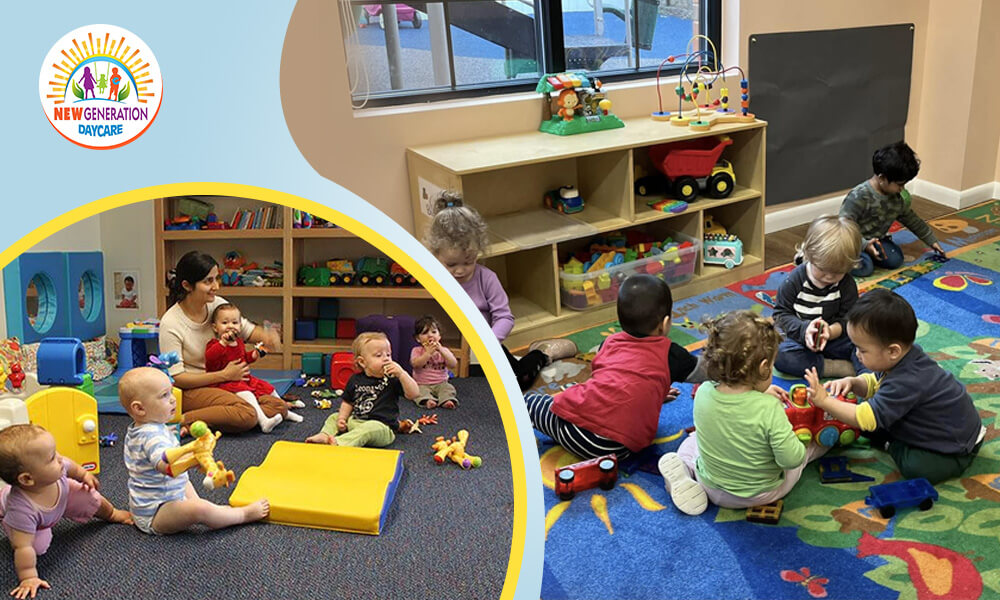
Choosing the right childcare program is one of the most important decisions parents make. Families want a place where children are safe, supported, encouraged to learn, and given opportunities to build confidence. When searching for a Licensed daycare Staten Island, parents should consider safety standards, educational activities, caregiver experience, daily routines, and communication with families.
A quality daycare provides more than supervision. It creates a warm, structured environment where children can learn through age-appropriate activities, creative play, social interaction, and guided exploration.
What to Look for in a Staten Island Daycare
Parents comparing childcare programs should consider these important factors:
- Licensing and safety: Make sure the daycare meets applicable licensing, health, and safety requirements.
- Qualified caregivers: Ask about staff experience, training, background checks, and professional development.
- Age-appropriate learning: Activities should encourage language, creativity, problem-solving, early academic skills, and motor development.
- Clean facilities: Classrooms, play areas, bathrooms, and shared spaces should be clean and well maintained.
- Balanced routines: Children benefit from a daily schedule that combines learning, play, meals, rest, and social activities.
- Parent communication: Families should receive clear updates about their child’s activities, progress, routines, and needs.
Benefits of a Private Daycare in Staten Island
A Private daycare Staten Island can be an attractive option for families looking for a structured childcare and early learning environment. Private programs may offer age-specific activities and consistent routines that support children’s individual developmental stages.
Before enrolling, parents can ask about classroom sizes, teacher-to-child ratios, outdoor activities, meals and snacks, nap schedules, and emergency procedures. Visiting the facility can also help parents determine whether the environment feels safe, welcoming, and appropriate for their child.
New Generation Learning Center focuses on creating an environment where children can experience early learning, social interaction, and development through engaging activities.
Questions to Ask Before Enrollment
Parents may want to ask:
- Is the facility currently licensed?
- What qualifications and training do caregivers have?
- What does a typical day look like?
- How are individual developmental needs supported?
- What safety and emergency procedures are followed?
- How does the daycare communicate with parents?
- Are meals and snacks provided?
- What are the enrollment requirements and operating hours?
Give Your Child a Strong Start
The early childhood years are an important period for developing communication, social, emotional, cognitive, and physical skills. A supportive daycare can encourage independence, curiosity, confidence, and positive relationships.
When searching for a Licensed daycare Staten Island, families should look beyond convenience. Safety, qualified caregivers, meaningful learning activities, and reliable communication all contribute to a positive childcare experience.
For families considering Private daycare Staten Island, scheduling a tour can provide valuable insight into the classrooms, staff, routines, and learning environment. New Generation Learning Center gives families an opportunity to explore childcare and early learning options based on their children’s needs.
Ultimately, the right daycare should give children a safe and engaging place to learn, play, grow, and thrive while giving parents greater peace of mind.
Pre-K Staten Island: Where Little Learners Build Big Futures
The preschool years are a time of growth. Children develop early academic skills while learning to communicate, socialize, solve problems, and become more independent. For families looking for a nurturing Pre-K Staten Island option, choosing a program that balances structured learning with hands-on discovery can make the transition to kindergarten more confident and enjoyable.
A Strong Foundation for Kindergarten
A designed Pre K program Staten Island families choose should prepare children for the classroom while making learning exciting. New Generation Learning Center offers a comprehensive pre-kindergarten approach that supports academic, social, emotional, and physical development through age-appropriate experiences.
Children can benefit from:
- Early literacy: Stories, sight words, letter activities, and foundational reading skills encourage a love of books.
- Early math: Counting, skip counting, measurement, time, and basic money concepts introduce children to practical mathematics.
- Science discovery: Hands-on activities encourage children to observe, ask questions, make predictions, and explore the world around them.
- Creative expression: Art, crafts, music, and imaginative activities give children opportunities to express ideas and build confidence.
- Social development: Group activities help children practice sharing, cooperation, communication, and respectful interactions.
- Motor development: Engaging activities strengthen fine and gross motor skills needed for writing, movement, and everyday independence.
Learning Through Exploration
Young children learn by participating and discovering. A quality Pre-K Staten Island program at New Generation Learning Center combines guided instruction with interactive experiences that encourage curiosity. Daily routines such as circle time can also strengthen listening, communication, attention, and classroom participation.
Individualized Support for Every Child
Every child develops differently. Effective early learning programs recognize individual learning styles and adapt activities to support each child’s needs. Personalized lesson planning can help children build confidence while developing skills at an appropriate pace. The curriculum also emphasizes emotional intelligence, independence, teamwork, empathy, critical thinking, and problem-solving.
Why Choose a Local Pre-K Program?
For Staten Island families, a located program can make daily routines easier while giving children a consistent learning environment close to home. A welcoming center with bright classrooms, nurturing teachers, enrichment activities, and family-focused support can create a positive experience for children and parents. The Staten Island location is at 389 Seaver Avenue, Staten Island, NY 10305.
The goal of a Pre K program Staten Island families can rely on is not simply to teach facts. It is to help children become confident learners ready to ask questions, build relationships, follow routines, and approach new experiences with enthusiasm.
Give Your Child a Bright Start
Choosing early education is a decision. Look for a program that combines learning, creativity, social development, and caring guidance in one environment. New Generation Learning Center provides Staten Island families with an engaging early learning experience designed to help children grow today and for tomorrow.
Schedule a tour to explore the classrooms, meet the teachers, and learn more about enrollment. A strong start today can help your child step into kindergarten with confidence and a lasting love of learning.
Make This Summer Unforgettable: The Best Summer Camp Near Me in Staten Island for Kids
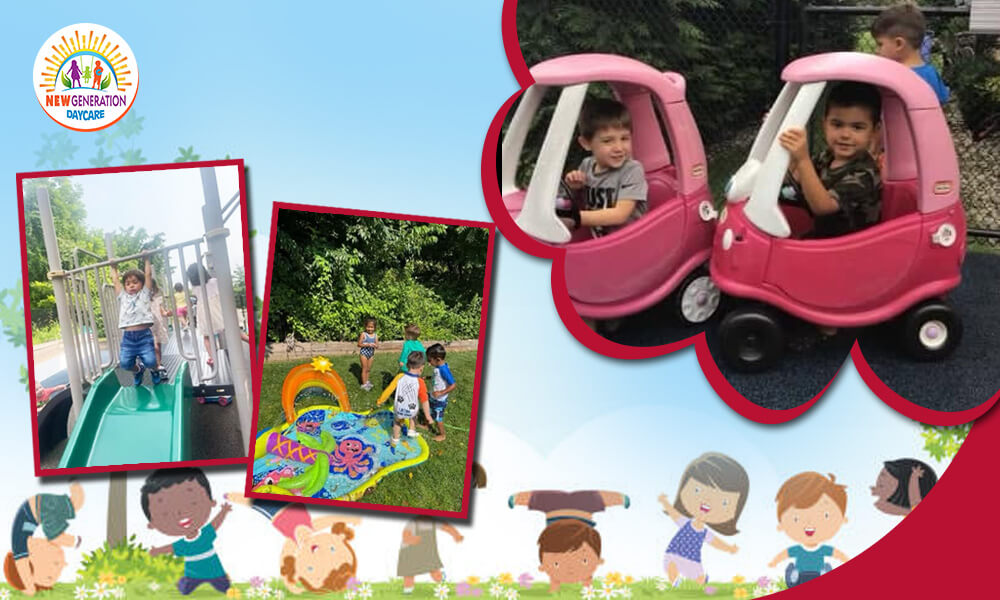
Finding the right activity for your child during summer break can make a big difference in their growth, confidence, and happiness. Families searching for a summer camp near me Staten Island want more than just childcare; they want a safe, engaging, and fun environment where children can learn, explore, and create lasting memories.
A quality summer camp Staten Island program provides children with opportunities to build friendships, discover new interests, and enjoy exciting daily experiences while staying active throughout the summer months.
Why Choose a Summer Camp Program in Staten Island?
Summer is the perfect time for children to step away from their regular routines and participate in activities that encourage creativity, teamwork, and independence. A well-designed camp experience helps kids develop important social skills while having fun with their peers.
Here are some benefits of enrolling your child in a local summer camp:
- Creative Learning Activities: Kids can explore arts, crafts, imaginative play, and hands-on projects that encourage curiosity and self-expression.
- Active Play & Fun Adventures: Outdoor games, group activities, and movement-based experiences help children stay energetic and healthy.
- Social Development: Children learn teamwork, communication, and confidence by interacting with new friends.
- Safe & Supportive Environment: Professional educators and caregivers provide guidance while ensuring children feel comfortable and included.
A Fun-Filled Summer Experience for Staten Island Kids
Parents looking for a trusted summer camp near me Staten Island often prefer programs that combine learning with entertainment. The right camp keeps children engaged through a variety of age-appropriate activities designed to support emotional, social, and intellectual development.
At New Generation Learning Center, children enjoy a summer experience focused on exploration, creativity, and meaningful connections. The program is designed to provide a welcoming atmosphere where kids can participate in exciting activities while building confidence and new skills.
What Makes a Great Summer Camp?
When selecting a summer camp Staten Island, parents should consider important factors such as:
- Experienced and caring staff
- Safe facilities and structured schedules
- Educational and recreational activities
- Opportunities for teamwork and friendship
- A positive environment where children can enjoy learning
A great summer camp is not just about keeping children busy; it is about helping them grow, discover their talents, and create happy childhood memories.
Give Your Child a Summer to Remember
Choosing the right summer camp near me Staten Island can give your child an unforgettable summer filled with learning, laughter, and adventure. With engaging activities, supportive educators, and a child-focused approach, New Generation Learning Center helps families make the most of summer break.
If you are searching for a reliable summer camp Staten Island option that combines fun and learning, explore a program that helps your child shine, build friendships, and enjoy every moment of their summer journey.
Give Your Child the Best Start at New Generation Learning Center in Staten Island
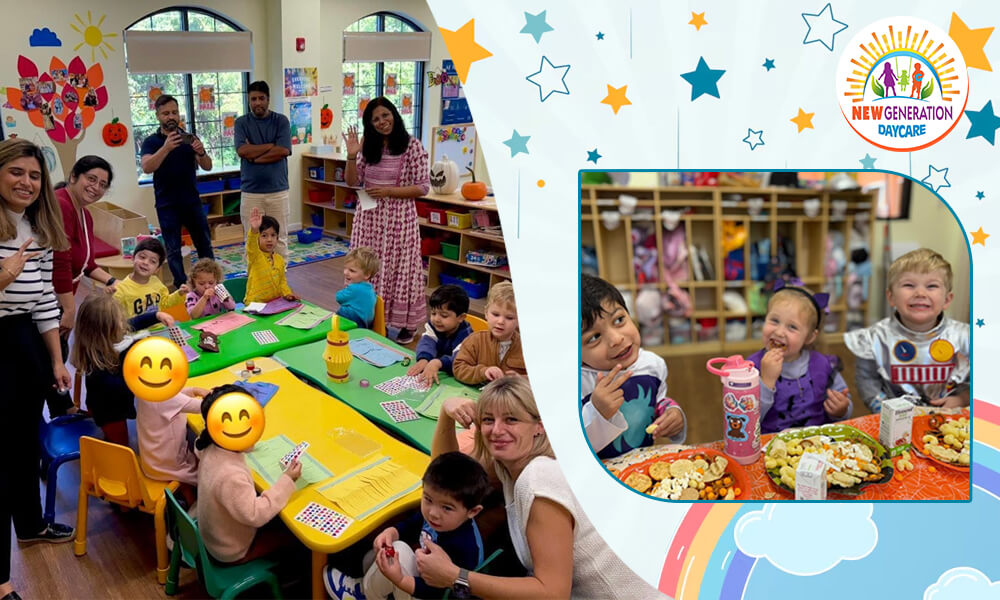
Choosing the right preschool is one of the most important decisions parents make during their child’s early years. A high-quality preschool provides more than just childcare; it creates a nurturing environment where children develop confidence, social skills, creativity, and a lifelong love of learning. If you are searching for Preschool 10305, New Generation Learning Center offers a welcoming educational setting designed to help every child thrive.
Why Early Childhood Education Matters
The preschool years play a vital role in a child’s cognitive, emotional, social, and physical development. Through age-appropriate activities and structured learning experiences, children build essential skills that prepare them for kindergarten and future academic success.
At New Generation Learning Center, experienced educators create engaging classrooms where children are encouraged to explore, discover, and grow at their own pace.
A Safe and Supportive Learning Environment
Parents want peace of mind knowing their children are learning in a secure, caring, and stimulating environment. A quality preschool should promote both education and emotional well-being.
Children benefit from:
- Safe and clean classrooms
- Caring and experienced teachers
- Age-appropriate learning materials
- Structured daily routines
- Small group learning opportunities
- Positive social interaction
- Creative play and exploration
- Individual attention and encouragement
These elements help children feel confident while developing important life skills.
Comprehensive Preschool Curriculum
Families looking for Preschool Staten Island NY often seek a program that balances academics with creativity and play-based learning. A well-rounded curriculum introduces foundational concepts while making learning enjoyable.
Key learning areas include:
- Early literacy and language development
- Beginning math concepts
- Science exploration
- Arts and crafts
- Music and movement
- Social and emotional development
- Fine and gross motor skills
- Problem-solving activities
- Teamwork and communication
This balanced approach supports every aspect of a child’s development while encouraging curiosity and independence.
Preparing Children for Kindergarten Success
A quality preschool program helps children transition confidently into elementary school. Through structured learning, classroom routines, and interactive activities, children develop the skills needed for future academic achievement.
Students learn how to:
- Follow classroom routines
- Build friendships
- Express ideas confidently
- Strengthen communication skills
- Develop independence
- Improve concentration
- Practice early reading and writing
- Build confidence through hands-on learning
These foundational experiences help children become enthusiastic and successful learners.
Convenient Choice for Staten Island Families
For parents searching for Preschool 10305, choosing a conveniently located learning center makes daily routines easier while providing children with a consistent educational experience close to home.
Families appreciate programs that combine educational excellence, flexible scheduling, caring teachers, and a welcoming environment where children feel excited to learn each day.
Why Parents Choose New Generation Learning Center
New Generation Learning Center is committed to helping every child reach their full potential through engaging educational experiences, compassionate teaching, and a supportive classroom environment. The center focuses on creating meaningful learning opportunities that inspire confidence, creativity, and lifelong curiosity.
Whether your child is beginning their educational journey or preparing for kindergarten, New Generation Learning Center provides the foundation needed for future success.
If you are looking for a trusted Preschool Staten Island NY, choosing a program that emphasizes academic growth, social development, and individualized attention can make a lasting difference. Investing in quality early childhood education today helps build confident, curious, and capable learners for tomorrow.
Give Your Child the Best Start at a Leading Preschool Staten Island NY
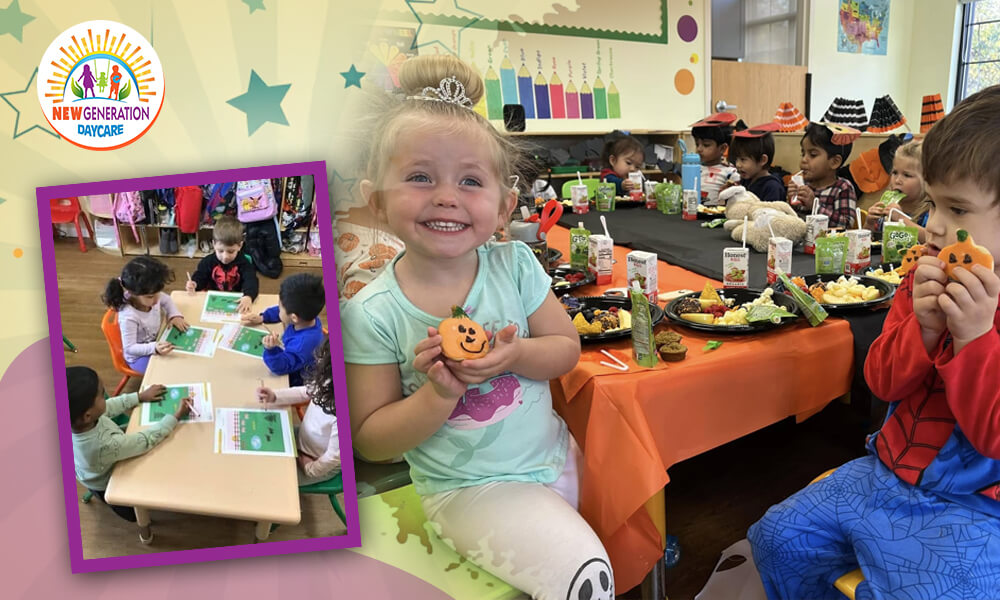
The early years of a child’s life are filled with discovery, growth, and learning opportunities that shape future success. Choosing the right preschool is one of the most important decisions parents can make. If you are searching for a high-quality Preschool Staten Island NY, finding a nurturing environment that encourages creativity, confidence, and academic readiness can make a lasting difference in your child’s development.
At New Generation Learning Center, children are encouraged to explore, learn, and build essential skills through engaging educational experiences. A well-designed preschool program helps children develop socially, emotionally, physically, and academically while preparing them for kindergarten and beyond.
Why Preschool Education Matters
A strong preschool foundation helps children:
- Build communication and language skills
- Develop social interaction and teamwork abilities
- Strengthen problem-solving and critical-thinking skills
- Improve emotional regulation and self-confidence
- Foster creativity through hands-on activities
- Prepare for a successful transition to elementary school
Research consistently shows that children who attend a quality preschool program often demonstrate stronger academic and social skills throughout their educational journey.
What to Look for in a Preschool near me
When parents search for a Preschool near me, they often want a learning environment that combines education, safety, and personal attention. Key features to consider include:
- Age-appropriate curriculum
- Experienced and caring teachers
- Safe and secure classrooms
- Interactive learning activities
- Opportunities for social development
- Clean and welcoming facilities
- Family involvement and communication
A preschool should inspire curiosity while creating a positive environment where children feel comfortable learning and exploring.
Learning Through Play and Exploration
Children learn best when they are actively engaged. Programs at New Generation Learning Center focus on hands-on experiences that make learning enjoyable and meaningful.
Activities may include:
- Early literacy development
- Mathematics and number recognition
- Science exploration
- Arts and crafts
- Music and movement
- Outdoor play
- Group learning experiences
These activities help children build foundational skills while encouraging independence and confidence.
Benefits of Choosing a Local Preschool Staten Island NY
Selecting a local preschool offers several advantages:
- Convenient location for families
- Opportunities to build community connections
- Familiarity with local educational standards
- Easier parent-teacher communication
- Consistent routines for children
Families searching for a trusted Preschool Staten Island NY often appreciate the balance of educational excellence and personalized care that a community-focused preschool provides.
Invest in Your Child’s Future
The preschool years are a critical stage of development. A supportive learning environment helps children gain the skills they need to thrive academically and socially.
Whether you are beginning your search for a Preschool near me or comparing educational options, New Generation Learning Center provides an environment where young learners can grow, discover, and build a strong foundation for lifelong success.
Give Your Child the Best Start with Quality Daycare in Staten Island
Finding the right daycare is one of the most important decisions parents make for their children. A nurturing environment, experienced educators, and engaging learning activities can shape a child’s confidence and development during their early years. If you are searching for a Private daycare Staten Island or a Licensed daycare Staten Island, choosing a center that prioritizes education, safety, and individualized attention can make all the difference.
At New Generation Learning Center, children are encouraged to explore, learn, and grow through age-appropriate programs designed to support every stage of early childhood development. The goal is to create a welcoming atmosphere where children feel secure while building essential life skills.
Why Choose a Quality Daycare?
A professionally managed daycare offers more than just supervision. It provides opportunities for children to develop socially, emotionally, and academically through structured activities and guided play.
Key benefits include:
- Safe and secure learning environments
- Experienced and caring educators
- Age-appropriate educational programs
- Interactive play that promotes creativity
- Daily routines that encourage responsibility
- Opportunities for social interaction and teamwork
- Activities that build communication and problem-solving skills
Parents looking for a Private daycare Staten Island often value personalized attention and smaller learning groups that help children thrive at their own pace.
Building Strong Foundations for Lifelong Learning
Early childhood education plays a significant role in preparing children for future academic success. A quality daycare program introduces foundational concepts in literacy, mathematics, science, and creative arts while making learning enjoyable.
A trusted Licensed daycare Staten Island also focuses on developing:
- Language and vocabulary skills
- Fine and gross motor coordination
- Emotional regulation
- Critical thinking abilities
- Self-confidence and independence
Through hands-on learning experiences and engaging classroom activities, children become curious learners who enjoy discovering new ideas every day.
A Balanced Approach to Education and Fun
At New Generation Learning Center, every day is designed to combine education with creativity and exploration. Children participate in activities that stimulate imagination while encouraging healthy physical and social development.
Programs may include:
- Storytelling and reading sessions
- Arts and crafts projects
- Music and movement activities
- STEM-based learning experiences
- Outdoor play and physical exercise
- Sensory exploration
- Group collaboration and interactive games
Families searching for a Private daycare Staten Island appreciate programs that balance structured learning with opportunities for independent discovery.
Supporting Families with Quality Care
Parents deserve peace of mind knowing their children are in a caring and supportive environment. A reputable Licensed daycare Staten Island emphasizes safety, communication, and consistent developmental progress while partnering with families throughout each child’s learning journey.
By choosing New Generation Learning Center, families invest in an environment that nurtures curiosity, confidence, and lifelong learning. With dedicated educators, engaging programs, and a child-centered philosophy, children receive the support they need to grow academically, socially, and emotionally while preparing for a bright future.
Exciting Summer Adventures and Learning Opportunities for Kids in Staten Island
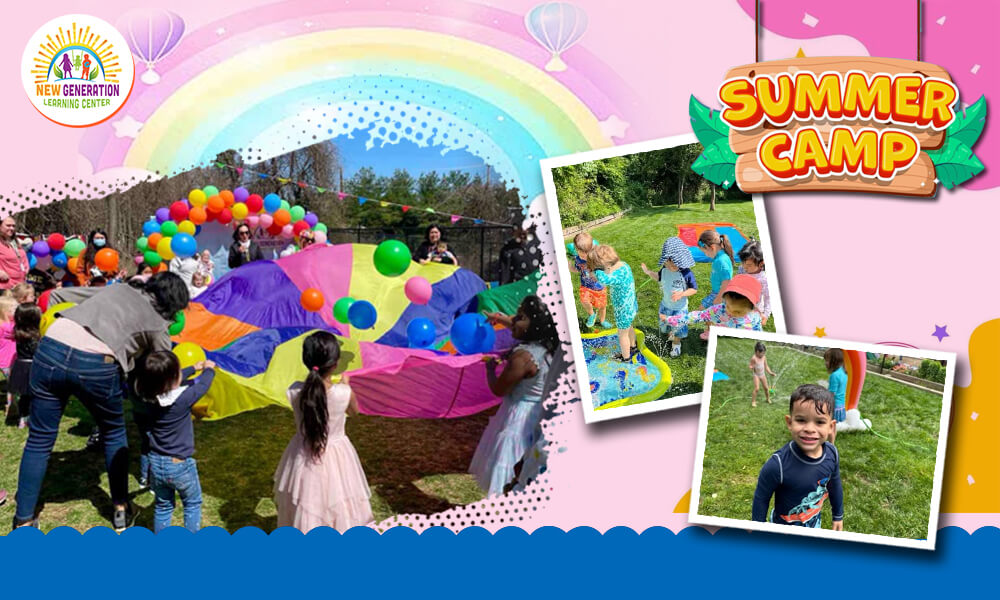
Summer is the perfect time for children to explore new interests, build friendships, and stay active in a fun and supportive environment. Parents searching for engaging seasonal programs often look for activities that combine education, creativity, recreation, and personal development. Finding the right summer camp Staten Island program can give children an unforgettable experience while providing parents with peace of mind throughout the summer months.
At New Generation Learning Center, children can enjoy exciting summer activities designed to encourage learning, teamwork, confidence, and creativity. Structured programs help kids stay engaged while developing important social and academic skills outside the classroom.
Why Summer Camps Are Important for Child Development
Summer camps provide much more than entertainment. They create opportunities for children to develop communication skills, independence, leadership abilities, and confidence in a positive group setting. Many families searching for summer camp near me Staten Island want programs that balance educational enrichment with recreational fun.
A well-rounded summer camp experience may include:
- Arts and crafts activities
- Outdoor games and sports
- Science and creative learning projects
- Music and dance programs
- Team-building activities
- Educational enrichment sessions
- Social interaction and friendship development
These activities help children stay mentally and physically active during summer break while encouraging curiosity and creativity.
A Safe and Supportive Environment for Every Child
Safety and supervision are major priorities for parents choosing a summer camp Staten Island program. Families want to know their children are participating in activities within a secure, organized, and welcoming environment.
Professional summer programs focus on maintaining structured schedules, experienced staff supervision, and age-appropriate activities that keep children engaged throughout the day. Positive learning environments also help children feel more comfortable trying new experiences and building confidence.
At New Generation Learning Center, children are encouraged to explore their interests while participating in fun educational and recreational activities designed to support personal growth and development.
Encouraging Learning Beyond the Classroom
Summer learning programs can help children maintain academic progress while making education enjoyable. Interactive activities such as storytelling, science experiments, reading challenges, and creative arts projects allow children to continue developing important skills during school breaks.
Parents looking for a reliable summer camp near me Staten Island often prefer programs that combine entertainment with educational value. This balanced approach helps children remain engaged while reducing summer learning loss.
In addition to academics, summer camps also teach important life skills such as teamwork, communication, responsibility, and problem-solving. These experiences can positively influence a child’s confidence and emotional development long after summer ends.
Creating Lasting Summer Memories
A quality summer camp Staten Island program provides children with opportunities to make new friends, discover talents, and create lasting memories in a supportive setting. From exciting group activities to educational adventures, summer camps can become one of the most rewarding experiences of childhood.
Families searching for a trusted summer camp near me Staten Island program can benefit from choosing a center that prioritizes safety, creativity, learning, and child development. With engaging programs and caring supervision, New Generation Learning Center continues to provide meaningful summer experiences for children and families throughout Staten Island.
Give Your Child the Best Start with a Quality Preschool in Staten Island
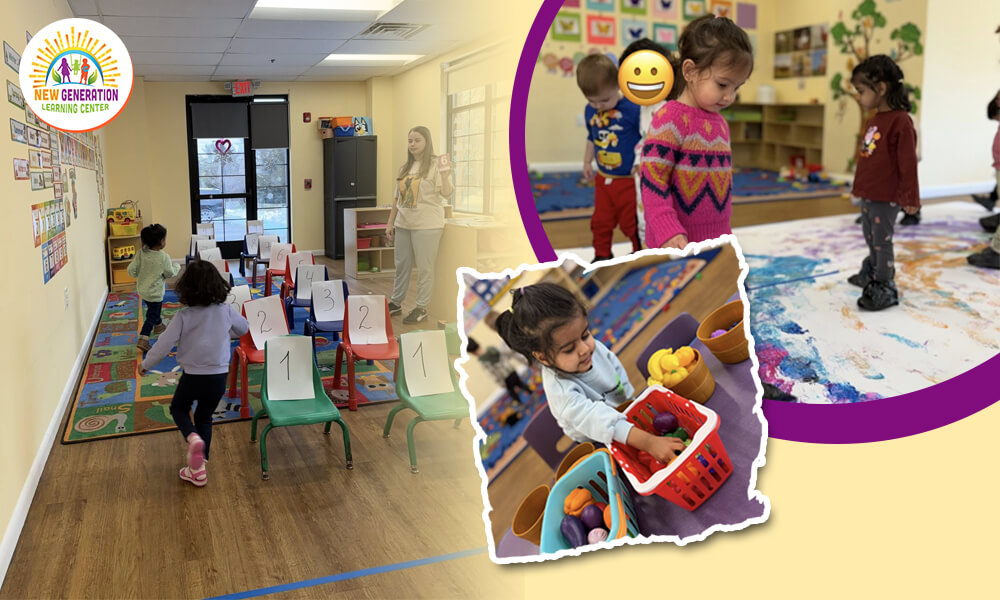
Choosing the right preschool is an important step in your child’s early development. Parents want a safe, nurturing, and educational environment where children can grow academically, socially, and emotionally. If you are searching for a Preschool near me that offers engaging learning experiences and caring teachers, Staten Island families have trusted options that support every child’s success.
Why Early Childhood Education Matters
A quality preschool program helps children build strong foundational skills before kindergarten. Early learning environments encourage:
- Language and communication development
- Early math and reading readiness
- Social interaction and teamwork
- Creative thinking and problem-solving
- Emotional confidence and independence
- Structured routines and classroom behavior
At New Generation Learning Center, children participate in hands-on activities that make learning exciting and meaningful every day.
Benefits of Choosing a Professional Preschool Program
Parents looking for a dependable Preschool near me Staten Island often seek programs that focus on both education and personal growth. A strong preschool experience can help children:
- Develop confidence in classroom settings
- Improve listening and communication skills
- Learn how to share and cooperate with others
- Build friendships through interactive play
- Strengthen motor and cognitive abilities
- Prepare for long-term academic success
Experienced teachers guide students through age-appropriate lessons designed to support individual learning styles.
A Safe and Supportive Learning Environment
Safety and comfort are major priorities for families searching for a Preschool near me. A well-designed preschool environment should provide:
- Clean and organized classrooms
- Caring and attentive staff members
- Safe indoor and outdoor play areas
- Positive teacher-to-child interaction
- Structured daily schedules
- Encouraging and welcoming learning spaces
At New Generation Learning Center, the goal is to create an atmosphere where children feel secure, supported, and excited to learn.
Programs Designed for Growing Minds
Children learn best through exploration and interactive experiences. Preschool programs often include:
- Storytime and reading activities
- Music, dance, and creative arts
- Group learning exercises
- Educational games and hands-on projects
- Early science and discovery activities
- Social development activities
Families searching for a trusted Preschool near me Staten Island appreciate programs that combine education with creativity and fun.
Preparing Children for Future Success
A strong preschool education helps children transition smoothly into kindergarten and elementary school. Early learning programs teach important life skills such as:
- Following instructions
- Building daily routines
- Communicating with teachers and classmates
- Developing independence
- Managing emotions in social settings
By choosing New Generation Learning Center, parents can provide children with a positive early education experience that supports lifelong learning and development.
For families searching for a reliable Preschool near me or a nurturing Preschool near me Staten Island, finding the right preschool can make a lasting difference in a child’s future growth, confidence, and academic success.
Safe, Nurturing and Trusted: Discover Quality Daycare in Staten Island
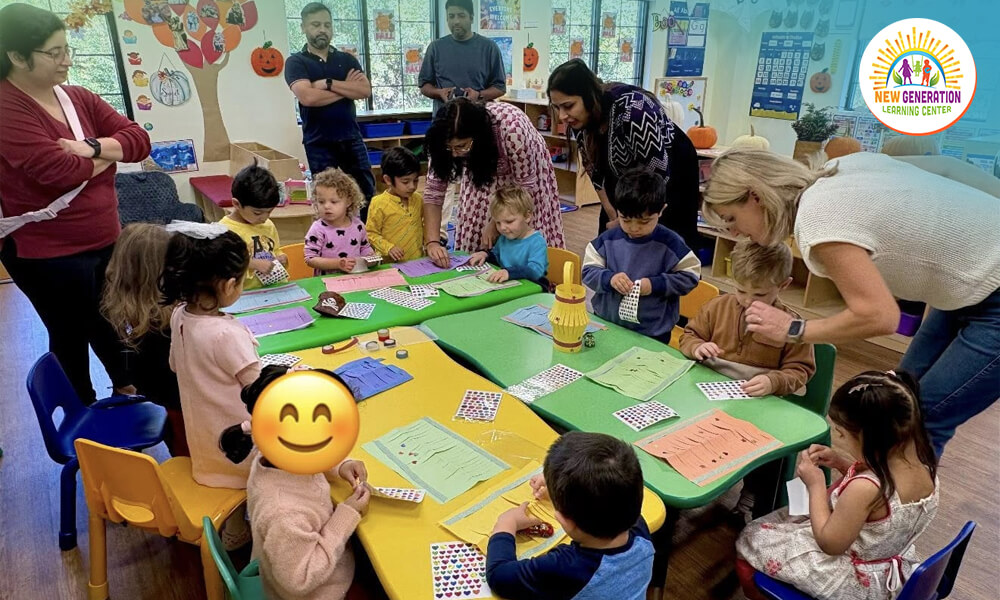
Finding the right daycare is one of the most important decisions parents make for their child’s early development. A safe, engaging, and supportive environment helps children grow emotionally, socially, and academically. For families searching for a reliable Private daycare Staten Island or a trusted Licensed daycare Staten Island, choosing a center that prioritizes both care and education is essential.
Early childhood is a critical stage of learning, where children begin to explore the world around them. A high-quality daycare program offers more than supervision, it provides structured learning, creative activities, and meaningful interactions that build a strong foundation for future success.
What Makes a Quality Daycare?
When considering a Private daycare Staten Island, parents should look for programs that combine safety, education, and personalized attention. A well-rounded daycare includes:
- Structured Learning Programs
Age-appropriate lessons that introduce early literacy, numbers, and problem-solving skills. - Safe & Secure Environment
Facilities designed with child safety in mind, including secure entry systems and supervised play areas. - Experienced & Caring Staff
Trained caregivers who understand child development and create a nurturing atmosphere. - Interactive Activities
Creative play, music, art, and group activities that encourage socialization and imagination.
For those seeking a Licensed daycare Staten Island, licensing ensures that the facility meets state regulations, including safety standards, staff qualifications, and curriculum guidelines.
Benefits of Choosing a Licensed Daycare
Enrolling your child in a Licensed daycare Staten Island provides peace of mind and long-term benefits:
- Regulated Standards
Licensed center follow strict guidelines to ensure quality care and safety. - Early Learning Development
Children gain essential skills that prepare them for preschool and kindergarten. - Social Interaction
Daily interaction with peers helps children develop communication and teamwork skills. - Routine and Stability
Structured schedules help children feel secure and build positive habits.
A Trusted Choice for Staten Island Families
New Generation Learning Center is dedicated to providing a supportive and enriching environment for young learners. With a focus on both care and education, the center offers programs designed to meet the developmental needs of every child.
As a recognized Private daycare Staten Island provider, New Generation Learning Center emphasizes individualized attention, ensuring each child receives the care and encouragement they need to thrive. Their commitment to maintaining high standards also makes them a dependable Licensed daycare Staten Island option for families seeking quality childcare.
What to Look for When Selecting a Daycare
Choosing the right daycare involves careful evaluation. Parents should:
- Visit the facility and observe staff interactions
- Ask about safety measures and licensing credentials
- Review daily schedules and learning activities
- Consider class sizes and teacher-to-child ratios
These steps help ensure your child is placed in a safe and nurturing environment.
Final Thoughts
A quality daycare sets the stage for lifelong learning and development. Whether you are exploring a Private daycare Staten Island or a dependable Licensed daycare Staten Island, selecting the right center can positively impact your child’s growth and confidence.
New Generation Learning Center continues to support families by offering a safe, engaging, and educational space where children can learn, play, and thrive every day.
Make This Summer Unforgettable with Engaging Kids Programs in Staten Island
Summer is the ideal time for children to explore, learn, and grow outside of the traditional classroom. Parents searching for an engaging summer camp Staten Island program often look for a balance of education, creativity, and outdoor fun. A thoughtfully designed camp keeps children active, builds confidence, and creates lasting memories. Programs offered by New Generation Learning Center are structured to support both learning and enjoyment in a safe and welcoming environment.
A high-quality Kids summer camp Staten Island experience goes beyond simple recreation. It encourages children to develop new skills while interacting with peers and participating in exciting activities. New Generation Learning Center focuses on creating a supportive setting where children feel motivated to explore their interests and build friendships.
What Children Can Expect
- Creative arts and crafts to encourage imagination
- Interactive storytelling and reading sessions
- STEM-inspired hands-on learning activities
- Group games that promote teamwork and collaboration
- Music and movement sessions for active participation
- Outdoor play to support physical development
These engaging activities make a summer camp Staten Island program both educational and enjoyable. Children remain engaged while developing communication skills and confidence.
Benefits for Kids
- Builds social and communication skills
- Encourages creativity and self-expression
- Supports physical activity and coordination
- Promotes teamwork and problem-solving
- Keeps children mentally engaged during summer break
- Creates opportunities for new friendships
Parents searching for a Kids summer camp Staten Island option appreciate programs that combine fun with meaningful development. New Generation Learning Center offers structured routines that help children stay focused while enjoying their day.
A Balanced Daily Schedule
A well-organized summer camp Staten Island program typically includes:
- Morning welcome and group interaction
- Learning-based enrichment activities
- Snack and social time
- Outdoor games and movement sessions
- Creative workshops in the afternoon
- Closing circle with reflection and sharing
This structured approach ensures children experience a variety of activities throughout the day. A reliable Kids summer camp Staten Island program keeps children engaged while maintaining a comfortable routine.
Safe and Supportive Environment
Safety and supervision are essential for parents. Professional staff members monitor all activities to ensure children participate in a secure environment. Clean play areas, organized classrooms, and attentive guidance help children feel comfortable and confident. New Generation Learning Center emphasizes a nurturing atmosphere where every child is encouraged to participate and grow.
Choosing the right summer camp Staten Island option gives children the opportunity to learn, play, and create unforgettable summer memories. With engaging activities, structured schedules, and supportive supervision, a Kids summer camp Staten Island program provides the perfect mix of fun and development for a successful summer.
Building Bright Futures: Top Pre-K Programs in Staten Island
Early childhood education plays a critical role in preparing children for lifelong learning and success. For families in Staten Island, enrolling children in a quality Pre-K Staten Island program ensures they receive the guidance, support, and skills necessary to thrive academically and socially. A well-structured Pre K program Staten Island combines nurturing care with engaging learning experiences to develop curiosity, confidence, and a love for learning.
Why Pre-K Education Matters
Pre-K programs provide a foundation in cognitive, social, and emotional development. At a trusted Pre-K Staten Island center, children engage in age-appropriate activities that stimulate creativity, critical thinking, and problem-solving. Through play-based learning, arts and crafts, interactive Storytime, and group activities, children develop essential skills that prepare them for kindergarten and beyond.
A high-quality Pre K program Staten Island focuses on more than academics. Social-emotional learning is a core component, helping children build relationships, communicate effectively, and manage emotions. Educators guide children in collaborative activities, encouraging teamwork, empathy, and self-confidence while fostering a supportive and safe learning environment.
Key Features of a Strong Pre-K Program
When choosing a Pre-K Staten Island or Pre K program Staten Island, families should look for:
- Experienced and Caring Educators – Certified teachers trained in early childhood education who provide personalized attention.
- Structured Curriculum – Balanced programs combining play, academics, and social development.
- Safe and Stimulating Environment – Classrooms and play areas designed to encourage exploration while maintaining safety standards.
- Parent Engagement – Open communication, progress updates, and opportunities to participate in activities.
Benefits of Local Pre-K Programs
Choosing a nearby Pre-K Staten Island program allows families to stay closely involved in their child’s early learning journey. Proximity makes it easier to participate in events, meet teachers, and observe progress. Local center also fosters community connections, giving children the opportunity to build friendships in a familiar and supportive setting.
Why Choose New Generation Learning Center
At New Generation Learning Center, children receive individualized attention and comprehensive early education. Their Pre K program Staten Island combines a nurturing environment with a structured curriculum designed to support academic, social, and emotional growth. With experienced educators and a focus on holistic development, New Generation Learning Center provides children with the skills and confidence needed to succeed in school and in life.
Investing in quality early education through a trusted Pre-K Staten Island program lays the foundation for a lifetime of learning and growth. Families seeking a safe, engaging, and educational environment will find the guidance and support they need at New Generation Learning Center.
A Safe and Nurturing Start for Your Child in Staten Island
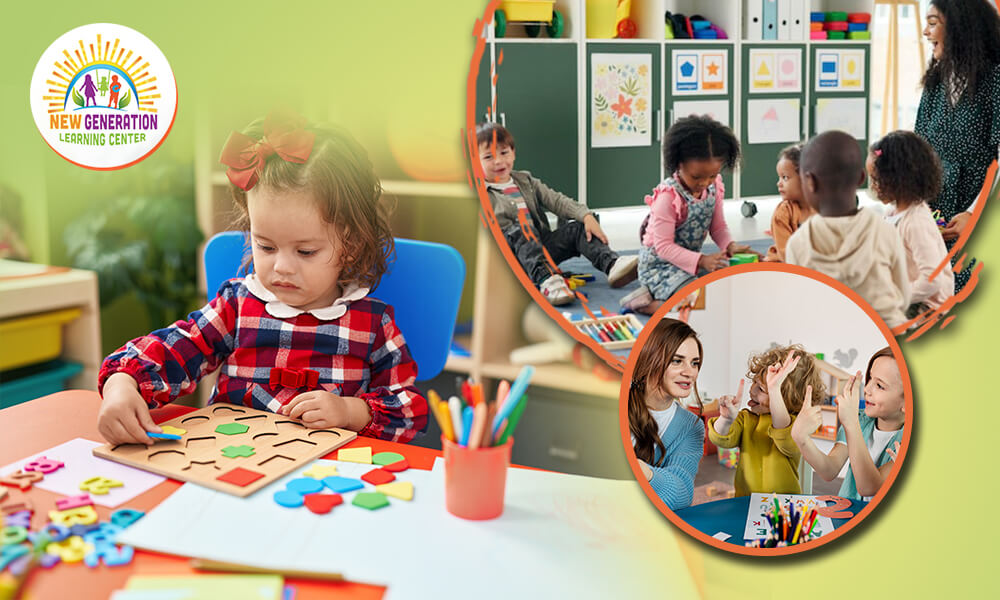
Choosing the right daycare is one of the most important decisions parents make for their children. Families want a place where their child feels safe, supported, and encouraged to grow. When searching for an Affordable daycare Staten Island, parents often look for a balance between quality education, caring staff, and a welcoming environment that helps children thrive.
Early childhood programs play a vital role in a child’s development. During the first few years of life, children build the foundation for learning, social interaction, and emotional growth. A structured daycare program provides opportunities for exploration, creativity, and early education while ensuring children are cared for by experienced professionals.
Why Quality Daycare Matters
A reliable daycare environment offers more than supervision. It introduces young learners to structured activities that support cognitive, social, and physical development. Through guided play, storytelling, art, music, and group interaction, children develop essential skills such as communication, problem-solving, and teamwork.
Parents seeking a Licensed daycare Staten Island can feel confident knowing that the program follows state guidelines and safety standards. Licensed facilities are required to maintain trained staff, appropriate child-to-teacher ratios, and safe learning environments. These standards help ensure that every child receives the attention and care they need.
Programs like New Generation Learning Center focus on creating a balanced environment where children learn while having fun. Structured activities are combined with free play to encourage creativity and curiosity.
A Learning Environment Designed for Growth
A well-designed daycare program supports both academic readiness and emotional development. Children are introduced to early literacy, numbers, shapes, and basic problem-solving through engaging activities that match their developmental stage.
Parents looking for an Affordable daycare Staten Island often appreciate programs that provide educational value without compromising quality. A strong daycare program focuses on building confidence, independence, and social skills that prepare children for preschool and kindergarten.
At New Generation Learning Center, children participate in activities that promote creativity and exploration. Classrooms are designed to be stimulating and safe, allowing children to interact with learning materials that spark curiosity and imagination.
Caring Teachers and Supportive Staff
The quality of educators plays a major role in a child’s daycare experience. Skilled teachers create a nurturing environment where children feel comfortable and valued. They guide young learners with patience, encouragement, and age-appropriate instruction.
Families choosing a Licensed daycare Staten Island often look for programs with experienced educators who understand early childhood development. Teachers help children build friendships, express their ideas, and develop a love for learning.
Programs like New Generation Learning Center also emphasize communication with parents, ensuring families stay informed about their child’s daily activities and progress.
Preparing Children for a Bright Future
A quality daycare program lays the groundwork for lifelong learning. Children who attend structured early education programs often transition more smoothly into preschool and elementary school. They develop stronger social skills, improved communication, and greater confidence.
For families searching for an Affordable daycare Staten Island, finding a supportive and engaging learning environment is essential. A program that combines safety, education, and nurturing care helps children grow academically and socially.
By choosing the right daycare, parents give their children the opportunity to explore, learn, and build a strong foundation for future success.
Why New Generation Learning Center is the Top Choice for Daycare in Staten Island
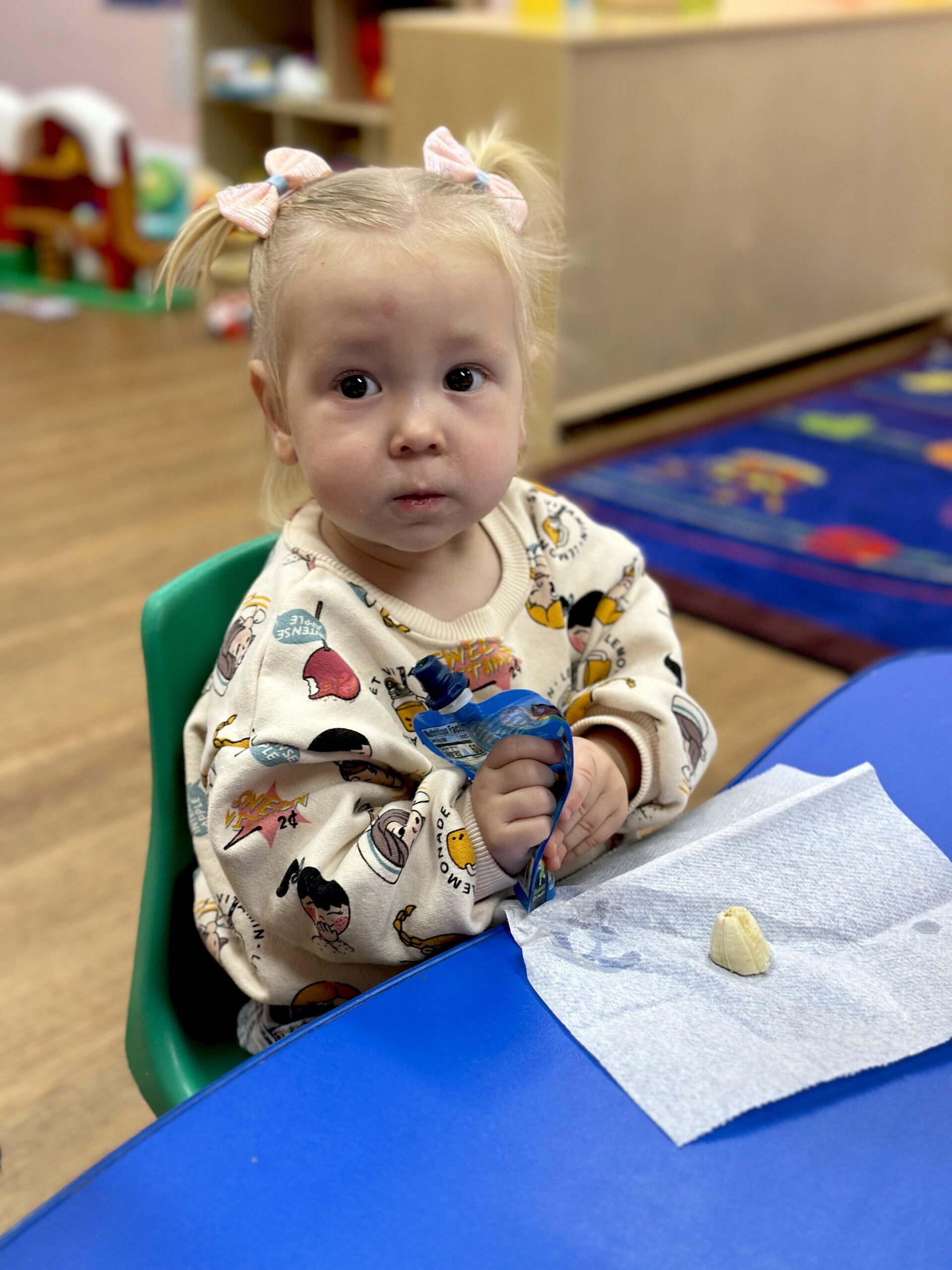
Every parent wants the very best for their child especially when it comes to early childhood care. If you have been searching for the best daycare Staten Island has to offer, you are looking for a place that goes beyond basic care to foster growth, curiosity, and confidence. New Generation Learning Center stands out as a trusted partner in your child’s early years, delivering a balance of compassionate care and developmental learning.
Our center has built a reputation for being a nurturing and enriching environment where children feel safe, valued, and eager to explore. From the moment your child steps through our doors, they become part of a community that supports their emotional well-being and academic potential.
A Daycare Center in Staten Island You Can Trust
Choosing a Daycare center Staten Island families rely on means finding one that prioritizes quality learning and individualized attention. At New Generation Learning Center, we focus on building strong teacher-child relationships that help children flourish. Our experienced team understands how to guide young learners through key milestones while encouraging independence, social skills, and creativity.
Our programs are thoughtfully designed to meet the developmental needs of infants, toddlers, and preschoolers. Through structured activities and play based learning, children develop essential skills in communication, problem-solving, and early academic concepts.
Programs for Every Age and Stage
We know that children grow rapidly during their early years and that each stage deserves tailored care and attention:
- Infant Program: Comfort, sensory exploration, and nurturing routines.
- Toddler Program: Language expansion and early cognitive development.
- Preschool Program: Early literacy, math readiness, and kindergarten preparation.
Parents searching for a Daycare near me Staten Island appreciate the thoughtful curriculum and engaging daily routines we offer. Our classrooms are filled with opportunities for hands-on learning, interactive play, and creative expression that encourage every child to shine.
A Focus on Learning and Fun
Learning at New Generation Learning Center happens in a joyful environment that stimulates imagination and curiosity. Our daily schedule includes art projects, music and movement, story time, outdoor play, and exploratory activities that support physical, emotional, and cognitive development. These experiences are designed to make learning fun while laying the foundation for future academic success.
As one of the top contenders for the best daycare Staten Island parents trust, we take pride in our welcoming and inclusive community. We work closely with families to ensure open communication, updates on progress, and a collaborative approach to each child’s growth.
Why Families Choose Us
Convenience, quality, and care all come together at New Generation Learning Center. We offer flexible scheduling, a clean and safe environment, and a team that truly understands early childhood development. Whether you are new to the area or looking to switch childcare providers, when you search for Daycare near me Staten Island, consider us your partner in nurturing your child’s potential.
Schedule a tour today and see firsthand why so many families consider us the ideal Daycare center Staten Island choice.
A Bright Start for Young Learners with Quality Pre-K Education in Staten Island
Early childhood education lays the groundwork for a child’s academic, social, and emotional success. Choosing the right Pre-K Staten Island program helps young learners build confidence, curiosity, and essential skills before stepping into kindergarten. Parents in Staten Island often look for programs that blend learning with play in a warm, supportive environment.
A well-structured Pre K program Staten Island focuses on age-appropriate learning experiences that encourage exploration and independence. Children are introduced to early literacy, math concepts, and creative expression through engaging, hands-on activities that make learning enjoyable and meaningful.
At New Generation Learning Center, the Pre-K experience is thoughtfully designed to support the overall development of each child. The program goes beyond academics, placing strong emphasis on emotional growth, social interaction, and positive behavior. Children learn to follow routines, express themselves confidently, and interact respectfully with peers and teachers.
A quality Pre-K Staten Island program prepares children for a smooth transition into kindergarten by helping them adapt to structured classroom settings. Daily schedules promote consistency, while guided activities strengthen listening skills, problem-solving abilities, and early critical thinking.
Key Benefits of a Strong Pre-K Program
A comprehensive Pre K program Staten Island typically includes:
- Early literacy development through storytelling, reading, and phonics
- Introduction to basic math skills using counting, sorting, and games
- Creative activities such as art, music, and imaginative play
- Social skill building through group activities and teamwork
- Development of independence and confidence through guided routines
- Safe, clean, and nurturing classroom environments
The Pre K program Staten Island at New Generation Learning Center is designed to keep children engaged while allowing them to learn at their own pace. Personalized attention from experienced educators ensures that every child receives the support they need to grow academically and socially.
Safety and communication are important priorities for families. A trusted Pre-K Staten Island program maintains structured supervision, secure facilities, and clear daily routines. Regular communication with parents helps keep families informed about milestones, classroom activities, and developmental progress.
Social interaction is another vital part of early education. Through shared play and collaborative learning, children develop empathy, cooperation, and communication skills. These abilities form the foundation for strong relationships and emotional intelligence later in life.
Families continue to choose New Generation Learning Center for its commitment to nurturing young learners and preparing them for future success. By combining academics, creativity, and care, the program creates a balanced and enriching early education experience.
In summary, selecting the right Pre-K Staten Island option is an important investment in a child’s future. A high-quality Pre K program Staten Island equips children with the skills, confidence, and enthusiasm they need to thrive in kindergarten and beyond.
Unforgettable Fun This Summer: Best Summer Camp for Kids in Staten Island

Summer is a time for adventure, friendship, and unforgettable memories. If you’re searching for a summer camp near me that combines fun with learning, you have come to the right place. For families looking for a vibrant summer camp for kids in Staten Island, New Generation Learning Center offers an exciting and enriching program designed specifically to keep children engaged all season long.
Our summer camp provides a safe, stimulating environment where kids can explore new interests, make friends, and grow their confidence. Whether your child loves arts and crafts, outdoor games, or imaginative play, we make every day an opportunity for discovery and joy.
A Summer Adventure Just Around the Corner
One of the biggest priorities for parents is finding a summer camp near me that’s both convenient and high-quality. At New Generation Learning Center, we balance convenience with an action-packed schedule of activities that appeal to a wide range of interests and ages.
Our summer program includes:
- Creative art and music sessions
- Team-building outdoor games
- STEM-inspired challenges
- Storytelling and dramatic play
- Nature exploration
Each activity is thoughtfully designed to nurture children’s curiosity and keep them excited about learning even during the summer break. Our dedicated team of educators ensures every child feels included, safe, and encouraged each day.
Fun Meets Learning All Summer Long
For families focused on enriching experiences, our summer camp for kids in Staten Island goes beyond traditional day camps. While fun is always at the forefront, we weave educational elements into every activity. Kids build social skills through group tasks, strengthen motor development through active play, and expand creative thinking through crafts and challenges.
We pride ourselves on creating a summer experience that feels joyful yet purposeful. Each session is structured to help children grow in confidence, independence, and problem-solving all while having a blast with new friends.
The Perfect Choice for Local Families
When parents type summer camp for kids near me into their search bar, they’re looking for something special: a summer option that’s close by, trustworthy, and full of opportunities for growth. New Generation Learning Center checks all those boxes and more. Our community of families appreciates how we blend care with creativity, making every day of camp both fun and meaningful.
Safety is our top priority. We follow strict health and supervision standards to ensure peace of mind for parents while children are free to explore and enjoy themselves. Our experienced staff members are trained in early childhood engagement and support each camper with warmth and professionalism.
Make This Summer One to Remember
Summer should be a season of laughter, learning, and exploration. If you’re searching for a summer camp near me that truly delivers, look no further than our exciting summer camp for kids in Staten Island. With a variety of activities, caring staff, and a welcoming atmosphere, New Generation Learning Center offers the perfect place for kids to shine this summer.
Sign up today and give your child a summer full of unforgettable moments!
A Fun and Enriching Summer Camp Experience for Kids in Staten Island

Summer is the perfect season for children to explore new interests, make friends, and continue learning outside the classroom. Choosing the right summer camp for kids in Staten Island helps parents ensure their children enjoy a safe, structured, and exciting environment during the school break. A well-planned camp program balances fun activities with educational enrichment to support overall child development.
A high-quality kids summer camp in Staten Island offers more than just playtime. It provides daily routines, guided activities, and age-appropriate learning experiences that help children grow socially, emotionally, and academically. From creative arts and hands-on projects to outdoor games and group challenges, summer camps keep children active, engaged, and motivated.
Parents looking for a trusted Summer Camp Staten Island, NY often prioritize programs that focus on learning through play. Play based learning allows children to develop problem-solving skills, creativity, and communication naturally. Structured summer activities also help reduce screen time and encourage real-world interaction, which is essential for healthy childhood development.
One of the greatest benefits of enrolling in a summer camp for kids in Staten Island is social development. Children interact with peers from diverse backgrounds, learn teamwork, and build confidence in group settings. These social skills are critical for long-term success both inside and outside the classroom. Camps also promote independence by encouraging children to try new activities in a supportive environment.
A well-designed kids summer camp in Staten Island ensures that learning continues even when school is out. Educational games, storytelling, science-based activities, and creative expression help prevent summer learning loss while keeping the experience enjoyable. Children return to school refreshed, confident, and ready to learn.
Families seeking a nurturing and structured environment often turn to New Generation Learning Center for thoughtfully designed summer programs. With experienced educators and a child-focused approach, the center creates a balance between fun and learning that supports each child’s unique needs and interests.
Another important aspect of a quality Summer Camp Staten Island, NY is consistency and safety. Clear routines, supervised activities, and a positive atmosphere help children feel secure and comfortable. This sense of stability allows them to fully engage in learning and play throughout the summer months.
Choosing the right summer camp for kids in Staten Island is an investment in your child’s growth, happiness, and confidence. With engaging activities, educational enrichment, and a supportive environment, New Generation Learning Center delivers a summer experience that families trust. New Generation Learning Center continues to provide meaningful summer learning opportunities that help children build skills, friendships, and lasting memories.
Trusted and Loving Child Care in Staten Island for Growing Minds
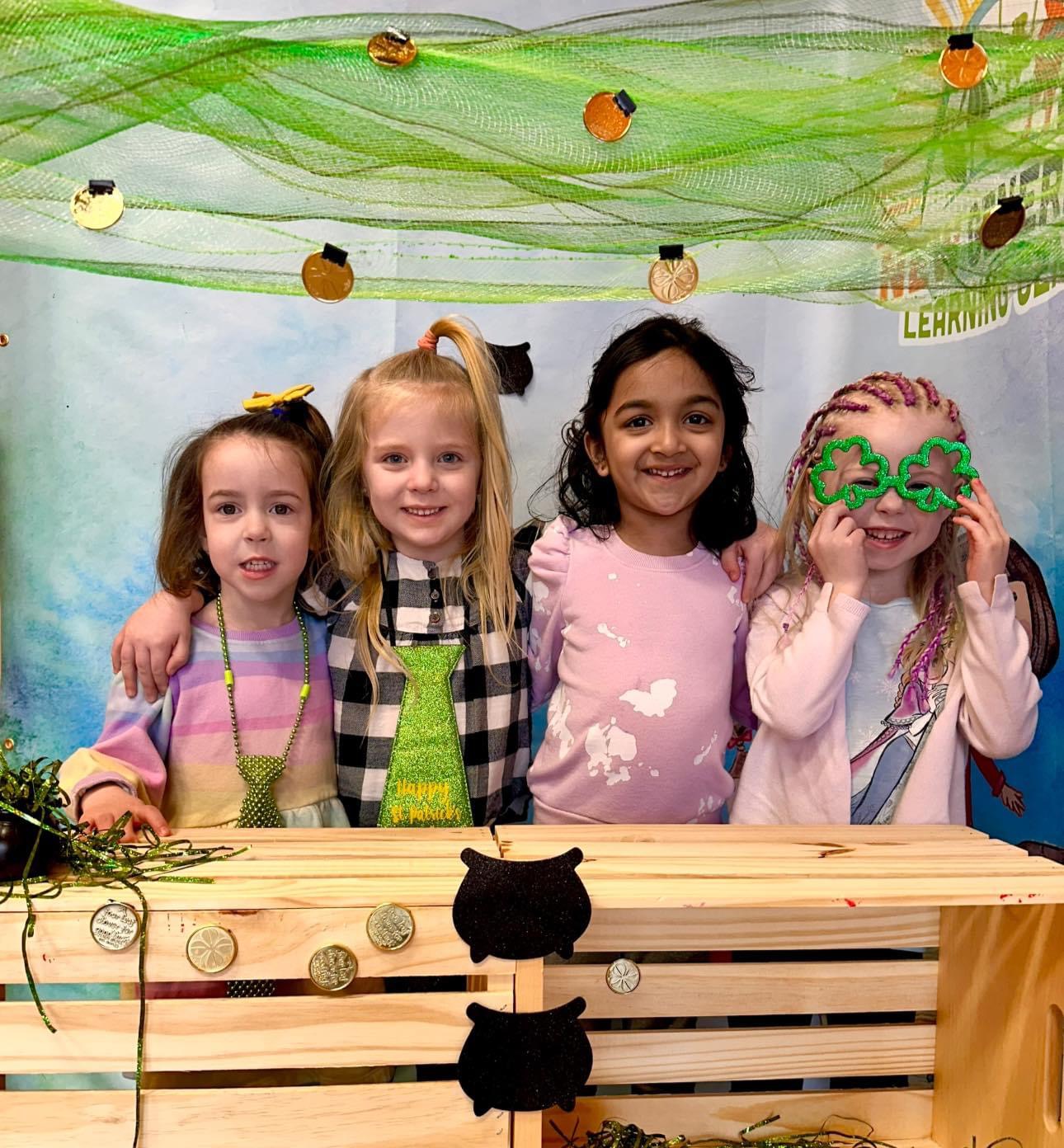
Finding dependable, nurturing Child care Staten Island families can rely on is one of the most important decisions a parent will make. Your child deserves a safe, engaging environment where they can learn, grow, and build confidence every day. At New Generation Learning Center, we understand how vital early childhood experiences are in shaping lifelong success.
Our center is designed to provide a warm, structured atmosphere where children feel supported and inspired. From the moment families walk through our doors, they notice the difference caring teachers, thoughtfully designed classrooms, and programs that blend learning with creativity and fun.
A Safe & Stimulating Environment
Parents searching for dependable Child daycare Staten Island options want more than supervision, they want meaningful early education. Our programs focus on social development, language skills, early math concepts, and creative expression. Through hands-on activities, guided play, and interactive lessons, children build essential skills that prepare them for preschool and beyond.
Safety is always our top priority. Our facility follows strict health and safety guidelines, and our trained staff ensures every child receives attentive, individualized care. We maintain small group sizes so children benefit from personal attention and strong teacher-child connections.
Programs Designed for Every Stage
At New Generation Learning Center, we offer age-appropriate programs tailored to infants, toddlers, and preschoolers. Each classroom follows a structured curriculum that encourages curiosity and discovery.
- Infant Care: Gentle routines and sensory exploration in a nurturing setting.
- Toddler Programs: Language development, motor skills, and social interaction.
- Preschool Readiness: Early literacy, math foundations, and confidence-building activities.
Families seeking the Best child care in Staten Island appreciate our commitment to early learning excellence. Our educators work closely with parents, providing regular updates and open communication to ensure each child thrives both academically and emotionally.
Building Strong Foundations for the Future
Quality early childhood education fosters independence, resilience, and a love of learning. At New Generation Learning Center, we focus on helping children develop problem-solving skills, creativity, and positive social behaviors. Our daily schedules include circle time, hands-on learning center, outdoor play, and enrichment activities that keep young minds engaged.
We also understand that convenience matters to busy families. Flexible scheduling options and extended hours help parents balance work and family life without compromising on quality care.
Choosing the right Child care Staten Island program means selecting a partner in your child’s development. Our experienced team is dedicated to providing compassionate care and meaningful education in a supportive environment.
If you are looking for reliable Child daycare Staten Island families trust, we invite you to discover what makes New Generation Learning Center a leading choice. Schedule a tour today and see why so many parents consider us among the best child care in Staten Island for their children’s early years.
Inspiring Early Learning: Premier Pre-K and Preschool in Staten Island
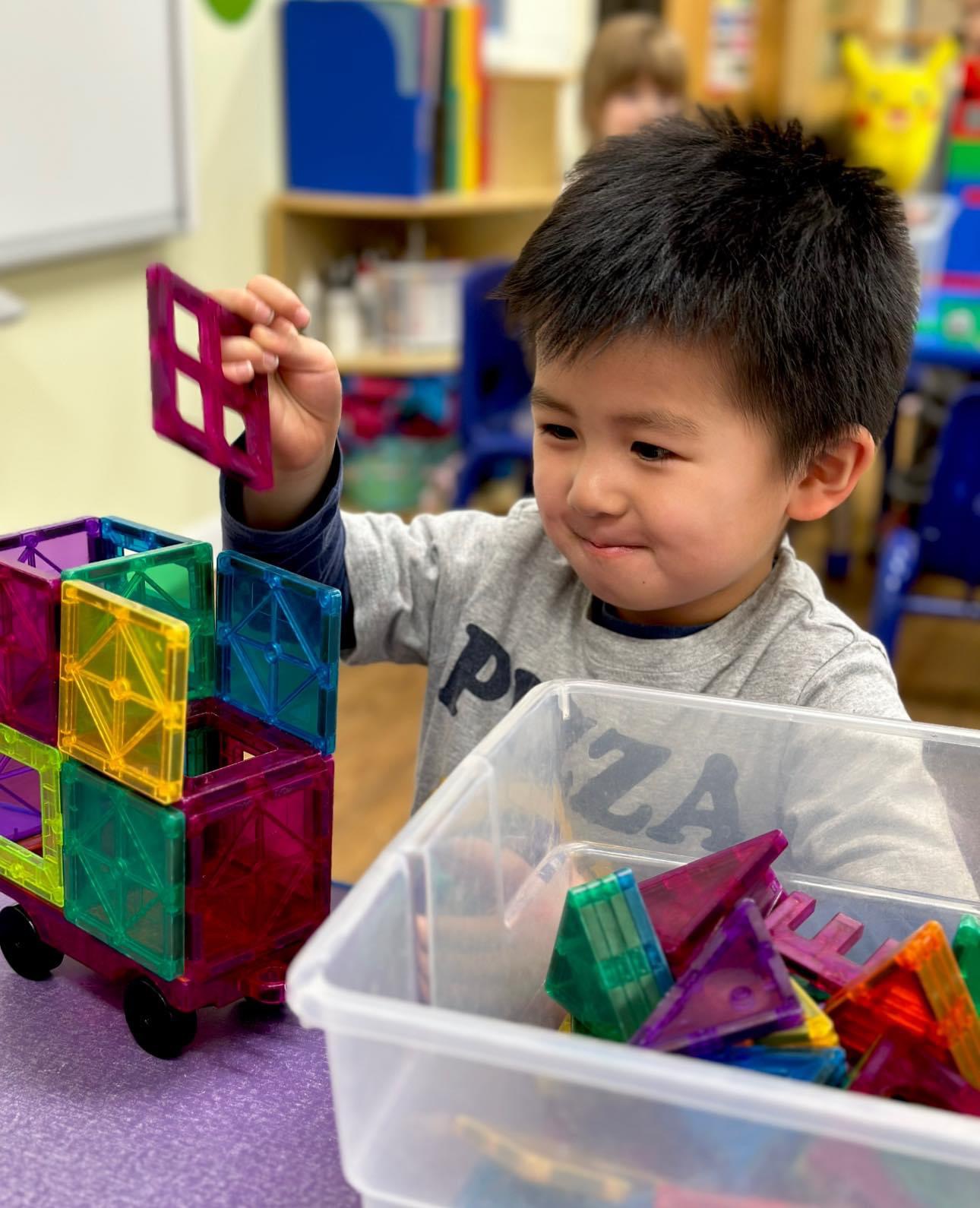
The early years of a child’s life are filled with discovery, growth, and important milestones. Choosing the right program sets the tone for lifelong success. If you are searching for exceptional Pre k Staten Island programs, high-quality Preschool Staten Island options, or nurturing Toddler care Staten Island families trust, finding a center that blends education with compassion is essential.
At New Generation Learning Center, we believe every child deserves a strong foundation built on encouragement, exploration, and individualized attention. Our welcoming environment supports children at every stage helping them gain confidence, independence, and essential academic skills.
Building Strong Foundations in Pre-K
Our structured Pre k Staten Island program prepares children for kindergarten and beyond. Through a balanced curriculum that combines hands-on learning and guided instruction, children develop early literacy, math readiness, and critical thinking skills.
Daily activities include:
- Letter and number recognition
- Early writing practice
- Science exploration
- Creative arts and music
- Social-emotional development exercises
We focus not only on academics but also on building self-confidence and positive peer relationships. Small class sizes ensure each child receives personal attention and encouragement from our experienced educators.
A Preschool Experience That Encourages Growth
Families seeking a dependable Preschool Staten Island program want more than childcare. They want an enriching learning experience. Our preschool classrooms are designed to inspire curiosity and imagination. Through play-based learning center, circle time discussions, and group activities, children develop communication skills and teamwork.
At New Generation Learning Center, our teachers guide children through structured routines that provide both stability and excitement. By encouraging exploration and creativity, we help young learners discover their unique strengths while preparing them for future academic success.
Compassionate and Engaging Toddler Care
Early development begins long before preschool. Our nurturing Toddler care Staten Island program focuses on language development, motor skills, and early social interaction. Toddlers learn best through movement, play, and sensory experiences, and our classrooms are designed to stimulate curiosity in a safe and caring setting.
We create daily schedules that balance structured activities with free exploration. From story time and music to hands-on play and outdoor fun, every moment is an opportunity for growth. Teachers provide gentle guidance to help toddlers build independence while feeling secure and supported.
A Trusted Partner for Families
New Generation Learning Center is proud to support families throughout every stage of early childhood. We prioritize safety, cleanliness, and open communication so parents feel confident in their choice. Flexible scheduling options and a welcoming atmosphere make our center a convenient solution for busy families.
When searching for reliable Pre k Staten Island, enriching Preschool Staten Island, or compassionate Toddler care Staten Island, families consistently choose our center for its dedication to excellence.
Schedule a tour today and discover how New Generation Learning Center can help your child build a strong, confident start toward a bright academic future.
